16 Famous Golfers From Connecticut
Meet 16 famous golfers from Connecticut. See how each one has shaped the sport with their skills, wins, and dedication to golf.
Jul 28, 202589.9K Shares1.1M Views
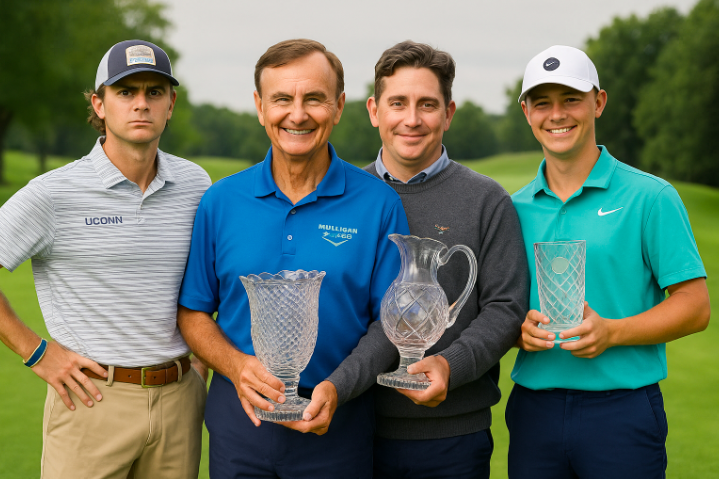
Connecticut may be a small state, but it has made a big name in the world of golf. From quiet towns to championship greens, this New England state has produced golfers who became legends on and off the course. Whether it's a major tournament or a local club match, Connecticut’s golfers have carried their home state’s pride with every swing.
If you think great golfers only come from sunny states, this list will surprise you. From classic names to modern stars, you'll discover how Connecticut has quietly built a strong presence in the game. Read on to meet the players who turned hometown dreams into national fame and learn why Connecticut deserves a spot on the golfing map.
Wally Armstrong
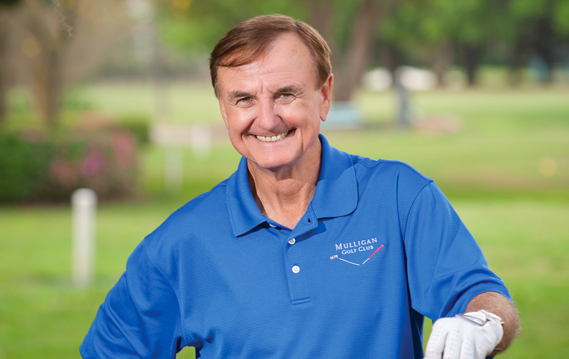
Wally Armstrong, born on June 19, 1945, in New London, Connecticut, developed his golf skills on a nine-hole course near his home. In high school, he focused on golf and won the Indiana high school state championship in 1963. He earned a golf scholarship to the University of Florida, where he played from 1965 to 1967 and received All-American honors in 1966. Armstrong graduated with a bachelor's degree in physical education in 1968 and a master's degree in public health in 1969.
Turning professional in 1970, Armstrong joined the PGA Tour in 1974 and competed in over 300 events until 1984. His notable finishes include second place at the 1974 Sahara Invitational, the 1975 Pensacola Open, and the 1977 Western Open. In the 1978 Masters Tournament, he tied for fifth place with a total score of 280, setting a record low for a first-time participant.
After his playing career, Armstrong became a respected golf instructor and author. He developed the first junior golf instructional tapes and created Titleist's first set of junior golf clubs. His instructional video "Maximizing Your Game" gained popularity in the early 1990s. Armstrong resides in Maitland, Florida, and has no known connection to California.
People also ask for
- Best Golf Courses In Connecticut
- Famous nfl players from connecticut
- Famous rappers from connecticut
- Famous NBA Players From Connecticut
- famous actors from connecticut
Georgianna Bishop
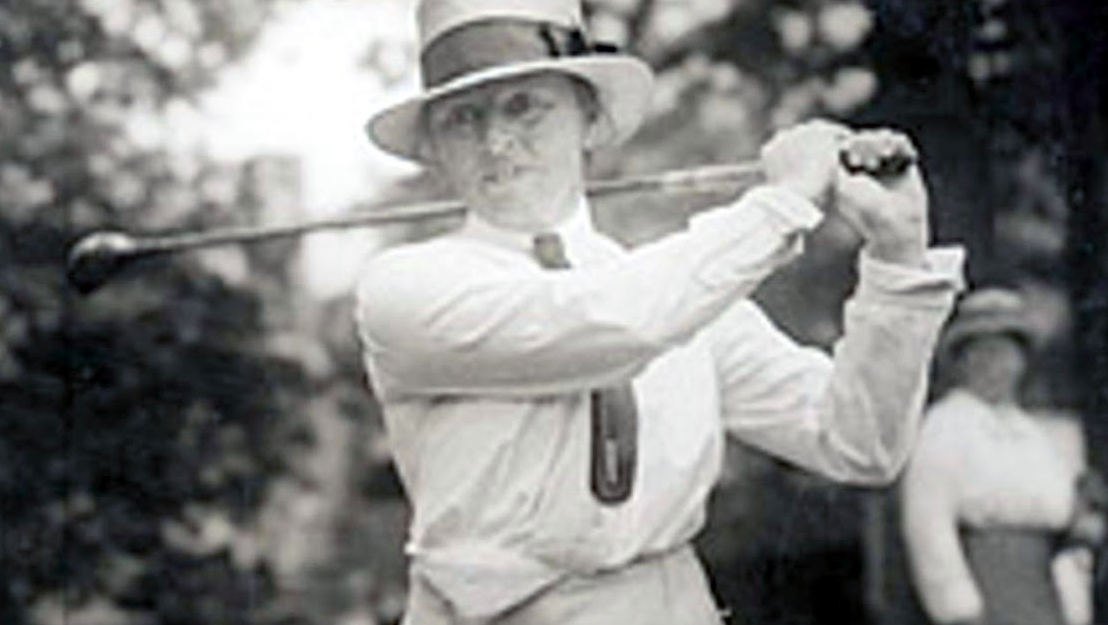
Georgianna Bishopwas born on October 15, 1878, in Bridgeport, Connecticut. She was introduced to golf in her hometown and played at the Brooklawn Country Club, where she later became an honorary member. Bishop's competitive golf career began in the late 1800s, and she continued playing tournament golf through the first quarter of the 20th century.
She was Connecticut's first national champion, winning the U.S. Women's Amateur Championship in 1904 at the Merion Cricket Club in Pennsylvania. In that tournament, she defeated Mrs. E.F. Sanford in the final match by 5 up and 3 to play. Bishop played in seventeen U.S. Women's Amateur Championships and traveled to England with the first U.S. women's team to play the British. She also won the Metropolitan Women's Championship in 1907 and 1908 and was runner-up five times. In the 1920s, she won the Connecticut Women's Amateur Championship four times: in 1920, 1921, 1922, and 1927. In 1959, Bishop was inducted into the Connecticut Golf Hall of Fame.
Bishop was known for her consistent and strategic playing style, which allowed her to compete at a high level for over two decades. Her participation in the 1905 British Ladies Amateur, where she earned the only American victory against British Ladies Amateur champion Lottie Dod, showcased her competitive spirit and skill on an international stage. Bishop's legacy includes being a trailblazer for women in golf, inspiring future generations of female golfers. She passed away on September 1, 1971, in Bridgeport, Connecticut, at the age of 92.
People also ask for
- Famous authors from connecticut
- Famous comedians from connecticut
- Famous boxers from connecticut
- Famous People In Connecticut
Julius Boros
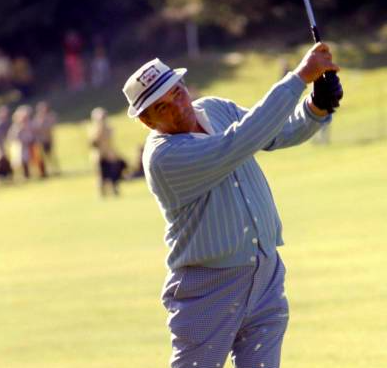
Julius Boroswas born on March 3, 1920, in Fairfield, Connecticut, and was of Hungarian descent. He played varsity baseball in college and worked as an accountant while playing high-standard amateur golf. Boros turned professional in 1949 at the age of 29.
Boros achieved significant success in his professional golf career, winning 18 PGA Tour events, including three major championships: the U.S. Open in 1952 and 1963, and the PGA Championship in 1968. His victory at the 1968 PGA Championship made him the oldest major champion at the time, at 48 years old . He also won the PGA Seniors' Championship in 1971 and 1977 and played on four U.S. Ryder Cup teams between 1959 and 1967 . Boros was named PGA Player of the Year in 1952 and 1963 and was the PGA Tour's leading money winner in 1952 and 1955.
Known for his smooth and relaxed swing, Boros often forwent practice swings, opting instead for a simple waggle before addressing the ball . His approach emphasized precision and consistency over power, earning him a reputation for being unflappable under pressure . Boros's demeanor and technique made him a respected figure in the golfing community.
Michael Breed
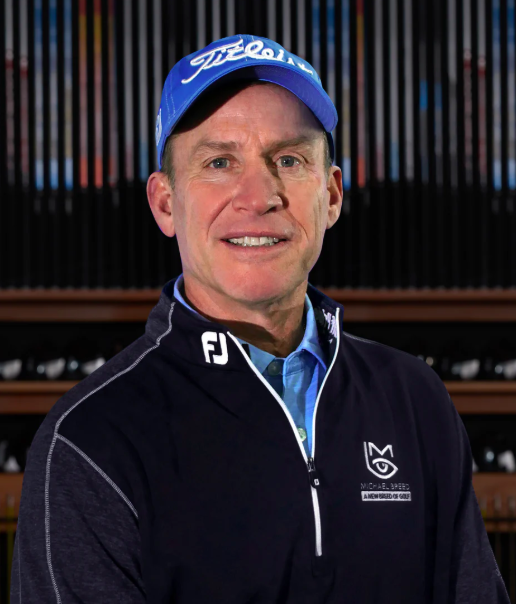
Michael Breedwas born on May 14, 1962, in Greenwich, Connecticut. He began his athletic career as a baseball shortstop and was introduced to golf at age 13 by his father, who played a significant role in his development as a golfer. Breed graduated from Choate Rosemary Hall and then from Randolph-Macon College in 1985, where he was later inducted into the college's Hall of Fame in 2004. He turned professional and played in the 1994 Greater Hartford Open on the PGA Tour and participated in several events on the Ben Hogan Tour in 1991.
Breed is renowned for his contributions to golf instruction. He served as the Head Golf Professional at Birchwood Country Club from 1996 to 2001 and at Sunningdale Country Club from 2001 to 2013. In 2008, he became the host of "The Golf Fix" on Golf Channel, the network's highest-rated golf instruction series. He currently hosts "Course Record with Michael Breed" on CBS and "A New Breed of Golf" on SiriusXM PGA Tour Radio. Breed has been recognized as the PGA National Teacher of the Year in 2012, Metropolitan PGA Teacher of the Year in 2000 and 2009, and has received multiple Horton Smith and Ely Callaway awards. He is also the Chief Digital Instructor for Golf Digest, focusing on innovating golf instruction and overseeing the "Best Young Teachers" program.
Breed is known for his dynamic and engaging teaching style, emphasizing a positive and motivational approach. His "Let's Do This" mantra has inspired golfers worldwide. He has worked with numerous tour professionals across the PGA, LPGA, and Web.com Tours. Breed resides in Connecticut and has no known connection to California.
Dick Chapman
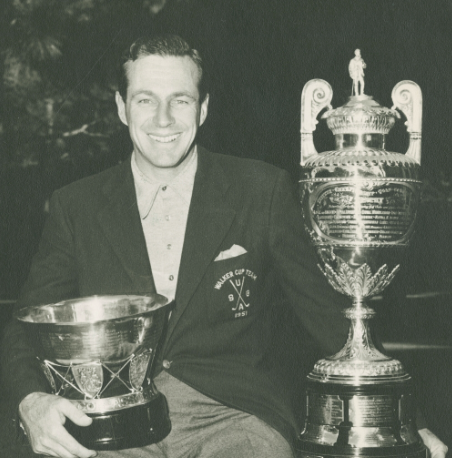
Richard Davol "Dick Chapman" was born on March 23, 1911, in Greenwich, Connecticut. He began his golf journey in high school, winning the Eastern Interscholastic Championship in 1930. Chapman achieved early success with victories in the Westchester Amateur in 1934 and the Connecticut Amateur in 1936 and 1938. His national prominence grew when he reached the semifinals of the U.S. Amateur in 1938 and won the French Open Amateur in 1939. In 1940, he secured the U.S.
Amateur title at Winged Foot Golf Club, his home course, defeating Duff McCullough 11 and 9 in the final. Chapman served as a major in the U.S. Army Air Corps during World War II. After the war, he continued his golfing success, winning the Canadian Amateur in 1949, the British Amateur in 1951, and the Italian Open Amateur in 1960. He also claimed state amateur titles in Massachusetts, New York, and the Carolinas. Chapman represented the United States in the Walker Cup in 1947, 1951, and 1953. He passed away on November 15, 1978, in Rancho Santa Fe, California.
Chapman was known for his strong competitive spirit and analytical approach to the game. He was dubbed "the Ben Hogan of amateur golf" by Time magazine. His contributions extended beyond playing; in the 1950s, he collaborated with the USGA to develop the Chapman System, a handicap format for foursomes play. Chapman's legacy includes being the first golfer to win the U.S., British, and Canadian Amateur Championships. He was inducted into the Connecticut Golf Hall of Fame in 2001 and the Carolinas Golf Hall of Fame in 1986.
Glenna Collett-Vare
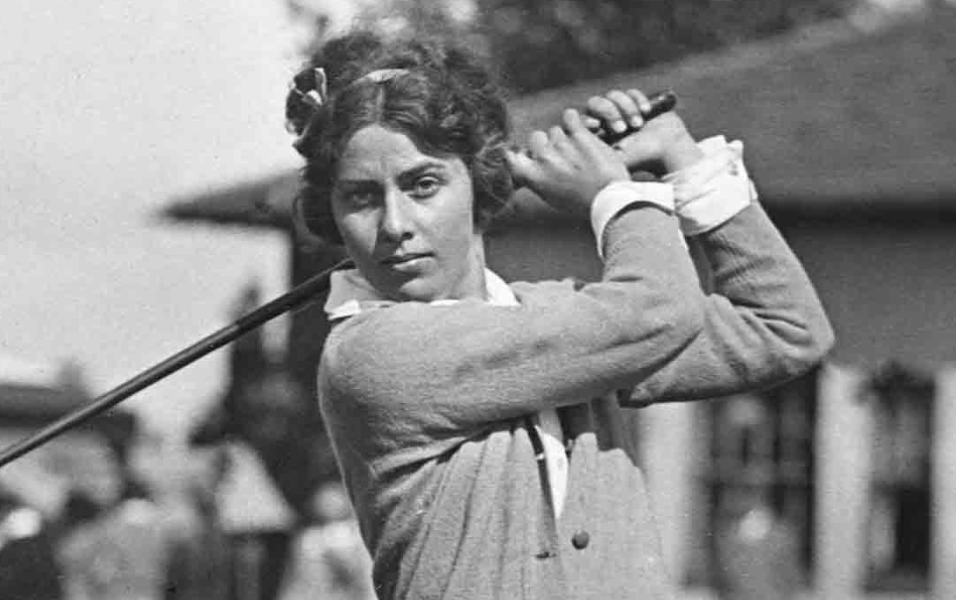
Glenna Collett-Vare, born on June 20, 1903, in New Haven, Connecticut, and raised in Providence, Rhode Island, was introduced to golf at age 14 when she accompanied her father to Metacomet Golf Club. Prior to golf, she excelled in swimming and diving. By 16, she competed in the U.S. Women's Amateur, winning her first-round match. She claimed her first U.S. Women's Amateur title in 1922 and went on to win it five more times—in 1925, 1928, 1929, 1930, and 1935. Additionally, she secured victories at the Canadian Women's Amateur in 1923 and 1924, and the French Women's Amateur in 1925. Between 1928 and 1931, she achieved 16 consecutive tournament wins. Collett-Vare also served as a player-captain for the U.S. team in the Curtis Cup matches of 1934, 1936, 1938, and 1948. In recognition of her contributions, the LPGA established the Vare Trophy in 1953, awarded annually to the player with the lowest scoring average.
Known for her powerful swing and athleticism, Collett-Vare was often referred to as the "Queen of American Golf." Her dominance in the 1920s and 1930s set a standard in women's golf. Gene Sarazen once called her "the greatest woman golfer of all time." Beyond her playing career, she influenced women's golf fashion by promoting more practical attire, such as pleated skirts and knitwear, enhancing comfort and movement on the course. She spent summers in Narragansett, Rhode Island, playing at Point Judith Country Club, where she participated in the Point Judith Invitational for over 60 years. Collett-Vare passed away on February 3, 1989, in Gulf Stream, Florida.
Heather Daly-Donofrio
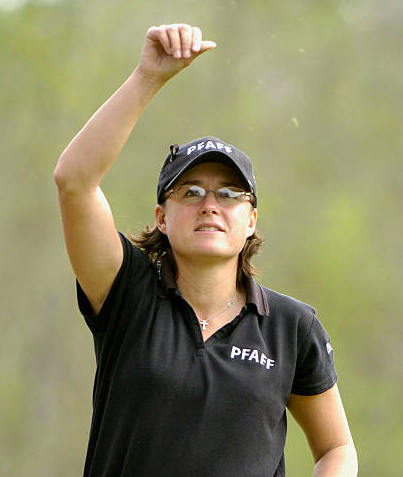
Heather Daly-Donofriowas born on September 10, 1969, in Bridgeport, Connecticut, and raised in Fairfield. She began playing golf at age 15 after a high school announcement invited girls to join the golf team. Self-taught using instruction books and a secondhand set of clubs, she quickly developed her skills. At Yale University, she played on the women’s golf team and graduated cum laude in 1991 with a degree in history. She won the Connecticut Women’s Amateur Championship in 1992 and 1993. Turning professional in 1993, she played on the Futures Tour, winning three events between 1995 and 1997. She joined the LPGA Tour in 1998 and secured two victories: the First Union Betsy King Classic in 2001 and The Mitchell Company Tournament of Champions in 2004. While competing, she also served as head coach of Yale’s women’s golf team from 1997 to 2000. In 2005, she received the LPGA's William and Mousie Powell Award for exemplifying the spirit and ideals of the LPGA.
Known for her determination and leadership, Daly-Donofrio was respected by peers for balancing competitive play with coaching and administrative roles. She served as president of the LPGA Player Executive Committee from 2005 to 2006. After retiring from professional play in 2008, she held various executive positions within the LPGA, including Chief Tour Operations Officer. She later joined the USGA as Managing Director of Player Relations and Development, contributing to initiatives like the Women's World Amateur Golf Ranking and serving as Technical Delegate for women's golf at the 2020 Tokyo Olympics. Her career reflects a commitment to advancing women's golf both on and off the course.
Ken Green
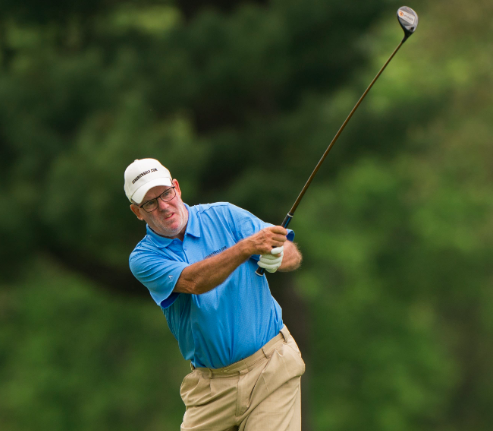
Ken Greenwas born on July 23, 1958, in Danbury, Connecticut. He began playing golf at age 12 while living in Honduras, where his father was the principal of the American School. With limited sports options, he chose golf over soccer. Green left school at 16 to pursue professional golf but later earned his GED. He attended Palm Beach Junior College and then the University of Florida, where he played for the Florida Gators men's golf team from 1977 to 1979 and was a second-team All-Southeastern Conference selection in 1979.
Turning professional in 1979, Green joined the PGA Tour in 1980. He secured five PGA Tour victories between 1985 and 1989, including wins at the Buick Open and the Kmart Greater Greensboro Open. In 1988, he also won the Dunlop Phoenix in Japan. Green represented the U.S. in the 1989 Ryder Cup. His best major finish was a tie for seventh at the 1996 U.S. Open. Known for his rebellious nature, Green often challenged golf norms, once sneaking friends into The Masters in his car trunk and playing rounds dressed entirely in green.
In 2009, Green faced a tragic RV accident that resulted in the loss of his right leg, his brother, and his girlfriend. Demonstrating resilience, he returned to competitive golf, participating in events like the U.S. Adaptive Open. His comeback earned him the Champions Tour Comeback Player of the Year award in 2010. Green's journey has inspired many, highlighting his determination and passion for the sport.
Liz Janangelo
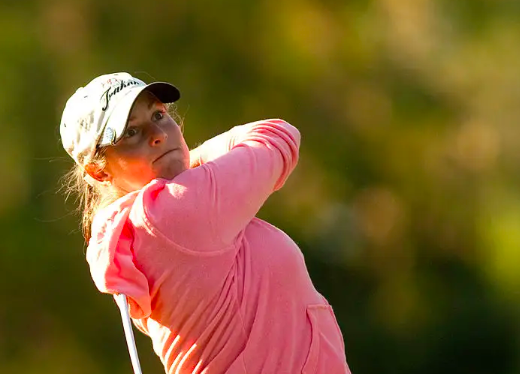
Liz Janangelo, born in West Hartford, Connecticut, began playing golf at the age of three. By 13, she became the youngest winner of the Connecticut State Women's Amateur Championship, a title she secured five consecutive times. As a junior golfer, she claimed eight American Junior Golf Association (AJGA) titles, including two majors, and was named the 2001 Polo Golf Girls Junior Player of the Year. At Duke University, Janangelo's collegiate career was distinguished; she was a four-time First Team All-American, won seven individual titles, and contributed to Duke's back-to-back NCAA Championships in 2005 and 2006. Notably, she set an NCAA scoring record with a 9-under 62 at the ACC/SEC Challenge.
Turning professional in 2006, Janangelo achieved two victories on the Futures Tour in 2007, leading to her LPGA Tour card for the 2008 season. Her playing style was characterized by precision and consistency, earning respect from peers and fans alike. Beyond her playing career, Janangelo has made significant contributions to golf as a teaching professional at The Mill River Club in Oyster Bay, New York. Her legacy is honored through the Liz JanangeloCaron Women's Player of the Year award, established by the Connecticut State Golf Association in 2017 to recognize the state's top female amateur golfer.
Bradford Tilley
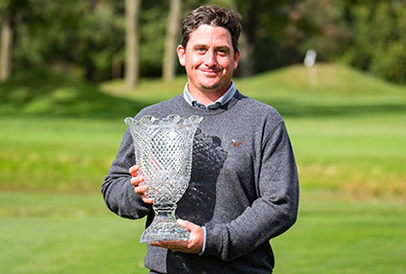
Bradford Tilley, born in Chappaqua, New York, developed his golfing skills at Virginia Episcopal School before playing collegiate golf at the University of Virginia. There, he earned All-ACC Team honors in 2005 and captained the team in 2006. His early career was marked by a significant win at the 48th MGA/Canon “Ike” Stroke Play Championship in 2003, where he overcame a hand injury to secure victory.
Tilley's amateur career includes notable achievements such as earning medalist honors at the 2017 U.S. Mid-Amateur Championship with a two-round total of 5-under 136. In 2019, he set a record at the New York State Men’s Mid-Amateur Championship with a 9-under 204 over 54 holes, winning by seven strokes. He also won the 120th Met Amateur Championship in 2022 and was named the MGA Jerry Courville Sr. Player of the Year the same year.
Known for his consistent and strategic play, Tilley is respected for his perseverance and leadership on the course. His victories, including the Westchester Amateur in 2020, demonstrate his enduring competitiveness. Residing in Easton, Connecticut, and affiliated with Sleepy Hollow Country Club in New York, Tilley's regional ties have significantly influenced his golfing journey.
Cody Paladino
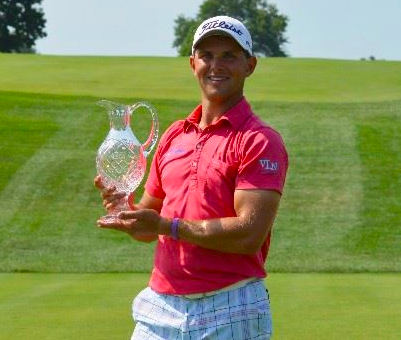
Cody Paladino, born and raised in Kensington, Connecticut, is a distinguished amateur golfer known for his significant contributions to the sport within his home state. He played collegiate golf at Baylor University in Waco, Texas, where he served as team captain and earned multiple academic honors. Paladino's early achievements include winning the Connecticut Public Links in 2006 and the Connecticut Amateur in 2013. He also secured victories in the Connecticut Open in 2015 and the Connecticut Mid-Amateur in 2024, completing the state's "Grand Slam" by winning all major men's championships. Additionally, he claimed the New England Amateur title in 2021.
Paladino's playing style is marked by consistency and precision, which have earned him seven Connecticut State Golf Association (CSGA) Player of the Year awards, including five consecutive titles from 2020 to 2024. His dedication to the sport and sportsmanship have made him a respected figure among peers and fans. Beyond his playing career, Paladino contributes to golf by co-directing the Northern Junior Championship in Connecticut, fostering the development of young golfers. While his primary connection is to Connecticut, his victory at the California State Fair Men's Championship in 2013 highlights his competitive presence beyond his home region.
Jackson Roman
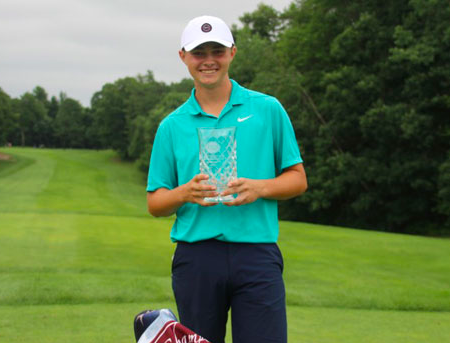
Jackson Roman, a native of Kensington, Connecticut, began his golf journey at Shuttle Meadow Country Club. He gained early recognition by winning the 2020 Junior Golf Hub Championship with a standout first-round score of 64, leading to a wire-to-wire victory. That same summer, he secured another title at the US Challenge Cup Boys Championship in Rhode Island. Roman attended Hamden Hall Country Day School, where he played alongside top junior talent, and later committed to Loyola University Maryland to compete in NCAA Division I golf.
In 2023, Roman made history by becoming the first amateur since 2008 to win the Connecticut Open, finishing with a 12-under-par 201. He also qualified for the U.S. Amateur Championship by shooting a bogey-free 5-under 65 at a final qualifier. During his collegiate season, he earned PING All-Northeast Region honors with a 73.00 stroke average and achieved multiple top-10 finishes.
Roman is known for his composed demeanor and ability to perform under pressure, often delivering strong final rounds. His recent successes have marked him as a promising talent in amateur golf. While his achievements have primarily been in the Northeast, there is no publicly available information indicating a connection to California.
Tommy Dallahan
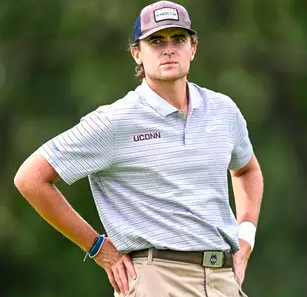
Tommy Dallahan, born in 2001, hails from Simsbury, Connecticut, and began his golf journey at Ellington Ridge Country Club. He played collegiate golf at the University of Connecticut (UConn), where he competed in 113 rounds over 39 events, achieving a career scoring average of 73.6. Dallahan secured 16 top-20 finishes, including a victory at the 2022 Bash at the Beach tournament with a 12-under-par 201, his career-best score. He was named BIG EAST Golfer of the Week twice, notably after a third-place finish at the 2024 Palmas del Mar Collegiate, where he shot rounds of 69-69-67 for an 11-under-par 205. In 2024, he earned All-BIG EAST First Team and PING All-Northeast Region honors.
Dallahan turned professional in 2024 and has participated in events on the Minor League Golf Tour. Known for his consistent performance, he led UConn with 13 rounds at par or better in his senior year and achieved a low round of 67 twice during the season. He has expressed a strong desire to represent New England on the PGA Tour, inspired by players like Keegan Bradley. Dallahan's dedication to the sport and his region underscores his commitment to advancing in professional golf.
Don Hoenig
Don Hoenig, a prominent figure in Connecticut golf, was born and raised in the state. He began his golfing journey alongside his father, John Hoenig, when they designed and built the Raceway Golf Club in the mid-1940s, with the first nine holes opening in 1947 on their family dairy farm property. Hoenig's early exposure to golf course design and management played a significant role in shaping his career. He achieved notable success as an amateur, winning the Connecticut Open in 1956 and 1957, and the Connecticut State Amateur Championship in 1957.
Hoenig continued to make significant contributions to golf in Connecticut. He won the Connecticut Section PGA Championship in 1984 and the Connecticut Section PGA Senior Championship consecutively from 1985 to 1989. Hoenig also secured three titles at the Senior Open held at Shennecossett Golf Course, tying him for the most titles in the event's history. His consistent performance and dedication to the sport earned him induction into the Connecticut Golf Hall of Fame in 1981. Beyond his playing achievements, Hoenig's work in golf course design and management, particularly at Raceway Golf Club, has left a lasting impact on the golfing community in Connecticut.
Ted Lenczyk
Ted Lenczyk, a distinguished amateur golfer from Connecticut, made significant contributions to the sport during the mid-20th century. He achieved notable success by winning the Connecticut Open in 1954, where he set a course record with a 6-under-par 65 in the first round and ultimately secured a seven-shot victory. In 1961, he claimed the Connecticut State Amateur title, marking a unique family achievement as his sister, Grace Lenczyk Cronin, won the women's amateur title in the same year. Lenczyk also reached the semifinals of the 1954 U.S. Amateur Championship, earning him an invitation to compete in the 1955 Masters Tournament. His accomplishments were recognized with his induction into the Connecticut Golf Hall of Fame in 1968.
Known for his calm demeanor and strategic approach to the game, Lenczyk was respected by peers and fans alike. Beyond his playing career, he contributed to the sport by mentoring young golfers, including his sister Grace, who became a national women's champion. His lifelong association with Indian Hill Country Club in Connecticut underscores his deep ties to the region, where he both trained and competed, leaving a lasting legacy in the state's golfing community.
J.J. Henry
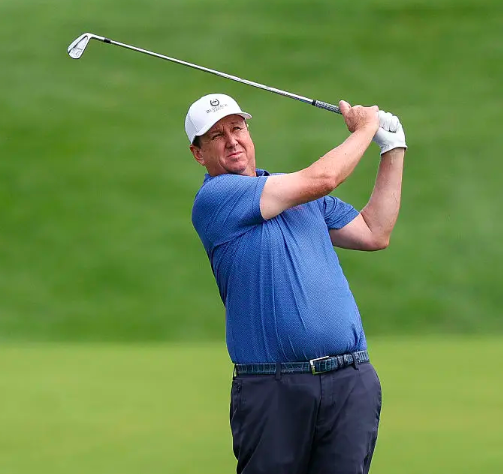
J.J. Henrywas born on April 2, 1975, in Fairfield, Connecticut. He developed his golf skills in his hometown, achieving significant success in amateur competitions. Henry won the Connecticut Amateur three times (1994, 1995, and 1998) and the New England Amateur in 1998. He attended Texas Christian University (TCU), where he became the first golfer in the school's history to earn All-American honors in three consecutive seasons. In 1998, he finished second overall at the NCAA National Championships, posting the best four-round score in TCU program history.
Turning professional in 1998, Henry secured three PGA Tour victories: the 2006 Buick Championship, the 2012 Reno-Tahoe Open, and the 2015 Barracuda Championship. He represented the United States in the 2006 Ryder Cup, contributing 1.5 points by halving all three of his matches. In recognition of his accomplishments, Henry was inducted into the Connecticut Golf Hall of Fame in 2015. Off the course, he founded the Henry House Foundation in 2006, a non-profit organization dedicated to supporting community-based programs focusing on children's healthcare and well-being in Fort Worth, Texas, and Southern New England.
Latest Articles
Popular Articles