Sanpaku Eyes | Meaning, Myths, Celebrities, Science & Medical Facts
Three whites” or a simple anatomy trait? Find out what sanpaku eyes really reveal-myth, meaning, and science in one definitive guide.
Oct 27, 202581.1K Shares1.2M Views

The Truth Behind Sanpaku Eyes: What Your Eyes Reveal
An old saying goes, "the eyes are the windows to the soul." This means that your eyes can show what you are thinking or feeling. However, according to some cultures, your eyes can also tell you what you will be in the future, and this is commonly called "Sanpaku Eyes."
"Three whites" is what the Japanese words "Sanpaku" and "Sanpaku gan" mean. This phrase refers to people whose eyes are white at the top or bottom of the iris, even when they are looking straight ahead.
The popular narrative surrounding sanpakuis often sensational and even frightening: a dire prediction of a life ending in tragedy or violence. While this fatalistic view dominates pop culture discussions about sanpaku eyes and the meaning of death, it grossly oversimplifies a complex concept rooted in traditional macrobiotic philosophy and physiognomy.
As someone who studies the intricate dialogue between inner life and outer appearance, I view sanpakunot as a curse, but as a profound visual cue-a diagnostic signal from your body indicating a subtle but critical imbalance that needs attention. It’s an invitation, not a final judgment.
What Are Sanpaku Eyes?
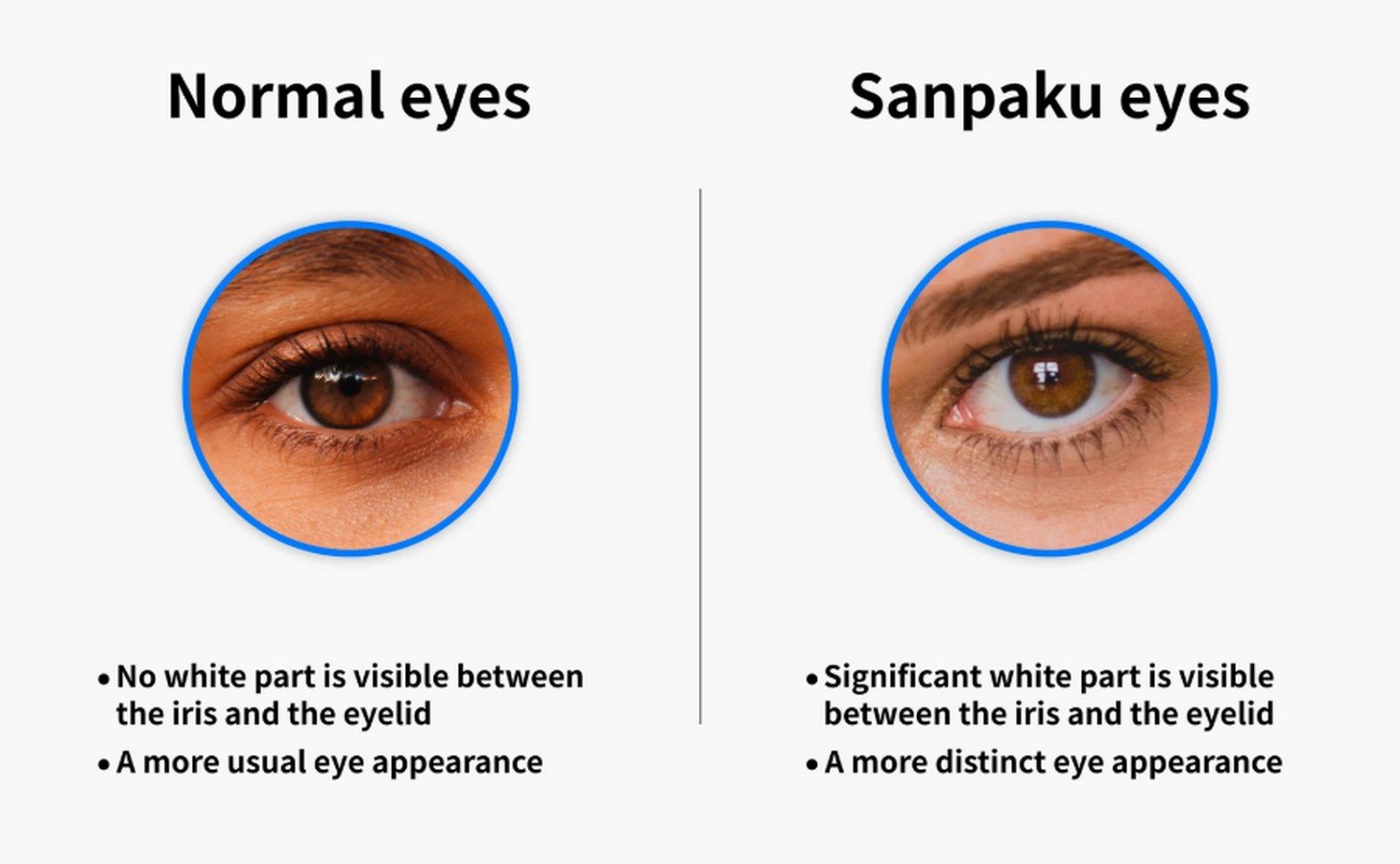
The term sanpaku eyes comes from the Japanese phrase sanpaku gan(三白眼), meaning "three whites." It refers to an ocular feature where the white of the eye (sclera) is visible beneath the iris, above the iris, or sometimes both. Normally, the whites of the eyes are only visible on the left and right sides of the iris.
In Western medicine, this appearance is known as scleral show.
Sanpaku Eyes Vs. Scleral Show
While both terms describe the same appearance, the cultural meaning differs significantly. Sanpakuis rooted in Japanese face reading (physiognomy) and superstition, linking the trait to a person's fate or internal state. Scleral show is a neutral anatomical term describing the exposure of the sclera due to genetics, aging, or various medical conditions.
Understanding The Types Of Sanpaku Gaze
To move past the superstition, we must first understand the anatomy and the specific categorizations of the sanpakugaze, which are directly linked to the ancient concepts of Yin and Yang-the fundamental forces of balance in the universe.
1. Yin Sanpaku (Lower Sanpaku)
This is the more common and highly debated type, frequently studied in sanpaku eyes photos of celebrities like Marilyn Monroe and Princess Diana. Yin Sanpaku is present when the white sclera is visible belowthe iris.
- The Yang Implication:In traditional thought, this is often associated with a person whose Yang forces-representing external action, aggression, or outward expression-are excessive. It’s a signal that the person’s internal reserves (Yin) are being drained by the external world.
- The Persona:Historically, this is linked to a sanpaku eyes personality prone to overextension, emotional volatility, and a perceived danger to themselvesor external misfortune.
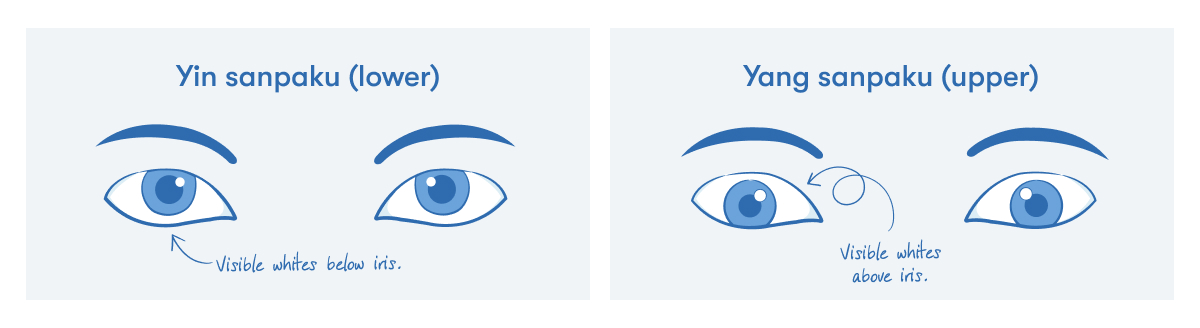
2. Yang Sanpaku (Upper Sanpaku)
This condition is far rarer than the lower form and is often associated with more alarming behavioral predictions. Yang Sanpaku is present when the white sclera is visible abovethe iris.
- The Yin Implication:This suggests an excess of Yin-representing internal, passive, or receptive energy. The person's internal world is overwhelming their ability to navigate the external world effectively.
- The Persona:This type is traditionally linked to a person who possesses a volatile, inner disturbance, and is perceived as being a potential danger to others.
The Sanpaku Eyes Superstition: Destiny Or Warning?
The core of the sanpaku eyes superstition lies in the idea that this gaze predicts a tragic destiny or early death. The concept was popularized in the West by George Ohsawa, who claimed the feature was a sign of severe physical, physiological, or spiritual imbalance caused by a poor diet.
However, many viewers now treat this as a psychological warning:
- Yin (Below):A warning of danger to the self(vulnerability, self-neglect).
- Yang (Above):A warning of danger to others(internal aggression, volatility).
Who Has Sanpaku Eyes? Rarity And Prevalence
Is having this feature a sanpaku eyes rarity? Scientific research suggests that some degree of inferior scleral show is not rare at all. In studies measuring eyelid position in healthy individuals, almost half of the participants showed some degree of visible white below the iris, typically measuring about 0.4 millimeters.
This commonality immediately challenges the fatalistic sanpaku eyes superstition that it marks only those destined for tragedy.
Causes of Scleral Visibility:The appearance can be caused by simple, benign factors like: Heredity (natural eye structure), Aging (loss of muscle tone), Trauma, or sometimes, complications after cosmetic procedures like blepharoplasty.
Sanpaku Eyes Vs. Scleral Show
To address the science behind the feature, we must use the official anatomical term. The technical, medical term for what is commonly called sanpaku eyesis scleral show.
Scleral Show: The Anatomical Reality
Scleral show simply describes the state when the lower eyelid sits lower than the lower edge of the iris, revealing a sliver of the white sclera beneath.
- Challenging the Rarity:Is having this feature a sanpaku eyes rarity? Research suggests that some degree of inferior scleral show is not rare at all. In studies measuring eyelid position in healthy individuals, almost half of the participants showed some degree of visible white below the iris, typically measuring about 0.4 millimeters. This commonality immediately challenges the fatalistic sanpaku eyes superstition that it marks only those destined for tragedy.
- Causes of Scleral Visibility:The appearance can be caused by simple, benign factors like: Heredity (natural eye structure), Aging (loss of muscle tone), Trauma, or sometimes, complications after cosmetic procedures like blepharoplasty.
Sanpaku Eyes And Personality
The question, What is the mental illness of sanpaku eyes? reflects a deep-seated anxiety. We can now synthesize the ancient belief with insights from modern behavioral science and expert body language analysis.
Why We Instinctively Fear The Wide-Eyed Gaze
The eyes are the first signal of intent. The extreme visibility of the white sclera, especially in the rare Yang Sanpakutype or in an intense, wide-open stare, triggers a primal defense mechanism in the observer.
- The Reptilian Stare Connection:When the eyes are wide, exposing the sclera both above and below or in a cold, unblinking glare, body language experts and former FBI profilers have dubbed this the "reptilian stare." This unnerving look is reminiscent of a predator or someone experiencing a massive adrenaline surge (fight-or-flight).
- Activating the Limbic System:This wide, cold gaze bypasses conscious thought and directly activates the brain’s limbic system-the part responsible for survival instincts. The body reacts viscerally, triggering our own fight-or-flight response, regardless of whether the person is a psychopath or simply stressed. The ancient prediction that Yang Sanpakusignals "danger to others" is, therefore, rooted in a very real, evolutionary defense mechanism.
Physiognomy's Interpretation Of Personality
- Yin Sanpaku (Lower):The Outward Burner. This sanpaku eyes personality is viewed as emotionally sensitive and outwardly focused, putting them at the mercy of the world (external danger).
- Yang Sanpaku (Upper):The Inward Pressure. This yang sanpaku eyes type is seen as having immense, suppressed emotional pressure, leading to internal volatility and a lack of control, which is the foundation of the "danger to others" belief.
Sanpaku Eyes Celebrities: The Faces Behind The Legend
The question of whether people with sanpaku eyesare rare is best answered by looking at the medical term: scleral show.

The concept of sanpaku eyes gained significant traction in Western culture after it was linked to several famous and often tragic public figures. While the belief is rooted in superstition, the association with these compelling individuals ensures the topic remains relevant.
Many celebrities have been noted for having noticeable lower scleral show (Yin Sanpaku) in photographs:
- President John F. Kennedy
- Marilyn Monroe
- Princess Diana
- James Dean
- Michael Jackson
- Billie Eilish
- Diana Ross
- Twiggy
The most famous example cited for Yang Sanpaku (white visible above the iris) is often the cult leader Charles Manson. This stark contrast highlights the split nature of the sanpaku eyes superstition-from vulnerable victims to volatile perpetrators.
What Does Science Say: The Evolutionary Eye
In a purely scientific context, the unique visibility of the white sclera in humans has an evolutionary explanation. The Cooperative Eye Hypothesissuggests that our eyes developed with a visible white background so others could more easily follow our gaze direction.
This enhanced communication, by making the iris and pupil highly distinct against the white, is fundamental to human social interaction, grounding the eye's appearance in function, not fate.
The Solution: From Fatalism To Self-Mastery
If your eye appearance is non-pathological, the key to "addressing" your sanpakulies in adopting the solution proposed by its own foundational philosophy: re-establishing balance.
1. Grounding The Spirit Through Diet And Lifestyle
Adopting principles similar to the macrobiotic philosophy can stabilize the energy of the body (Qior Ki), which can subtly relax the delicate musculature around the eyes.
- Focus on Whole and Local Foods:Eating whole, unprocessed foods that grow naturally in your environment connects you to a stable rhythm.
- Master Emotional Regulation: Daily stillness practice or meditation counters the mental agitation that can manifest as chronic facial tension, which affects the eyes.
- Prioritize Sleep: Chronic sleep debt and fatigue are leading causes of visible scleral show. A consistent, deep sleep schedule is essential for restoring both physical and spiritual balance.
2. The Final Verdict: Is Sanpaku Eyes Lucky?
The narrative of good or bad luck often varies geographically. While Japanese sanpaku eyes superstition leans toward warning, some Chinese physiognomy schools interpret a slight scleral show as a sign of fierce determination and magnetic charisma.
The truth is that the feature is neutral; it serves as a wake-up call. If it motivates you to lead a more grounded, balanced life, it is, in fact, a great sign of fortune.
You Might Also Like: The Hidden Reasons Women Experience More Anxiety Than Men
Frequently Asked Questions
What Does It Mean If You Have Sanpaku Eyes?
If you have sanpaku eyes, it means the white part of your eye (sclera) is visible either above (Yang) or below (Yin) the iris. In traditional Japanese and Chinese face reading, this is interpreted as a visual sign of physical, emotional, or spiritual imbalance, suggesting a person is living out of harmony with their environment or themselves.
Are Sanpaku Eyes Lucky?
Sanpaku eyes are neither inherently lucky nor unlucky. The Japanese superstition views them as a warning of danger or misfortune. However, a slight scleral show can also be interpreted as a sign of magnetism or intensity.
What Does Science Say About Sanpaku Eyes?
Science uses the term scleral show for this appearance. Studies indicate it is quite common, often affecting nearly 50% of the population to some degree. It is typically a benign, natural anatomical feature caused by genetics, slight variations in eye socket structure, or simply a temporary sign of fatigue or dehydration.
Can Sanpaku Eyes Be Fixed Or Corrected?
If the appearance is caused by an underlying medical condition, treating that condition may resolve the issue. For non-pathological or inherited sanpaku eyes, they can be cosmetically altered using medical procedures like blepharoplasty (eyelid surgery) or dermal fillers. However, this is typically a matter of personal preference, not medical necessity.
Is Sanpaku Eyes A Mental Illness Or Linked To Violence?
No, sanpaku eyes are not a recognized mental illness. While sensationalized accounts link the rare Yang type to violence, the appearance is scientifically connected to the "Reptilian Stare," which triggers a primal, non-conscious fear response in others.
Which Eye Shape Is The Rarest?
In the context of sanpakuitself, the Yang Sanpaku (white visible above the iris) is the rarest form of naturally occurring scleral show.
A Quick Recap
The gaze that has captivated and worried people for centuries-the sanpaku eyes-is best understood not as a dark prophecy, but as a profound piece of personal feedback. The essential takeaway is that a visible white below or above the iris is a traditional indicator of imbalance in the body and mind.
The most potent insight you can gain is this: If you believe you have sanpakueyes, do not fear your fate. Instead, treat it as a powerful call to action. It is a reminder to embrace the ancient wisdom of balance-to seek inner harmony through mindful living, a grounding diet, and emotional regulation.
By doing so, you take control of your destiny, proving that the true power lies not in the stars, but in your daily choices.
Jump to
The Truth Behind Sanpaku Eyes: What Your Eyes Reveal
What Are Sanpaku Eyes?
Understanding The Types Of Sanpaku Gaze
The Sanpaku Eyes Superstition: Destiny Or Warning?
Who Has Sanpaku Eyes? Rarity And Prevalence
Sanpaku Eyes Vs. Scleral Show
Sanpaku Eyes And Personality
Sanpaku Eyes Celebrities: The Faces Behind The Legend
What Does Science Say: The Evolutionary Eye
The Solution: From Fatalism To Self-Mastery
Frequently Asked Questions
A Quick Recap
Latest Articles
Popular Articles