Peggy Bacon: The Sharp-Eyed Artist Who Captured American Life With Humor
Discover the life and legacy of Peggy Bacon, the witty American artist and illustrator known for her clever drawings and keen eye for social detail.
Jul 28, 202517.9K Shares513.6K Views
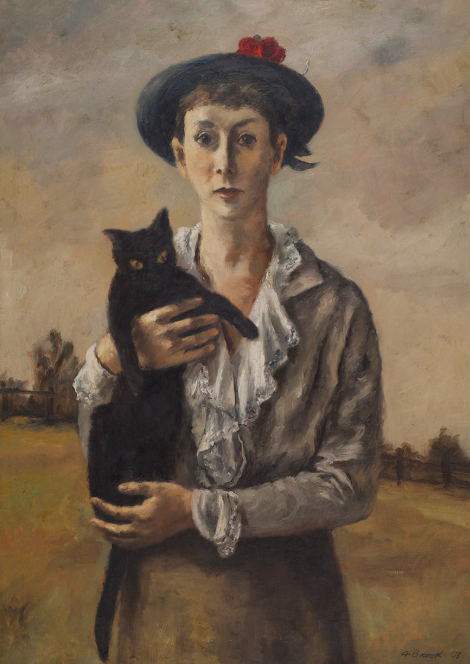
Have you ever seen a funny sketch that makes you think twice about the person it shows? Peggy Bacondrew just like that. She was a U.S. artist famous for her sharp and witty caricatures of people in New York’s art world during the 1920s and 1930s. Peggy studied at the Art Students League of New York under teachers like John Sloan and Kenneth Hayes Miller and taught herself a print method called drypoint, which became her signature style. Her work appeared in magazines like The New Yorkerand Vanity Fair, and her 1934 book Off With Their Heads!made her one of the top caricaturists of her time. She also illustrated more than sixty books, including nearly twenty she wrote herself, and had dozens of gallery shows across the country.
Early Life And Education
Peggy Bacon was born on May 2, 1895in Ridgefield, Connecticut, the only child of two artists, Charles Roswell Bacon and Elizabeth Chase Bacon. Her parents met at the Art Students League of New York and filled their home with books and art. Peggy began drawing around the age of one and by ten she was writing and illustrating her own stories. She was educated by private tutors until age fourteen, when she attended Kent Place Schoolin New Jersey—a shift that also introduced her to mathematics and formal schooling.
In late 1913 she enrolled briefly at the School of Applied Design for Women in New York before moving on to take a landscape class on Long Island with artist Jonas Lie. Lie later arranged her first solo exhibition in 1915. From 1915 to 1920, she studied at the Art Students League of New York, learning from prominent figures such as John Sloan, Kenneth Hayes Miller, George Bellows, and Andrew Dasburg. During summers, she studied in artist communities at Provincetownand Woodstock, strengthening her style and artistic circle.
While Peggy trained as a painter, she discovered a talent and passion for drypoint printmakingaround 1917—a technique she taught herself. This method became her signature, and she used it to create sharp, witty scenes and caricatures of people in New York’s art circles. She also began contributing to Bad News, a student magazine, and published her first book, The True Philosopher and Other Cat Tales, in 1919, which included her early drypoint prints.
Her early education and training set the stage for a long and diverse career in art, illustration, and writing—fields where she would later become known for her wit, skill, and lively portrayals of modern life.
Artistic Career
Peggy Bacon quickly made her mark as an artist known for sharp, witty caricatures and printmaking. While initially trained as a painter at the Art Students League of New York from 1915 to 1920 under teachers like George Bellows, Kenneth Hayes Miller, John Sloan, and Andrew Dasburg, she shifted her focus around 1917 to drypoint printmaking, a technique she taught herself because no etching classes existed at the time.
She first published her caricature prints in the student magazine Bad News, and then in mainstream magazines soon afterward. Her early prints drew attention at venues such as the Society of Independent Artists and the Painter–Gravers of America in New York. These works, typically black-and-white drypoints, depicted lively scenes and portraits often of fellow artists, writers, and cultural figures, blending humor with fine technical skill.
Peggy had her first major exhibition of drypoint prints at the Joseph Brummer Gallery in 1922, presented alongside paintings by her husband Alexander Brook. She then lived part of her career in artistic communities like Woodstock and Greenwich Village, before settling in New York City as her reputation grew.
Throughout the 1920s and 1930s, she published in major magazines such as The New Yorker, Vanity Fair, The New Republic, and Fortune. Her 1934 Off With Their Heads!collection of satirical drypoint portraits solidified her status, and she earned a Guggenheim Fellowship the same year to continue her work in graphic arts.
In later decades, she produced more than thirty solo exhibitions at prominent galleries like the Intimate Gallery, Weyhe Gallery, Downtown Gallery, and Montross Gallery. She also illustrated over sixty books—about nineteen of them she wrote herself—including mystery stories like The Inward Eye, which was nominated for an Edgar Award in 1952.
Her artistic legacy includes formal recognition by prestigious institutions: she received awards from the American Academy of Arts and Letters in 1942 and a gold medal in 1980, and was elected to the National Academy of Design, associate in 1947 and full member in 1969. In 1975, the National Collection of Fine Arts honored her with a yearlong retrospective show titled Peggy Bacon: Personalities and Places.
Latest Articles
Popular Articles