Standish Lawder: The Visionary Who Changed Experimental Film
Discover how Standish Lawder reshaped experimental cinema through bold visuals and unique ideas. His work as a filmmaker and teacher still inspires artists today.
Jul 28, 202541.4K Shares781.3K Views
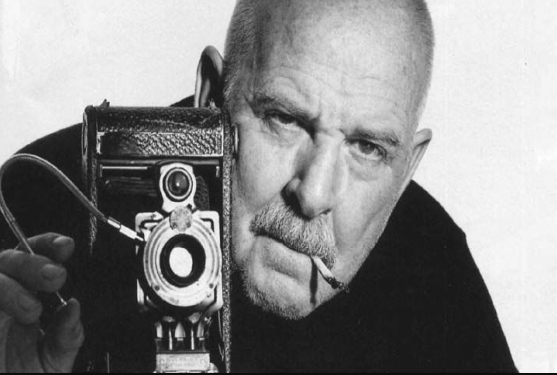
Biography
Standish Lawderwas born in 1936 in Connecticut. He studied at Williams College and the National Autonomous University of Mexico as an undergraduate, and spent time at Ludwig Maximilian University of Munich. Later, he earned a Ph.D. in art history from Yale University. His doctoral thesis examined how early modern art and film were linked; this work was published as The Cubist Cinema.
He began his creative career as a painter but shifted in the early 1960s into experimental film, multimedia photography, and projected-light installations. Between the late 1960s and early 1970s, he made around twenty-five experimental films informed by the structural film movement, including notable titles such as Necrology, Corridor, Runaway, Raindance, and Colorfilm.
To make his films, Lawder built many of his tools himself. He constructed a contact printer using an incandescent bulb in a coffee can, which allowed him to expose and edit film creatively. His films often used found footage, repetitive loops, animation, and unusual editing to explore perception and meaning. Necrology(1970) shows a slow descent of faces on an escalator and has been described as “one of the strongest and grimmest comments upon contemporary society that cinema has produced”.
As a teacher and scholar, he held positions at Yale University and served as the Henry Luce Visiting Professor of Film Studies at Harvard during 1972–73. In 1975, he joined the faculty of the Visual Arts Department at UC San Diego and taught there until retiring in 1996. He also founded the Denver Darkroom, a nonprofit art space for photographers and filmmakers, which became an active community resource in Denver for decades.
Lawder received recognition both as an artist and scholar. His book The Cubist Cinemaoffered an in-depth study of the relationship between painting and film in the early 20th century. His films have been preserved by institutions such as the Museum of Modern Art and are still screened at festivals and retrospectives. Standish Lawder passed away on June 21, 2014, in Los Angeles, California, leaving behind a legacy of artistic innovation and scholarly insight.
Jump to
Latest Articles
Popular Articles