How Noah Webster Changed American English And Education Forever
Discover how Noah Webster shaped American language and education through his famous dictionary and schoolbooks. Learn about his life, work, and lasting influence on the nation.
Jul 28, 202515.8K Shares547.8K Views
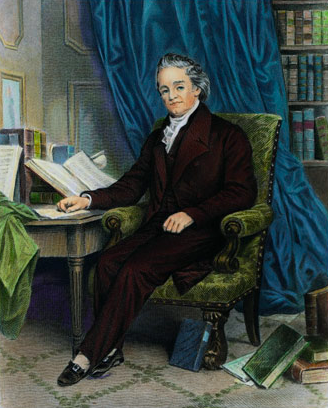
Few names in American history shaped the way people speak and write English like Noah Webster. Known as the “Father of American Scholarship and Education,” he worked hard to make American English different from British English. His most famous work, An American Dictionary of the English Language(1828), helped set national standards for spelling and usage. Webster also played a key role in developing textbooks and promoting education across the United States.
Early Life And Education
Noah Webster was born on October 16, 1758, in West Hartford, Connecticut, into a hardworking but modest family. His father, Noah Webster Sr., worked as a farmer and weaver, while his mother, Mercy Steele Webster, cared for their home and children. The Websters placed great value on education, even though they did not have much money. From a young age, Noah showed a strong interest in reading and learning.
At first, Webster attended a local one-room schoolhouse, where basic subjects were taught. He later prepared for college by studying Latin and other advanced topics with a local minister. In 1774, at the age of 16, Webster entered Yale College, one of the few institutions of higher learning in colonial America. His time at Yale took place during the American Revolutionary War, which caused several disruptions. Because of the war, some classes were moved to different towns, but Webster continued his education with determination.
While at Yale, Webster studied subjects like history, languages, and philosophy, and he read many classical works. He graduated in 1778, after four years of study. Even though he completed college, he could not immediately pursue a law degree due to financial problems, so he turned to teaching for a while after his education.
Career
After graduating from Yale in 1778, Noah Webster first worked as a teacherin Connecticut. He found that the schoolbooks at the time were mostly British and not suited for American students. This led him to create materials that better fit American culture and values. In 1783, he published his famous textbook, “A Grammatical Institute of the English Language,”which included a spelling book, a grammar, and a reader. The spelling book, later known as “The Blue-Back Speller,”became one of the most widely used schoolbooks in the United States and helped millions of children learn to read and spell.
Webster believed that language could help unite the new American nation, so he worked to create an American version of the English language. In the 1790s, he began publishing essays and starting newspapers to share his views on education, language, and politics. He supported a strong national government and used his writing to influence public opinion.
His most important work was “An American Dictionary of the English Language,”which he published in 1828after more than 20 years of research. He studied many languages, including Latin, Greek, and Hebrew, to better understand word origins. His dictionary included over 70,000 words, many with new American spellings, like “color” instead of “colour” and “center” instead of “centre.” This work helped shape American Englishand set it apart from British English.
Webster continued to write and publish until his death in 1843. He left a lasting impact on American education, language, and national identity.
Latest Articles
Popular Articles