Nathan Daboll: The Self-Taught Mathematician Who Shaped Early American Education
Explore the life of Nathan Daboll, a remarkable American educator and author known for his popular arithmetic books that influenced generations of students in early America.
Jul 28, 20251.2K Shares66.3K Views
Biography
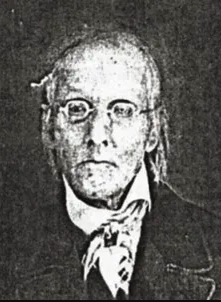
Nathan Dabollwas born on April 24, 1750, in Groton, Connecticut. Some records based on the old calendar list his birth as May 5, 1750, but the date April 24 is widely accepted. He was born into a family of English descent. Daboll had little formal schooling in his early years, but he was very interested in learning, especially in mathematics. He worked as a cooper(a person who makes barrels), but he taught himself mathematics while doing other jobs. His natural talent for numbers and calculations became clear at a young age, and this skill would shape his entire career.
In 1771, Daboll began working with a printer and publisher named Samuel Greenin New London, Connecticut. Green asked Daboll to help create a New England almanac, which was a small yearly book that included calendars, weather predictions, moon phases, tide charts, farming tips, and even jokes or short essays. These almanacs were very popular with farmers and sailors in colonial America. At first, Daboll wrote under the pen name "Edmund Freebetter"because he wanted to separate his personal life from his writing. Later, around 1793, he began using his real name. His almanacs were known for being accurate, clever, and full of useful information. During the time of the American Revolutionary War, his almanacs even included pieces of political satire, which made them even more popular among people who supported independence.
Around 1779, Nathan Daboll married his cousin, Elizabeth Daboll. The couple had two children. Their daughter’s name was Lydia, and their son, also named Nathan, followed in his father’s footsteps and became well known in his own right for his work as a judge, state legislator, and mathematician.
In 1799, Daboll published a math textbook called “Daboll’s Schoolmaster’s Assistant”, which became one of his most important works. This textbook was written especially for American students. Before that, many schools in the United States used English books that included English currency and measurements. Daboll’s book was different because it used American currency and local examples. It helped students learn practical math they could use in everyday life, such as how to measure land, keep financial records, and do business calculations. In 1814, Daboll released an updated and expanded versionof the book. The textbook became one of the most widely used math booksin American schools during the early 19th century. It stayed in use for many years and influenced how math was taught across the country.
In addition to writing, Nathan Daboll opened and ran a navigation schoolin New London, Connecticut. This school trained merchant seamenin nautical navigation and astronomy. He taught about 1,500 sailorsduring his lifetime, helping them learn how to sail long distances using math, maps, and the stars. Daboll was so respected in this field that in 1811, he was invited to teach navigation to midshipmenaboard the American naval ship USS Presidentat the request of Commodore John Rodgers, a top naval officer of the time.
Nathan Daboll was known not only as a talented mathematician and teacher but also as a humble and practical man. He never became rich or famous in the modern sense, but his work was widely respected by students, teachers, and sailors across the country. Even many years after his death, his name continued to be remembered in American culture. The famous American author Herman Melvilleeven mentioned him in his novel “Moby-Dick”in 1851. In that book, Melville wrote that “devils can be raised with Daboll’s arithmetic,” showing how well-known and influential Daboll’s math book was, even in literature.
Death
Nathan Daboll died on March 9, 1818, in his hometown of Groton, Connecticut, at the age of 67. He was buried in the area and remembered for his deep contribution to education, publishing, and navigation. Through his writing, teaching, and the thousands of students he influenced, Nathan Daboll left a lasting legacy that helped shape American math education during the nation’s early years
Latest Articles
Popular Articles