Inside The Chilling Case Of Matthew Steven Johnson: DNA Links Serial Killer To 3 Brutal Murders
Matthew Steven Johnson was sentenced to 180 years in prison for killing three women in Hartford. Learn how DNA evidence, expert testimony, and brutal crime scene details led to his arrest and conviction.
Jul 27, 202558.7K Shares996.3K Views
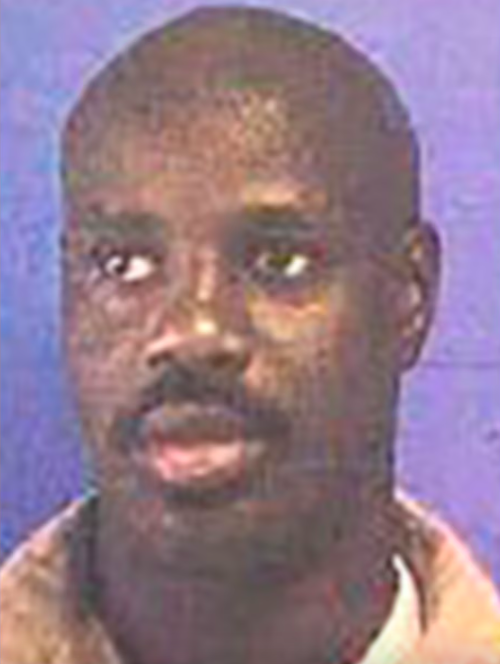
Matthew Steven Johnsonshocked Hartford, Connecticut, when a wave of brutal murders exposed his violent trail. Between 2000 and 2001, he targeted vulnerable women, killing at least three sex workers in a chilling pattern of strangling and stomping. It took nearly two years before DNA evidence linked him firmly to the crimes. Finally arrested in 2002, he would go on to receive consecutive life sentences, totaling 180 years behind bars. His case stands as a stark reminder of how forensic science and persistence can end a serial killer’s reign.
Early Life
Matthew Steven Johnson was born on May 24, 1963, in Hartford, Connecticut, growing up in the Blue Hills and Asylum Hill neighborhoods. He was one of ten children and had a twin brother. At age 12, he lost sight in one eye after being shot with a pellet gun. Teachers called him friendly as a young child, but also noted he could be very angry and had trouble handling being told “no.”
As a young teen, Johnson was admitted several times to Connecticut Children’s Medical Center for evaluations. He did well in music and gym class, but his schoolwork suffered due to an intellectual disability. He also had seizures and took medication for them. Testing showed his IQ was 69.
By age 17, Johnson felt depressed and began mixing drugs and alcohol. He stopped taking his medicine because it made him feel dizzy. He later earned a high‑school equivalency diploma and worked as a laborer.
Crimes
Matthew Steven Johnson murdered at least three womenin Hartford, Connecticut between 2000 and 2001. All three were female sex workers in their thirties who struggled with drug addiction. Their bodies were found in secluded areas within about one mile of each other. Each victim died from blunt force trauma to the head and neck, often after being strangled and stomped. Crimes described by experts as extremely violent.
- On April 16, 2000, Aida Quinones(age 33) was found lay face down near an overpass. Her clothing was ripped, her body covered with dirt, and her skull was crushed. DNA matching Johnson was found in her body fluids. Investigators believe the injuries were consistent with stomping and manual strangulation.
- On August 29, 2000, Rosali Jimenez(age 32) was discovered in an abandoned building’s basement. Her shirt was pulled up, pants down, face covered in blood, and a shoe print was visible on her arm. DNA from Johnson was found inside her mouth and under her fingernails. Her head and neck showed clear signs of stomping and blunt force trauma.
- On July 22, 2001, Alesia Ford(age 37) was found near a loading dock. She had serious head and face injuries, skull fractures, and signs of strangulation. Her shirt and underwear were pulled down. Semen and blood matching Johnson’s DNA were found on her abdomen, face, and under her chin.
Forensic experts concluded these three killings had strong similarities in victim profile, location, attack method, and DNA evidence. They called them serial killings, as his DNA was linked to all three scenes and there were time gaps between each crime.
Johnson was arrested on January 13, 2002, after DNA from semen, blood stains, and cigarette butts found with the victims matched his profile in a state DNA database. He faced trial on all three murder counts at once.
He was convicted by a jury and given three consecutive 60-year prison sentences, for a total of 180 yearsbehind bars. The Connecticut Supreme Court upheld the verdict and sentence in 2008.
Matthew Steven Johnson
Matthew Steven Johnson was arrested on January 13, 2002, after DNA from semen, blood stains, and cigarette butts found on the victims matched his profile in a state DNA database. This match came from samples collected at the crime scenes where Aida Quinones, Rosali Jimenez, and Alesia Ford had been found.
He faced a single trial for all three murder cases together. During the trial, forensic expert Dr. Henry Lee testified that the murders showed consistent patterns and that Johnson’s DNA appeared at all three scenes, strong evidence that tied him to each killing.
A jury found Johnson guilty on all three counts of murderin February 2004.
State law allows a maximum of 60 years in prison per murder. Because special circumstances applied, the judge imposed three consecutive 60-year terms, making a total of 180 years in prison. The Connecticut Supreme Court upheld both the verdict and the sentence in November 2008.
Latest Articles
Popular Articles