Henry B. Carrington: The Soldier, Scholar, And Frontier Builder
Explore the life of Henry B. Carrington, a Civil War officer and frontier leader known for his military service and deep knowledge of Native American history.
Jul 28, 20253.1K Shares126.6K Views
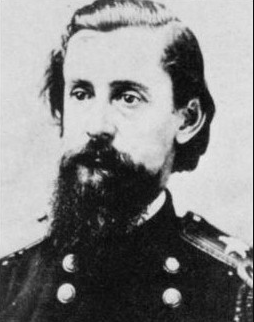
What kind of leader builds forts in the American West and records history for generations to come? Henry B. Carringtonwas a U.S. Army officer who led the construction of Fort Phil Kearny in 1866 to protect the Bozeman Trail during Red Cloud’s War. He also wrote many books on American wars and history, including works on the Revolution and Western Indian operations. His military service and writing made him a notable figure in both the battlefield and the study of American history.
Early Life
Henry Beebee Carrington was born on March 2, 1824, in Wallingford, Connecticut. He studied at Yale University, graduating in 1845, then attended Yale Law Schoolin 1847. After that, he practiced law in Columbus, Ohio, working alongside William Dennison, who later became governor of Ohio. During this time, Carrington was a strong opponent of slavery and helped build the new Republican Partyin 1854. By 1857, he was appointed Judge Advocate Generalin Ohio and then became Adjutant-General, leading the state's militia and reorganizing it.
Carrington’s early life and education laid the ground for his later leadership, teaching, and writing. He developed skills in law, public service, and organizing large groups, which served him well in his service during war and in his many later roles.
Civil War Service
Henry Beebee Carrington played a key role in the Civil War as a Union Army officer. When the war began, he organized ten militia regiments and set up the first twenty‑six Ohio infantry units. In May 1861, he was commissioned as colonel of the 18th U.S. Infantry and created Camp Thomas near Columbus, Ohio, to train troops.
In 1862, Indiana’s governor asked him to organize that state's volunteer regiments. Carrington formed a spy network to uncover rebel sympathizers and secret groups working against the Union draft. Over the course of that work, he mustered more than 100,000 soldiers and cracked down on opposition. In November 1862, he was promoted to brigadier general of volunteers and took command of the District of Indiana in the Department of the Ohio. Under his leadership, military tribunals and intelligence operations targeted underground groups, especially those thought to obstruct the war effort.
Despite his success in managing forces and intelligence, some of his methods like arrests and military trials of civilians later faced legal challenges. The Supreme Court eventually ruled these tribunals illegal, but Carrington remained in his post until 1865, when he was mustered out of volunteer service.
Carrington rejoined the 18th U.S. Infantry in 1866 and continued his military service in the West. He oversaw construction of forts along the Bozeman Trail, but his civil war assignments officially ended in 1870 when he retired from active duty.
Jump to
Latest Articles
Popular Articles