Gilbert Eastman: A Pioneer In Deaf Theater And Visual Communication
Learn about Gilbert Eastman, a groundbreaking figure in Deaf theater who helped shape visual storytelling and inspired generations through his work in education, television, and performance.
Jul 28, 20255.6K Shares194.6K Views
Biography
Gilbert Charles Eastmanwas born on September 12, 1934, in Middletown, Connecticut. He became deaf early in life, though his exact age at the time of hearing loss is not recorded in public sources. He was raised in a hearing family. As a child, he struggled with communication because his family did not use sign language. Most of their communication was limited to lip-reading, writing, or fingerspelling. This experience of limited access to language in his early years had a strong impact on him and would later shape his work in Deaf culture and theater.
Eastman attended the American School for the Deafin West Hartford, Connecticut, and graduated in 1952. This school played an important role in his education and development. After completing high school, he enrolled at Gallaudet University, the only liberal arts college for deaf students in the United States at the time. He graduated from Gallaudet in 1957with a Bachelor of Arts degree in Art. After graduating, he was asked to help start a drama program at Gallaudet, which later grew into the university’s Theatre Arts Department.
He went on to study further at the Catholic University of Americain Washington, D.C. There, he earned a Master of Fine Arts (MFA) in Drama, becoming the first deaf person in the worldto receive this degree. His training in drama, combined with his personal experience as a deaf person, gave him the tools to develop a new form of storytelling for the stage.
During the 1960s, Eastman helped to create the National Theatre of the Deaf (NTD), a professional theater company that combined American Sign Language (ASL) with spoken English. The NTD gave deaf actors a national platform and showed hearing audiences the beauty of ASL. Eastman worked with the group as an actor, writer, stage manager, and teacher. His work with the NTD helped bring sign language and deaf culture to the stage in a new and creative way.
One of Eastman’s greatest contributions to deaf theater was his development of Visual Gestural Communication (VGC). This was a style of acting and teaching that did not depend on spoken words. Instead, it used gestures, movement, and facial expressions to tell stories. He believed this visual language could be understood by both deaf and hearing people around the world. Eastman taught VGC widely and wrote a book called "From Mime to Sign", which explained how VGC worked and how it could be used in acting and education.
As a playwright, Eastman wrote and directed many plays. One of his most famous works is "Sign Me Alice", a play based on "Pygmalion"and "My Fair Lady", but told through sign language. In the play, a deaf woman learns to speak and sign clearly, showing the different values and strengths of deaf and hearing worlds. He also translated classic plays such as "Antigone"into ASL so deaf actors and audiences could enjoy important stories from literature and history.
Eastman was a professor of theater at Gallaudet Universityfor many years. He taught there from 1957to the early 1990s, serving as head of the departmentstarting in 1963, and later became professor emeritusafter retiring. He was loved by his students and respected by his colleagues for his creativity, leadership, and deep care for the deaf community.
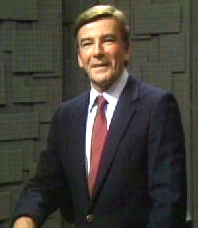
In addition to his work in theater, Gilbert Eastmanco-hosted the television program Deaf Mosaic, a news and culture show for and about the deaf community. The program aired from the late 1980s into the 1990sand was produced by Gallaudet University. His work on the show earned him a regional Emmy Award in 1993, one of the highest honors in television.
He was married to June Russi, a deaf actress. Together they had two daughters, Alisonand Ingrid, and he was also a grandfatherlater in life. Gilbert Eastman received several awards for his work. In the early 2000s, he was awarded an honorary doctoratefrom Gallaudet University. In 2006, he was inducted into the American School for the Deaf Hall of Famefor his lasting influence on deaf education and the arts.
Gilbert Eastman passed away on December 2, 2006, in Bethany Beach, Delaware, after battling cancer. He was 72 years old. His death was deeply felt by many in the deaf and theater communities. He left behind a strong legacy. Through his teaching, acting, writing, and advocacy, he opened doors for future generations of deaf performers and helped shape how deaf culture is shared and celebrated.
Jump to
Latest Articles
Popular Articles