Floyd Little: The NFL Legend Who Saved The Denver Broncos
Explore the inspiring journey of Floyd Little, the Hall of Fame running back who became the heart of the Denver Broncos and left a powerful legacy both on and off the field.
Jul 23, 202523.5K Shares672.5K Views
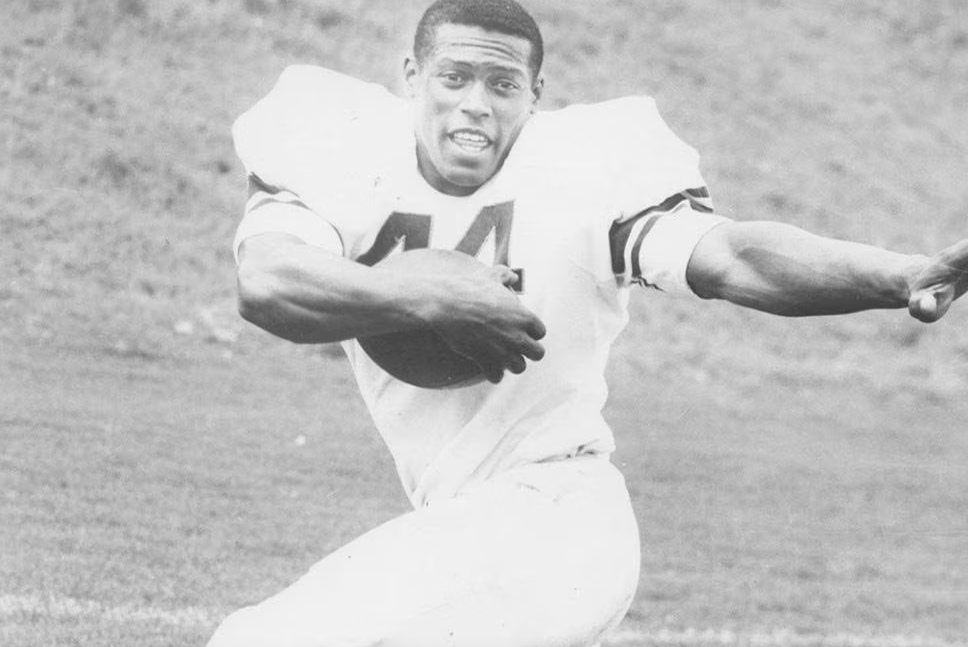
Floyd Littlewas born on July 4, 1942 in New Haven, Connecticut. He was the youngest of four children and grew up in a working-class family. His father served in World War II and passed away when Floyd was about six years old. After his father died, Floyd began helping his family by delivering newspapers, washing cars, and shining shoes while still a child.
He attended Hillhouse High School in New Haven, where he took part in football, basketball, and track. He became a well-known athlete in Connecticut and earned All State honors in football. At one point, his behavior led to him being expelled from school, but Bob Schreck, a teacher and later principal, helped him return and guided him to become a leader as a class president in junior high.
After Hillhouse, Floyd enrolled at Bordentown Military Institute in New Jersey. He was the first African-American student at the school, and he worked while studying and playing football as well as other sports. He used that time to prepare for college both academically and athletically.
He received many scholarship offers from top colleges. He chose to attend Syracuse University, encouraged by Ernie Davis, the first African-American Heisman Trophy winner, who visited Floyd at home and personally urged him to join Syracuse.
College Career
Floyd played football for Syracuse University from 1964 to 1966, and he was the only Syracuse running back to be named an All American three times. In 1964, he ran for 874 yards on 149 carries with 9 touchdowns, and also caught 16 passes for 257 yards and 1 touchdown. He helped his team on punt and kickoff returns and even threw a touchdown pass. That same year he totaled 1,686 all-purpose yards, averaging about 168 yards per game, and scored five touchdowns in a single game against Kansas, setting him apart early in his college career.
In 1965, he became the first Syracuse player to rush for over 1,000 yards, finishing with 1,065 yards on 193 carries, and scored 14 rushing touchdowns. He also had 21 catches for 248 yards and 1 touchdown. That year he led the whole country in total touchdowns (19) and scored 114 points, while also becoming the first Syracuse player to exceed 2,000 all-purpose yards in a season. He tied the school record for receptions and returned punts and kicks for big plays, including a 95-yard punt return, which remains a Syracuse record. He finished 5th in the Heisman voting and was again named an All American.
In his final season of 1966, Floyd was team captain and earned All America and ECAC Player of the Year honors. He rushed for 811 yards on 162 carries, with 12 rushing touchdowns, and added 13 catches for 186 yards and 2 touchdowns, along with one punt return touchdown. He shared the backfield with fellow great Larry Csonka but still earned 5th place in the Heisman voting again. That year featured a standout performance in the Gator Bowl, where he rushed 29 times for 216 yards and 1 touchdown.
Over his three-year career at Syracuse, Floyd totaled 2,704 rushing yards and scored 46 total touchdowns, setting school records. He also had four punt returns for touchdowns, another record, and finished his college career as the program’s all-time leader in both rushing yards and touchdowns.
Professional Career
Floyd joined the Denver Broncos in 1967 as a first-round draft pick (6th overall). In his rookie year, he was chosen as a team captain, becoming the last Broncos rookie to earn that honor until 2024.
He played nine seasons (1967–1975) all with Denver. He retired in 1975 as the franchise’s all-time leading rusher, finishing with 6,323 rushing yards and 54 total touchdowns (including rushing, receiving, returns).
In 1967, he led the AFL in punt return average (16.9 yards), and in 1967 and 1968 he led the league in combined yards (rushing + receiving + returns).
He was the first Bronco to win a rushing title when he led the AFC in rushing in 1970 with 901 yards, and in 1971 became the first Bronco to rush for over 1,000 yards (1,133), which led the entire NFL.
In 1968, he set a franchise record in a game by catching four passes for 165 yards, including a 66-yard touchdown, giving him a 41.25 yards per reception average that still stands.
He was named:
- First-team All-AFL in 1969
- Pro Bowl selections in 1970, 1971, and 1973
Though he was smaller than most backs at 5′10″ and 195 lbs, he still led the league in rushing or scrimmage yards repeatedly and was a powerful contributor during his career.
Over the six-year span from 1968 to 1973, he gained more total yards than any other running back in the NFL.
Floyd was known as “The Franchise” because his decision to sign with Denver helped keep the team in place and motivated local support to fund Mile High Stadium improvements.
He was inducted into the Denver Broncos Ring of Fame in 1984 and later into the Pro Football Hall of Fame in 2010, becoming one of only five players in the Super Bowl era to enter the Hall of Fame without ever playing in a postseason game.
Season stats summary:
- 117 games, 1,641 carries, 6,323 rushing yards (3.9 avg), 43 rushing TDs
- 215 catches for 2,418 yards (11.2 avg) and 9 receiving TDs
- 81 punt returns (11.0 avg) with 2 return TDs
- 104 kickoff returns (24.3 avg) overall with no touchdowns
- 54 total touchdowns
Latest Articles
Popular Articles