Charles Ives: The American Composer Who Broke The Rules
Explore the life and legacy of Charles Ives, a bold American composer known for his unique sounds, early struggles, and lasting impact on modern classical music.
Jul 23, 20253.1K Shares319.3K Views
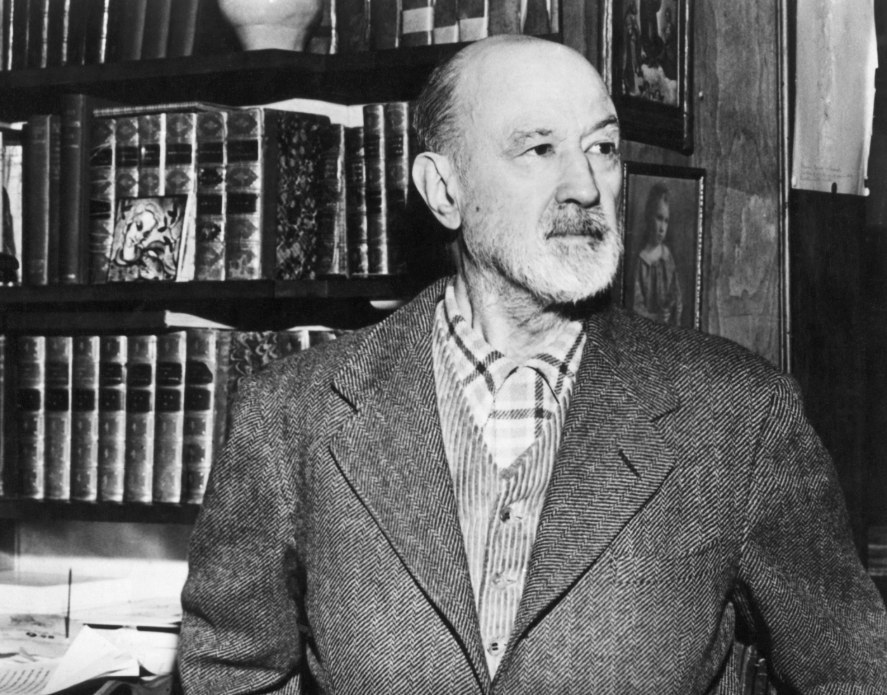
When you listen to Charles Ives’s music, you might feel swept up in a surprising mix of sounds, marching bands, church hymns, and bold dissonance woven together. Born in Danbury, Connecticut in 1874, he crafted music that did not follow the usual rules. While most composers looked to Europe for their style, Ives created a voice that felt distinctly American. In his private time, even as he ran an insurance business, he wrote many works that only gained fame late in life. Pieces like The Unanswered Questionand Three Places in New Englandshow how he used new methods, polytonality, polyrhythm, tone clusters—to push music forward. His bold blend of everyday sounds and musical traditions made him one of America’s most important composers of the 20th century.
Early Life
Charles Edward Ives was born on October 20, 1874, in Danbury, Connecticut, into a family well-known for its civic and business contributions. His father, George Ives, had led a Union Army band during the Civil War and was deeply involved in music and teaching in their hometown. From a young age, Charles listened to his father’s band playing in the town square while other local bands played nearby. These sounds mixed in the air and shaped his early musical ideas.
His father taught him music theory and encouraged him to experiment with unusual harmonies, even having young Charles sing a melody in one key while playing the accompaniment in another. This helped spark his interest in new musical ideas. By age 14, Charles became the youngest professional church organist in Connecticut and had already composed hymns and songs, including his Variations on “America” for a Fourth of July event.
In 1893, he started school at Hopkins Grammar School in New Haven, and in September 1894 he entered Yale University to study composition under Horatio Parker, a leading American composer. Only a month after starting Yale, his father passed away—a blow that deeply affected him—but he kept composing and exploring music in new ways.
At Yale, Charles kept composing, including a church music piece for the 1896 presidential campaign. He joined student societies and even played football, though his passion remained in music. Under Parker’s guidance he completed his First Symphony as his senior thesis, though his real musical ideas continued to grow from what his father first taught him.
Musical Career
Charles Ives began composing music in his early teens and served as a church organist by age 14. After graduating from Yale in 1898, he took a job at an insurance company in New York but continued composing in his spare time. Between about 1901 and 1915, he created many of his most famous pieces including Second Symphony (1900–02), From the Steeples and Mountains (1901), The Unanswered Question (1908), Piano Sonata No. 2 “Concord” (1909–15), Fourth Symphony (1910–16), Central Park in the Dark (1907), and the orchestral set Three Places in New England (1903–14).
Even while leading a busy insurance career, he poured energy into composing, often working evenings and weekends. His music remained private until the 1920s and 1930s. Supporters such as Henry Cowell and Nicolas Slonimsky helped bring attention to his work by publishing and conducting it. His Third Symphony, written in the early 1900s, won the Pulitzer Prize in 1947, bringing him broad recognition.
Ives continued revising his earlier works after retiring from business in 1930. Mounting performances of pieces like Concord Sonata, Second Symphony, and Fourth Symphony gradually built his reputation. After his death in 1954, interest in his music grew even more, and today he is known as one of the most important American composers of the 20th century.
Reception
He was largely ignored during his life, with many works left unperformed even after his death in 1954. His bold use of experiments and sharp dissonance puzzled listeners and critics, while the complex rhythms in his orchestral pieces were hard to play and hard to accept.
In the 1930s and 1940s, a few champions, Henry Cowell, Elliott Carter, Aaron Copland, Nicolas Slonimsky, and Lou Harrison, began promoting his work by publishing scores and organizing performances. The 1939 premiere of the Concord Sonata and Henry Cowell’s articles helped change opinions.
A defining moment came in 1946, when his Third Symphony was first performed, and in 1947 it won the Pulitzer Prize, elevating his reputation.
After retiring in 1930, Ives revised earlier works, and growing performances of Second and Fourth Symphonies built his legacy. By the end of the 20th century, he was widely seen as one of America’s most important classical composers.
In the 21st century, festivals and reappraisals highlighted his mastery of mixing hymn tunes, folk elements, and modern techniques. Critics like Arnold Schoenberg, Igor Stravinsky, John Cage, and Leonard Bernstein praised his originality and influence, cementing his place in music history.
Latest Articles
Popular Articles