Benedict Arnold: From Revolutionary War Hero To America's Most Famous Traitor
Discover the dramatic story of Benedict Arnold, a brave American general whose bold actions shaped the Revolution, only to shock the nation with betrayal. Learn how his early victories turned to lasting controversy.
Jul 23, 202557.3K Shares856.5K Views
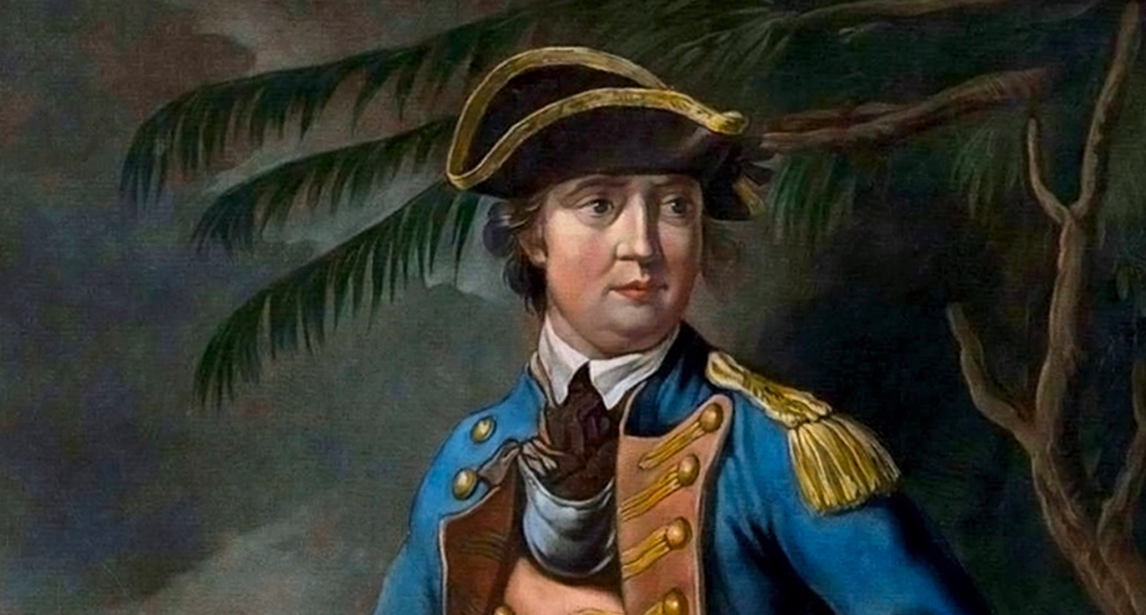
Benedict Arnoldbegan the American Revolution as one of its most fearless generals, winning praise for bold victories at Fort Ticonderoga and Saratoga. Known for daring leadership and unmatched energy, he earned the respect of George Washington and fellow soldiers. But in 1780, Arnold shocked the colonies by crafting a secret plan to hand over West Point to the British, forever changing how history remembers him. His name now stands as the ultimate symbol of betrayal in American culture—a legacy born from both bravery and betrayal.
Early Life
Benedict Arnold was born on January 14, 1741, in Norwich, Connecticut, into a family that once had plenty of money but lost much of it after bad business deals. His mother was from a well-off family, but after her death in 1759 his father turned to drinking and the family money disappeared. As a young boy, he went to Town schools in Canterbury, but when his family could not afford tuition, he left school at age 14 and began working as an apprentice in his cousins’ apothecary shop.
When Benedict was sixteen, he joined a Connecticut militia to fight in the French and Indian War in upstate New York. His mother had recently passed away and his father fell deeper into alcoholism. Arnold took care of his sister Hannah and helped manage the household after his parents died—his father in 1761 and his mother in 1759.
By the early 1760s, Arnold moved to New Haven, Connecticut. He started his own business selling medicine and books, later expanding into trade ships traveling to the West Indies, Canada, and New England. He earned wealth through commerce and even took risks at sea, including a heated duel with a British captain over insults. In 1767, he married Margaret Mansfield and they had three sons in the following years.
This mix of early hardship, military service, and merchant success shaped the ambitious and bold man who would later rise to fame and infamy in American history.
French And Indian War
When Benedict Arnold was sixteen, he joined the Connecticut militia to serve in the French and Indian War in upstate New York. He marched toward Albany and Lake George, where the French had just won at Fort William Henry. That campaign ended quickly, and Arnold only served for about thirteen days before turning back home. Historians note some unclear evidence that he deserted from the militia in 1758, but it is not certain.
Despite the short service, this experience began Arnold’s involvement in military life. He later used what he learned during the French and Indian War in the Revolutionary War, where his leadership became much more important.
Colonial Merchant
Benedict Arnold established himself in business in 1762 as a pharmacist and bookseller in New Haven, Connecticut, with the help of the Lathrops. He was hardworking and successful, and was able to rapidly expand his business. In 1763, he repaid money that he had borrowed from the Lathrops, repurchased the family homestead that his father had sold when deeply in debt, and re‑sold it a year later for a substantial profit. In 1764, he formed a partnership with Adam Babcock, another young New Haven merchant. They bought three trading ships, using the profits from the sale of his homestead, and established a lucrative West Indies trade.
During this time, Arnold brought his sister Hannah to New Haven and established her in his apothecary to manage the business in his absence. He traveled extensively in the course of his business throughout New England and from Quebec to the West Indies, often in command of one of his own ships. Some sources allege that on one of his voyages he fought a duel in Honduras with a British sea captain who had called him a "damned Yankee, destitute of good manners or those of a gentleman." The captain was wounded in the first exchange of gunfire, and he apologized when Arnold threatened to aim to kill on the second. However, it is unknown whether this encounter actually happened.
The Sugar Act of 1764 and the Stamp Act of 1765 severely curtailed mercantile trade in the colonies. The Stamp Act prompted Arnold to join the chorus of voices in opposition, and also led to his joining the Sons of Liberty, a secret organization which advocated resistance to those and other restrictive Parliamentary measures. Arnold initially took no part in any public demonstrations but, like many merchants, continued to do business openly in defiance of the acts, which legally amounted to smuggling. He was convicted of disorderly conduct for roughing up a man suspected of informing authorities and was fined only 50 shillings.
Revolutionary War (American Service)
When the American Revolutionary War started in April 1775, Benedict Arnold was a captain in the Connecticut militia. Right after the battles of Lexington and Concord, he quickly went to Cambridge, Massachusetts, with his company. There, he suggested an attack on Fort Ticonderoga in New York because it had many cannons but was poorly guarded. Arnold got permission and joined Ethan Allen and his Green Mountain Boys. They captured the fort on May 10, 1775, without much fighting.
Later that year, Arnold led a hard march through Maine to try and take Quebec. The journey was long and full of trouble—many men died or turned back. When Arnold reached Quebec in November, he had fewer than 600 men. They attacked the city on December 31, 1775, but the British won. Arnold was wounded, and General Richard Montgomery was killed. After the failed attack, Arnold kept up the siege for months until the Americans finally withdrew in spring 1776.
Even though the mission failed, Arnold was praised for his bravery and leadership. In October 1776, he helped build and lead a small fleet on Lake Champlain and fought the British in the Battle of Valcour Island. His ships were defeated, but his actions delayed the British advance. This helped American forces later win the Battle of Saratoga in 1777.
Arnold played a big role in that battle. He argued with General Horatio Gates about strategy, but he disobeyed orders and led a bold charge that helped win the fight. Arnold was seriously wounded in the leg, but his leadership was seen as a key reason for the American victory. However, he didn’t feel fully respected by Congress or other generals and grew bitter over time.
Latest Articles
Popular Articles