Shahid Bolsen Net Worth 2026: Career & Income
Shahid Bolsen Net Worth insights covering his career path, income streams, and how his online presence supports his finances.
Apr 23, 20261.8K Shares32.1K Views
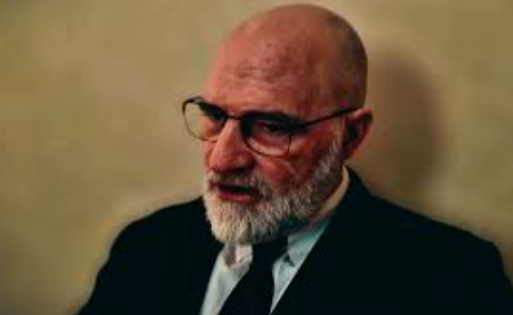
Shahid Bolsen was born Shannon Morris on June 5, 1971, in Boulder, Colorado. He grew up as one of three children in a Catholic family. His father left the family when Bolsen was about 12 years old (around 1983) to pursue a screenwriting career in California, after which Bolsen’s mother, Linda, raised him and his siblings on her own. The family faced financial hardship – for example, his mother took on two jobs to support the household.
As a boy, Bolsen was close to his younger brother (Sean) and helped support the family; the two brothers delivered copies of Boulder’s Daily Cameranewspaper in the early morning hours to make ends meet. Even in childhood he showed a strong concern for social issues. He spent long hours reading in the local library, particularly the works of Mahatma Gandhi and Martin Luther King Jr., reflecting an early awareness of racial and economic injustice.
Family members described him as stable and conscientious rather than troubled, noting that even as a teenager he was critical of consumerism and began participating in community work (for example, helping homeless people). His family also recalled that through these experiences Bolsen “continued to search for a spiritual direction that fitted with his views on poverty.”
After finishing high school, Bolsen enrolled at Metropolitan State University of Denver, where he studied political science and took part in various social justice projects. His college years continued the pattern of activism seen in his youth.
| Fact | Details |
| Full Name | Shahid Bolsen (Shannon Morris) |
| Date of Birth | June 5, 1971 |
| Age | 55 (as of 2026) |
| Birthplace | Boulder, Colorado, USA |
| Nationality | American |
| Residence | Malaysia |
| Profession | Writer, Political Commentator |
| Education | Political Science, MSU Denver |
| Net Worth 2026 | Not publicly disclosed |
| Income Sources | Media platform, content, speaking |

Early Career And Professional Background
Shahid Bolsen is an American-born writer and activist who began his professional life in Muslim-focused outreach and analysis. Shortly after his release from a UAE prison in 2013, he joined the Global Anti-Aggression Campaign, an international anti-war umbrella group. In that role he served as a chief analyst, managing the organization’s English website and writing commentary on current events affecting Muslim communities.
The work involved researching conflicts in the Muslim world and producing English-language analysis pieces. He reports that this position was initially a way to use his skills after prison, but it was brief – he left the role once the website became a lower priority for the NGO. These early duties gave Bolsen experience in producing political analysis and solidified his interest in global affairs.
How Shahid Bolsen Entered Writing And Public Commentary
After his stint at the NGO, Bolsen turned fully to independent writing and social media commentary. Beginning in 2013–2014 he focused on the dramatic political changes in Egypt following the Arab Spring. He published analyses online about Egypt’s revolution and military coup, emphasizing economic and social justice issues. Bolsen actively sought to reach an Arab-speaking audience by translating his posts: he initially paid for online translation of his English essays into Arabic and later relied on volunteers to do so.
As his content spread, he attracted a growing following across the Middle East. By the mid-2010s his online presence had surged: news reports noted his blog gathered on the order of 50–60 thousand subscribers, particularly among young Egyptians frustrated with the political status quo. This combination of blogging and social media allowed Bolsen to transition from a behind-the-scenes analyst into a visible commentator, writing his own narratives about Middle Eastern affairs.
Transition Into Political And Social Commentary
Over time Bolsen expanded the scope of his commentary beyond Egypt. By the late 2010s he was regularly speaking and writing on broader geopolitical and ideological issues. He began addressing topics like U.S. foreign policy, Western culture, and global power dynamics from an explicitly Muslim perspective. In early 2021 he formalized his media activities by launching Middle Nation, a digital platform featuring video essays, podcasts, and articles on global politics.
Under the Middle Nation banner, Bolsen presents himself as a “political commentator” analyzing world events through the lens of Islam and anti-imperialism. The platform covers diverse subjects – from analysis of U.S. democracy to critiques of European institutions – all geared toward a primarily Muslim audience. In interviews and livestreams, he discusses current events, positioning himself as a voice critiquing Western narratives and promoting what he calls the political independence of the Muslim world. His presence in these forums (and on associated social media channels) reflects a shift to multimedia activism, where he blends writing with video talks, podcasts, and participation in online symposiums.
Key Themes In Shahid Bolsen’s Work And Public Statements
Bolsen’s writings and speeches consistently revolve around anti-imperialism, economic justice, and Islamic identity. He frequently portrays Western governments and corporations as agents of neo-colonial control, arguing that regions like Egypt are being “invaded and occupied by a neoliberal crusade”. In his view, ordinary economic entities – banks, foreign-owned factories, fast-food chains – become symbols of that control.
For example, he has labeled Kentucky Fried Chicken outlets “symbols of U.S. capitalism” in Egypt, and explicitly urged non-violent “off-hour” campaigns against such businesses to pressure foreign powers. Bolsen emphasizes redirecting activism from street protests to economic disruption: he has called for a “campaign of targeted system disruption against multinational corporations” in order to “slash profits” and force them to withdraw support for authoritarian regimes.
He frames this strategy as an “alternative jihad” of economic resistance rather than physical violence. True to that intent, Bolsen stresses avoiding bloodshed: as he told critics, he only advocates hitting profit (corporate bottoms lines) rather than human lives. In his own words, it is “entirely inaccurate” to say he preaches violence unless one equates lost profit with lost life. He insists all his suggested tactics involve disruption without bloodshed.
At the same time, Bolsen has dismissed conventional protests as ineffective or even counterproductive. He has described peaceful demonstrations as “futile,” merely an opportunity “to get arrested or shot” by security forces. This rhetoric underscores his skepticism of Western-style protest methods.
In public statements he also champions Islamic values; at least once he explicitly labeled himself an “Islamic supremacist,” arguing that Islam does not force conversion while Western countries often impose their beliefs abroad. Throughout his work, Bolsen’s tone blends sharp criticism of Western and capitalist systems with calls for Muslim empowerment.
He invokes concepts like decolonization and economic sovereignty, encouraging workers’ organization and labor tactics as paths to democracy and justice in countries like Egypt. In sum, his key messages are that Muslim-majority societies have the right to self-determination free from foreign domination, and that resisting that domination can and should occur through nonviolent pressure on global capital, rather than futile street demonstrations or sectarian conflict.
Career Development And Online Presence
Since 2021, Shahid Bolsen has devoted himself to building his personal media brand. Middle Nation serves as his primary professional outlet. On this platform he produces regular content: weekly podcasts, lengthy YouTube lectures, and written analyses on current affairs. The YouTube channel, in particular, advertises him as a political commentator on global Muslim affairs, and his videos often receive thousands of views. His online reach is substantial for an independent commentator.
By August 2023 he had around 16,000 YouTube subscriberson Middle Nation. His social media following is also notable: he reports over 51,000 Facebook followersand more than 8,300 Twitter followersas of 2023. (He announced in early 2021 he would quit mainstream social platforms like Facebook and Twitter, but in practice he remains active on those and others.) In addition to Facebook and Twitter, Bolsen engages with audiences via Telegram channels, TikTok, and a Substack/Medium blog. He frequently streams live discussions (sometimes announced on those networks) and invites listeners to book discussions or live podcasts.
Bolsen’s career also includes guest appearances on other media. His analyses have been featured on podcasts by fellow Muslim commentators, and he has been interviewed on TV and online shows about Middle East politics. These collaborations have increased his visibility: even local Denver media noted that a New York Times feature in 2015 “raised Bolsen’s profile nationally and internationally, for better or worse”.
Additionally, think-tank studies and academic podcasts have cited his views when examining the Egyptian opposition; for instance, the Hudson Institute’s Egypt analysis describes his strategy for resistance. In summary, Bolsen’s career development has been driven by building and maintaining his own channels of communication, through which he has become a recognized commentator.
Controversies And Public Criticism Surrounding His Career
Bolsen’s career has been shadowed by multiple controversies. A major theme is the criticism that his rhetoric incites political violence. In 2015 a New York Times profile depicted him as “the unlikely apostle” of an extremist mix of anti-globalist and Islamist ideas, suggesting his blog inspired attacks on businesses in Egypt.
That article quoted him calling nonviolent protest futile and accused him of encouraging assaults on KFC outlets, banks, and mobile phone shops. Bolsen has flatly rejected those characterizations. On social media he argued that his writings target profits, not people: “It is entirely inaccurate to claim that I have advocated violence, unless loss of corporate profit is now regarded as the same thing as loss of human life,” he insisted.
He denies supporting terrorism or bloodshed, and he consistently clarifies that his goal is economic pressure only. Journalists have noted this dispute: for example, the Denver alt-weekly Westwordreported that Bolsen felt misunderstood by the media narratives and that he had never promoted lethal attacks on civilians.
Another controversy involves Bolsen’s past legal case in the United Arab Emirates. In 2006 he was convicted of the killing of a German businessman and sentenced to death. After years in prison, the conviction was eventually reduced to manslaughter on appeal, and Bolsen was released in October 2013 after paying compensation to the victim’s family.
This history is often mentioned in the press, sometimes to question his credibility. Bolsen himself rarely speaks about the details, but media accounts have sometimes presented it in sensational terms. For instance, some profiles noted a bizarre murder plot in Dubai, which Bolsen disputes or refuses to discuss in depth. Observers point out that the case was resolved by a legal “technicality” and compensation payments, which Bolsen’s supporters view as evidence of his release being a pragmatic resolution rather than a straightforward vindication or conviction.
Bolsen has also courted controversy through his ideological language. In interviews he has described himself as a “Muslim supremacist,” a term that critics have seized on. He explained this by contrasting Islam’s belief in its own truth with his claim that Islam fundamentally forbids forcing faith on others. Many readers find this rhetoric provocative.
Furthermore, media outlets have sometimes gotten his background wrong, prompting corrections. For example, one report claimed Bolsen had worked as a newspaper reporter in Colorado; a local journalist later clarified that Bolsen actually worked in newspaper distribution, not as an editor. The discrepancies over his resume have been minor compared to the larger ideological disputes, but they illustrate the scrutiny he has been under.
Finally, Bolsen’s ties to certain groups have drawn attention. He had friendships with figures in Muslim Brotherhood-affiliated parties in exile, and he appeared as a guest on Islamist satellite channels. A study of Muslim Brotherhood media notes that pro-Brotherhood outlets in Istanbul invited him as a “radical figure” who advocated targeting foreign businesses.
Similarly, his early association with Safar al-Hawali’s Saudi-based Anti-Aggression Campaign is cited by critics as evidence of radical connections. Supporters of Bolsen argue that such networks are simply vehicles for anti-imperialist voices, while opponents point to them as proof of extremist leanings. In any case, these affiliations have fed into the polarized debate over his work: he is simultaneously cast by some as a dangerous instigator and by others as a courageous dissident speaking truths that no one else will in the open.
Shahid Bolsen’s Influence And Audience Reach
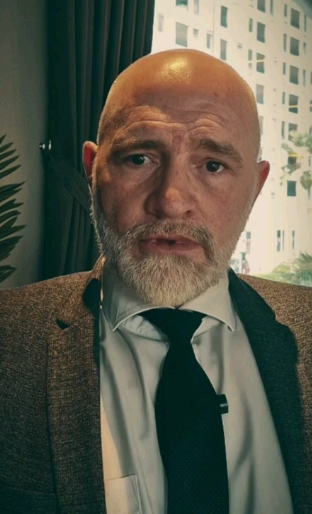
Bolsen’s influence is largely confined to online and activist circles, but within that space it is significant. Around 2015–2016, media accounts noted his blog had roughly 50,000–60,000 followers, primarily Egyptians and other Arab readers. Today his social media metrics remain in the five-figure range, reflecting a sustained though niche following.
As of mid-2023, he had about 51,000 followers on Facebookand 8,300 on Twitter, with even larger numbers on his Telegram channels. The Middle Nation YouTube channel he launched has accumulated nearly 16,000 subscribers. While these audiences are modest compared to mainstream media figures, they are sizeable for an independent commentator, especially given language and geographic divides.
Bolsen’s content is designed to resonate across the Global South, among disaffected Muslims and left-wing activists. In several interviews analysts noted that his sharp critiques struck a chord with young Islamists frustrated by authoritarian rule. Although he does not publish in academic or high-profile policy journals, his ideas have been discussed by scholars and think tanks.
The Hudson Institute and others have analyzed him in the context of Egyptian opposition strategy. Major news outlets (beyond the Times, including The Nationalin UAE) have covered his story, effectively amplifying his voice internationally. In short, Bolsen’s influence comes less from formal positions and more from the visibility of his online presence: he is a case study in how a blogger/commentator can gain transnational reach. The attention he has garnered – both supportive and critical – has made him one of the better-known American-born figures writing in Arabic about Middle Eastern politics.
Current Work, Recent Projects, And Professional Activities
In the early 2020s, Shahid Bolsen doubled down on his media work through Middle Nation. He continued producing video series, podcasts, and essays at a steady clip, often focusing on current crises. For example, he released a series of talks on U.S. decline (“American Erosion”), delivered lectures about international issues like Venezuela, and posted commentary on conflicts in Gaza and Ukraine.
In late 2023 and 2024 he remained active: he discussed the political situation in countries such as Malaysia (where he lives) and other parts of Asia, critiqued Western responses to Islamic causes, and reiterated his core critique of capitalism. He frequently appears as a guest on Islamic-oriented podcasts and Youtube shows, engaging with audiences on topics like the history of civilizations or the future of the Muslim world.
Throughout 2021–2026 Bolsen’s professional activities have not involved any formal corporate or government role; he is a self-published analyst. His projects are centered on content creation. Middle Nation and its associated outlets remain his sole enterprise. He occasionally teams up with other speakers for live events or collaborative videos, but there is no indication he holds an organizational title beyond “founder” or “editor” of Middle Nation.
Living in Malaysia since 2017, Bolsen uses that as his base of operations, though much of his work is remote and internet-based. He has continued to hone his writing, reportedly posting hundreds of articles to his blog, and to expand his video output. By 2026, Bolsen appears to be sustained by audience donations or platform monetization (typical for independent commentators), but there is no public data on this.
Shahid Bolsen Net Worth
As of 2026, Shahid Bolsen’s net worth has not been publicly disclosed, and no figures have been officially verified by major financial authorities. His income is primarily derived from his Middle Nation digital media platform, including his YouTube channel, as well as paid speaking engagements and consulting work. However, exact earnings figures remain undisclosed.
FAQs
Q1: Where Does Shahid Bolsen Currently Live?
Shahid Bolsen has been based in Malaysia since around 2017. He operates his media and commentary work primarily online from there.
Q2: What Is Shahid Bolsen Known For Professionally?
He is known for producing political commentary focused on global affairs, particularly issues affecting the Muslim world. His work often appears through his independent platform, Middle Nation.
Q3: Did Shahid Bolsen Work For Any Organizations?
Yes, after his release in 2013, he briefly worked with the Global Anti-Aggression Campaign. His role involved managing English-language content and political analysis.
Q4: What Type Of Content Does Shahid Bolsen Create?
He produces video lectures, podcasts, and written analyses on political and social issues. His content is منتشرed mainly through digital platforms like YouTube and blogs.
Q5: What Did Shahid Bolsen Study In College?
He studied political science at Metropolitan State University of Denver. His academic focus aligned with his later interest in global political issues.
Latest Articles
Popular Articles