What Was Randy Messner's Net Worth When He Died?
Randy Meisner Net Worth details, including earnings from the Eagles, royalties, and why no official figure was confirmed at the time of his death.
Apr 28, 20263.6K Shares72.3K Views

Randy Meisner was born on March 8, 1946, in Scottsbluff, Nebraska. He was the second child of Emilie (née Haun) and Herman Meisner, a Nebraska farm family who worked as sharecroppers. He had one sibling – an older sister named Carol. His childhood home was a family farm in the Lake Alice area near Scottsbluff. Meisner attended the local elementary school in Lake Alice and later transferred to Scottsbluff public schools for his secondary education.
Meisner grew up in a very musical household. His mother was a singer, and his grandfather was a classically trained violinist who taught him piano from a young age. He later recalled that his “musical family” background made music a constant part of home life. Around age 10, Meisner saw Elvis Presley perform on The Ed Sullivan Showand was deeply inspired; this experience motivated him to learn guitar. By about age 12 or 13 he had picked up an acoustic guitar and begun taking lessons.
Meisner’s early influences included country and rockabilly as well as 1960s soul. He has said that hearing performers like Elvis Presley and Conway Twitty on TV made him want to learn guitar. He also cited Motown and R&B artists – including Smokey Robinson and The Miracles, Mary Wells, the Temptations and Marvin Gaye – as important early inspirations. In this rural Nebraska setting, with a musical family and a steady diet of country and soul music, Meisner developed the skills and passion that would shape his later career.
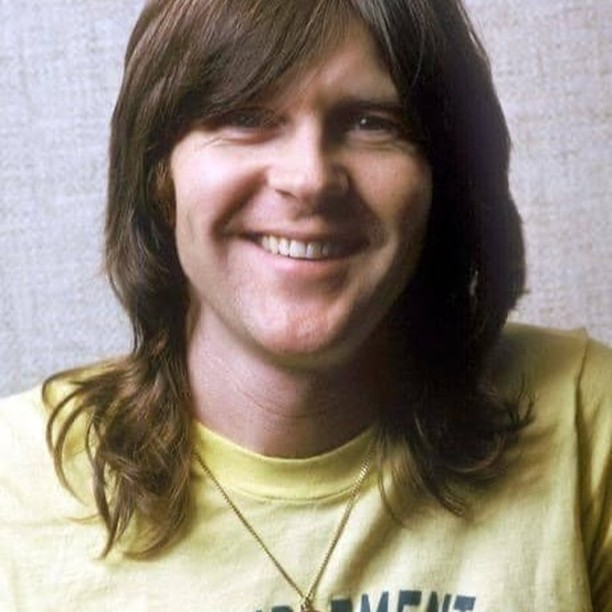
| Full Name | Randolph “Randy” Meisner |
| Born | March 8, 1946 |
| Birthplace | Scottsbluff, Nebraska, USA |
| Died | July 26, 2023 (age 77) |
| Profession | Bassist, Singer, Songwriter |
| Known For | Founding member of the Eagles and Poco |
| Major Albums | Eagles, Desperado, On the Border, One of These Nights, Hotel California |
| Hall of Fame | Inducted into the Rock & Roll Hall of Fame (1998) |
| Net Worth (2026) | Not publicly disclosed |
Early Career And Entry Into The Music Industry
Randy Meisner began performing professionally as a teenager in Nebraska. From 1961 to 1965 he played bass and sang lead in the local dance band The Dynamics (later The Drivin’ Dynamics).
The group released a self-produced EP (1962) and regional singles such as “So Fine” (1965), showcasing Meisner’s vocals. In 1966 he moved to Los Angeles and joined a hard-rock band called The Soul Survivors (soon renamed The Poor).
The Poor recorded several singles (on Loma and Decca Records) and even appeared on the soundtrack of the film Hell’s Angels on Wheels(1967). These early jobs built Meisner’s reputation as a reliable bassist and harmony singer in the Los Angeles music scene.
How Randy Meisner Started His Music Career
By the late 1960s, Meisner was working as a studio and touring musician. He performed session bass on landmark albums like James Taylor’s Sweet Baby James(1969) and Waylon Jennings’ Singer of Sad Songs(1970).
This steady work brought him to the attention of established artists. In 1971 he joined singer Linda Ronstadt’s backing band, which already included future Eagles members Don Henley, Glenn Frey, and Bernie Leadon. Serving as a live and studio sideman for Ronstadt gave Meisner major-label experience and set the stage for the next phase of his career.
The Bands And Early Experiences That Shaped His Career
In May 1968, Meisner auditioned for and won the bass slot in Poco, a new country-rock band founded by Richie Furay and Jim Messina. He played on Poco’s debut album Pickin’ Up the Pieces(1969) before departing the group during the final mixing sessions.
Soon afterward, in 1969 he joined Rick Nelson’s newly formed Stone Canyon Band. With Nelson he co-produced the live album In Concert at the Troubadour, 1969and co-wrote the song “I Wanna Be with You” for Nelson’s Garden Partyalbum.
These roles immersed Meisner in the burgeoning country-rock style. He then returned home to Nebraska briefly in 1970, but soon came back to Los Angeles to continue his career.
His steady work caught the attention of producer John Boylan, which led to Meisner joining Linda Ronstadt’s touring band in 1971 – a pivotal step that connected him with Henley, Frey and Leadon just before they formed a new group.
Joining The Eagles And Rising To Fame
In September 1971 Meisner co-founded the Eagles with Don Henley, Glenn Frey, and Bernie Leadon. The band signed to David Geffen’s Asylum label and released its self-titled debut album in 1972.
Over the next five years the Eagles became one of America’s premier rock acts. Meisner played bass and sang harmony on all five of the band’s early albums, and he also wrote or co-wrote songs on each.
The band’s sound – a blend of rock, country, and folk – proved hugely popular. Their 1974 album On the Borderand especially the 1975 LP One of These Nightsshot to No.1 on the Billboard charts.
That year Meisner co-wrote and sang lead on “Take It to the Limit,” which became the Eagles’ first platinum single. By 1976 the Eagles released Hotel California(another No.1 album, winning a Grammy Award for Record of the Year) and the compilation Greatest Hits (1971–1975)– the latter would go on to sell over 38 million copies in the US.
In reflecting on this era, the surviving Eagles later acknowledged that Meisner had been “an integral part of the Eagles and instrumental in the early success of the band,” praising his “astonishing” vocal range.
Randy Meisner’s Role As A Bassist And Harmony Vocalist
Within the Eagles, Meisner provided both rhythmic foundation and high harmonies. He partnered closely with drummer Don Henley, locking in basslines that often drew on R&B and soul influences.
For example, the sultry bass groove on “One of These Nights” and its soaring backing vocals came directly from Meisner’s style. At the same time his smooth falsetto voice was a hallmark of the band’s harmony sound.
He frequently took the lead on the slower ballads (“Tryin’,” “Take the Devil,” etc.) and provided that distinctive high harmony on up-tempo songs. His contributions were noted by the band: Eagles members later said his vocal range was “evident on his signature ballad, ‘Take It to the Limit’.”
Meisner himself said the group prided itself on precise studio work, recalling that for Hotel California“we were so precise and wanting to make it so perfect… we made sure we got it so good.” That attention to detail – and Meisner’s melodic bass and vocal parts – became key elements of the Eagles’ polished country-rock sound.
The Success Of “Take It To The Limit” And Career Growth
“Take It to the Limit” (1975) was Meisner’s standout success with the Eagles. Co-written by Meisner with Henley and Frey, it climbed to No.4 on the Billboard Hot 100, cementing his reputation as the band’s soaring lead singer.
The song’s demanding vocal climax became a live show highlight, but it also took a toll. By 1977 Meisner had grown exhausted from relentless touring, and he famously resisted performing the song’s high note in concert.
This tension came to a head at a Knoxville, TN, concert in 1977 when Meisner, ill and fatigued, refused to sing the encore “Take It to the Limit,” leading to an onstage altercation with Glenn Frey.
Shortly afterward, Meisner left the band. In a 1981 interview he explained, “I could have tripled my money if I’d stayed... but I was just tired of the touring... I thought I’d rather have sanity.”
Nonetheless, “Take It to the Limit” had already become a signature Eagles hit and showcased his talents to a wide audience. The song’s success also helped One of These Nightsgo platinum, propelling the Eagles into a new level of stardom and allowing Meisner to leave his mark on classic rock radio.
Major Career Milestones And Musical Achievements
Throughout the 1970s and beyond, Meisner’s work appeared on numerous hit records. He recorded on five multi-platinum Eagles albums and shared in the band’s Grammy win (for Hotel California). The Eagles’ compilation Greatest Hits (1971–1975)– made up of tracks to which Meisner contributed – became one of the top-selling albums ever.
After departing the Eagles, Meisner forged a modest solo career: he released a self-titled album in 1978 and One More Songin 1980. The latter yielded two U.S. Top 40 singles – notably “Hearts On Fire,” which reached No.19 on the Billboard Hot 100 – and featured a duet “Deep Inside My Heart” with Kim Carnes.
In the mid-1980s Meisner co-founded the country-rock supergroup Black Tie with Jimmy Griffin and Billy Swan. Their album When the Night Falls(1985) charted modestly (US Country LPs No.65) and produced the single “Learning the Game” (a Buddy Holly cover) which reached #59 on the U.S. Country chart.
In the 1990s he toured and recorded under the name Meisner, Swan & Rich (with Billy Swan and Charlie Rich Jr.), though those projects had limited commercial impact. In 1998 the Eagles were inducted into the Rock & Roll Hall of Fame, and Meisner joined Henley, Frey and Leadon onstage for the ceremony – a final public recognition of his role in the band’s history.
Career Legacy And Influence On Country Rock Music
Randy Meisner’s career left an enduring imprint on country-rock music. As co-founder of Poco (one of the genre’s first groups) and of the Eagles (its most successful ambassadors), he helped establish the California country-rock sound of the 1970s.
His melodic, R&B-tinged bass lines and his gentle high harmonies became defining features of that style. Fellow musicians and critics have pointed to his “winsome” falsetto and steady foundation as quietly shaping the Eagles’ timeless harmonies.
Meisner himself acknowledged the lasting appeal of the songs he helped create; in a 2016 interview he noted it was “just good to know that kids nowadays are listening to it. It’s long-standing music.”
In other words, the Eagles’ catalog – and by extension Meisner’s contributions – continued to find new listeners decades later. Today, he is remembered as a pivotal figure behind some of rock’s most enduring country-rock records. His bass work and vocal style remain benchmarks for the genre, and the songs he helped write and sing are staples of classic rock and country playlists.
Randy Meisner Net Worth
At the time of his death, Randy Meisner’s net worth was not publicly disclosed, and no figure has been officially verified by major financial authorities. His income was largely derived from music royalties and publishing. In particular, he retained a contractually guaranteed share of the proceeds from sales of the Eagles’ recordings after leaving the band in 1978.
He also earned songwriting and publishing royalties for songs he co-wrote and performed on, such as the Eagles’ “Take It to the Limit.” In addition, he released solo albums and toured with other groups, although specific earnings from those activities have not been made public.
FAQs
1. What Band Was Randy Meisner Most Famous For?
Randy Meisner is best known as a founding member of the Eagles. He played bass guitar and contributed high harmony vocals during the band’s early, most commercially successful years.
2. Why Did Randy Meisner Leave The Eagles?
He left the Eagles in 1977 due to exhaustion from constant touring and the pressures of performing demanding songs live. Tensions within the band, particularly during live performances, also contributed to his departure.
3. What Song Is Randy Meisner Best Known For Singing?
He is widely recognized for singing lead on “Take It to the Limit.” The song became one of the Eagles’ early major hits and showcased his distinctive vocal range.
4. Was Randy Meisner Inducted Into The Rock And Roll Hall Of Fame?
Yes, he was inducted in 1998 as a member of the Eagles. He reunited with former bandmates for the induction ceremony performance.
5. Did Randy Meisner Have A Solo Music Career?
Yes, he released solo albums after leaving the Eagles, including Randy Meisner(1978) and One More Song(1980). Some of his solo work achieved moderate chart success in the United States.
Latest Articles
Popular Articles