Raj Thackeray Net Worth, Political Journey, Influence, And Income
Raj Thackeray Net Worth overview with 2026 context, explaining income sources, political career background, and why no figure is confirmed.
Feb 04, 20266.5K Shares95.1K Views
Raj Thackeray Net Worth (2026)
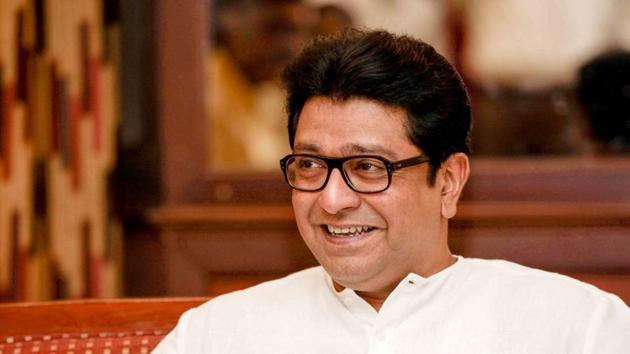
As of 2026, no reliable public net-worth estimate is available for Raj Thackeray. Thackeray is known as the founder and president of the Maharashtra Navnirman Sena (MNS), and his income comes mainly from his political career and related activities.
He has also been involved in business ventures; his firm Matoshree Infrastructure participated in selling a Mumbai property stake at a profit. However, with no official financial disclosures or coverage in reputable outlets such as Forbes or Bloomberg, any net worth figure would be speculative and unverified.
| Fact Category | Key Information |
| Full Name | Raj Shrikant Thackeray, Indian politician. |
| Birth | Born 14 June 1968, Mumbai, Maharashtra. |
| Family | Nephew of Shiv Sena founder Balasaheb Thackeray. |
| Education | Studied at Sir J. J. Institute of Applied Art, Mumbai. |
| Early Skills | Trained in music; skilled cartoonist under Balasaheb’s guidance. |
| Youth Leadership | Headed Bharatiya Vidyarthi Sena (student wing). |
| Party Split | Resigned from Shiv Sena in November 2005. |
| Party Founded | Founded Maharashtra Navnirman Sena (MNS) in March 2006. |
| Political Ideology | Focus on Marathi language, culture, and local employment. |
| Electoral Peak | MNS won 13 seats in Maharashtra Assembly (2009). |
| Later Results | Electoral performance declined after 2014. |
| Leadership Role | President and chief strategist of MNS. |
| Public Image | Known for strong oratory and controversial regional politics. |
| Net Worth | Raj Thackeray Net Worth not publicly verified (2026). |
Early Life
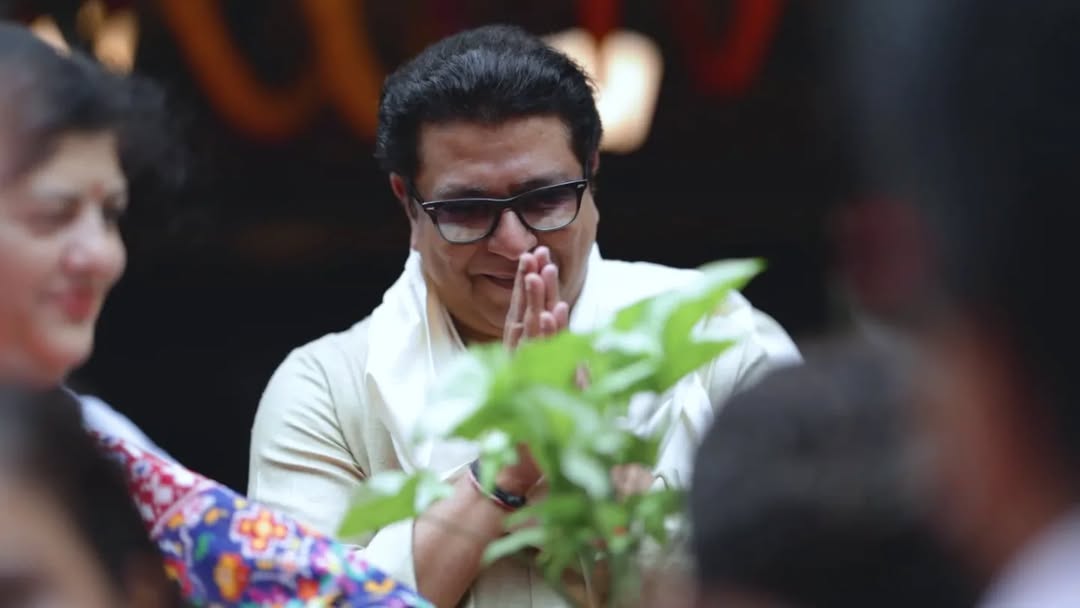
Raj Thackeray was born on 14 June 1968 in Mumbai, Maharashtra. He is the son of Shrikant Thackeray and Kunda Thackeray. Shrikant was the younger brother of Balasaheb Thackeray, and Kunda was the younger sister of Balasaheb’s wife Meena Thackeray. Therefore, Raj Thackeray is a nephew of Balasaheb Thackeray.
Education And Early Interests
He attended the Bal Mohan Vidya Mandir School in the Dadar neighbourhood of Mumbai and later graduated from the Sir J. J. Institute of Applied Art in Mumbai. From an early age he showed an interest in music: his father taught him to play instruments such as the violin, tabla and guitar. He also took up drawing; under his uncle Balasaheb Thackeray’s guidance he began creating cartoons in his youth. These artistic and musical pursuits were part of his upbringing in the Thackeray family.
Raj Thackeray Political Career
Raj Thackeray is an Indian politician who has led the Maharashtra Navnirman Sena (MNS) since founding it in March 2006. A former Shiv Sena leader, he left that party in late 2005 amid leadership disputes and established the MNS to champion regional Marathi interests.
As president of the MNS, Raj Thackeray has focused his political energy on advocating for Marathi culture, language and local employment. Over two decades, his career has been defined by forceful speeches and regional campaigns.
He remains the MNS chief today, steering the party’s strategy and alliances and positioning himself as a voice for Maharashtra’s “sons of the soil.”
Early Political Career & Association With Shiv Sena
Raj Thackeray began his political life in the Shiv Sena party of Maharashtra. In the late 1980s and early 1990s, he led the party’s student wing (Bharatiya Vidyarthi Sena) and served as a cartoonist and activist for the Sena’s mouthpiece.
He organized grassroots initiatives—such as a street vendor union (Shiv Udyog Sena) and public events like concerts—to build support among young members of the party. During this time he developed a reputation for fiery public speaking and populist tactics, drawing upon the legacy of the Sena’s founder.
Raj considered himself a potential future leader; by the early 2000s, after the Shiv Sena’s founder Balasaheb Thackeray named his son Uddhav Thackeray as party president (in 2002), tensions grew. Raj made public statements about rising through the ranks, and relations with other Sena leaders became strained.
Ultimately, Raj Thackeray resigned from all Shiv Sena posts in November 2005, announcing at a press conference, “All I had asked for was respect. All I got was insult and humiliation.” This break paved the way for his independent political career.
Formation Of Maharashtra Navnirman Sena (MNS)
After leaving Shiv Sena, Raj Thackeray formed the Maharashtra Navnirman Sena on 9 March 2006. As founder and president, he set the party’s agenda around Marathi regional identity and local pride.
The new party adopted an aggressive language and policy stance aimed at securing jobs and opportunities for Maharashtrians. In its early years the MNS campaigned on issues such as ensuring Marathi-language signboards in businesses and local promotion for Marathi speakers.
The party won several local election battles in 2006–2008, capitalizing on an emotional appeal to state pride. Raj built the party by attracting disgruntled former Sena members and amplifying issues like language rights and employment for locals.
Under his leadership, the MNS gained immediate attention; within months of its founding it captured seats in municipal elections in Maharashtra. The party’s symbol (a railway engine) and its agenda of “Maharashtra first” quickly became associated with Raj’s style of politics.
Leadership Role & Political Ideology
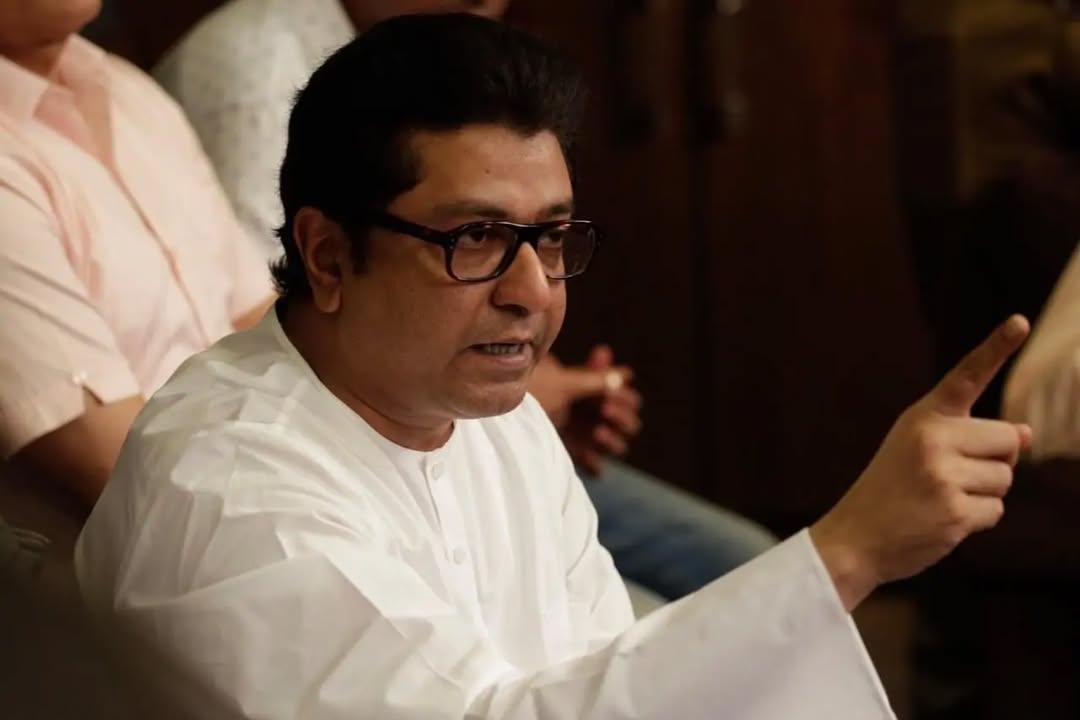
As MNS president, Raj Thackeray is its undisputed leader and chief strategist. He sets policy priorities and leads the party’s organizational efforts.
His ideology centers on protecting what he calls the “Marathi manoos” (Marathi person) and preserving Marathi language and culture. He often frames politics as a struggle to defend local jobs, land and language.
For example, in an address ahead of civic elections he warned that unchecked migration could “snatch away” jobs and erode Marathi culture. He has emphatically said that if outsiders try to impose their language, “I will kick you,” clarifying that his fight is not against any people but against perceived imposition.
In practice, Raj has pushed for laws like mandatory Marathi signage and for public services to be offered in Marathi. He also formed wings of his party for workers in the film industry and other sectors to promote Marathi employment.
More recently, he penned open letters to state officials decrying “growing injustice” against “sons of the soil” in employment drives and demanded stricter rules to ensure locals get priority.
Throughout his leadership, Raj’s style is combative and direct. He is known as a powerful orator and often speaks of unity among Maharashtrians. He once told constituents that political disputes with other Marathi leaders are “minor” in comparison to the interests of Maharashtra, underscoring his insistence that regional identity trumps individual rivalries.
Major Elections, Movements & Political Impact
Under Raj Thackeray’s guidance the MNS has contested every major state election since 2009. In the first state legislative elections it contested (2009), the MNS won 13 assembly seats, a surprising success for a new party.
Those victories made it a significant force, especially in Mumbai. However, in subsequent state elections the party’s fortunes declined. In 2014 and again in 2019, MNS managed to win only a single assembly seat each.
In the 2024 elections, the party failed to win any seat despite contesting over 100 races. Raj himself has not run for office, but he steered the party’s campaign strategies and nominated candidates (including fielding his son Amit in 2024).
Apart from elections, Raj led high-profile issue movements that drew public attention. In 2008 his party organized a statewide campaign to enforce Marathi-language shop signs and resisted language change, even threatening corrective action where Marathi was absent.
At the same time, his activists targeted migration issues, clashing with North Indian laborers in Mumbai; Raj publicly justified these actions as protecting local jobs.
He also intervened in cultural controversies: for instance, when a Bollywood actor made remarks seen as disrespectful to Maharashtrians, Raj demanded an apology and at one point banned that actor’s films until he complied.
Over the years, Raj’s campaigns forced changes: telecom firms began offering services in Marathi, and the government later instituted Marathi sign requirements in offices. His activism on urban issues was also notable; for example, he protested unsafe air travel routes for Western Maharashtra patients, pressuring authorities to improve local medical facilities.
In city politics, MNS corporators have at times held balance of power (in one Mumbai election the party’s six elected councilors helped secure a mayoral position for an ally). However, party impact has waned electorally, and its current role is more as a swing factor than a ruling force.
In the 2026 Mumbai civic polls, Raj allied his party with another Thackeray faction in a bid to consolidate Marathi votes, showing he is still active in shaping electoral outcomes even if MNS no longer wins many seats.
Public Influence, Media Presence & Controversies
Raj Thackeray’s political presence is marked by high public visibility and frequent media coverage. He is known for theatrical rallies and pointed speeches, which have made him a household name in Maharashtra politics.
His oratory style and cartoonist background (he drew cartoons for his uncle’s party magazine early in his career) contribute to his strong media image.
Over the years he has courted controversy as well. His 2008 anti-immigrant campaign led to clashes and legal cases – he and other leaders were briefly detained for organizing demonstrations against North Indian residents in Mumbai.
The aggressive tactics of his activists (such as assaults on parents of non-Marathi children seeking local school admissions) were widely reported, illustrating the backlash to his methods.
In entertainment and cultural issues, he ordered boycotts of films and public events when he felt Maharashtrians were slighted, drawing both support and criticism.
For example, he declared at one point that Mumbai’s mayoral office must stay in Marathi hands, announcing “Mumbai’s mayor will be Marathi and will be ours,” a statement that typified his stance and received wide press comment.
Critics have sometimes called him fringe or divisive, noting that his “sons-of-soil” politics can alienate non-Marathi communities. Nonetheless, Raj’s influence persists: his campaigns often force other parties and the government to respond to Marathi concerns (from job reservations to language use).
He maintains an active social media presence, posting on issues from civic planning to national policy. In short, Raj Thackeray remains a prominent if polarizing figure – a regional strongman who uses media to amplify his stance on Maharashtra’s interests.
Current Political Role & Future Direction
As of 2026, Raj Thackeray continues as the president of the MNS and key political leader in Maharashtra. He has recently moved to collaborate with other Thackeray factions: in late 2025 he announced a formal alliance with Uddhav Thackeray’s Shiv Sena (UBT) for Mumbai’s municipal elections, securing a split of hundreds of council seats between the parties.
He set clear goals in this alliance, vowing that civic leadership – such as the mayor’s position – would remain “Marathi.”
At the same time, he has entrusted his local MNS office-bearers with tactical decisions: after local polls in Kalyan-Dombivli in early 2026, Raj granted his corporators authority to support whichever coalition stabilized the city government, reflecting a pragmatic turn.
Politically, Raj continues to challenge the ruling party; he criticized the central government’s ties to industrial groups (for instance, accusing forces opposed to Maharashtra’s interests of promoting the Adani conglomerate’s expansion in Mumbai).
He is actively campaigning and expanding the party’s reach before upcoming elections – for example, he and his party network have toured the state to galvanize youth support.
Raj has also brought his son Amit into active politics, preparing a new generation of leaders under his banner.
Looking ahead, Raj Thackeray appears focused on unifying Marathi voters and regaining relevance for his party. He has repeatedly stated that state interests come first, indicating a willingness to set aside past rivalries if it serves Maharashtra.
His career objective now is to keep the “Marathi manoos” agenda alive and to position the MNS (and his allies) as necessary representatives of local aspirations in future state and civic elections. The coming years will show whether he can translate these strategies into electoral success.
FAQs
Who Is Raj Thackeray?
Raj Thackeray is an Indian politician and the founder and president of the Maharashtra Navnirman Sena (MNS). He is known for his focus on Marathi regional identity and state-level politics in Maharashtra.
When And Where Was Raj Thackeray Born?
Raj Thackeray was born on 14 June 1968 in Mumbai, Maharashtra. He comes from the prominent Thackeray political family.
How Is Raj Thackeray Related To Balasaheb Thackeray?
Raj Thackeray is the nephew of Balasaheb Thackeray, the founder of Shiv Sena. His father and mother were both siblings connected to Balasaheb Thackeray’s immediate family.
What Is Raj Thackeray’s Educational Background?
He studied at Bal Mohan Vidya Mandir in Mumbai and later graduated from the Sir J. J. Institute of Applied Art. He has a background in art and cartooning.
Was Raj Thackeray Part Of Shiv Sena?
Yes, Raj Thackeray was a senior leader in Shiv Sena during the late 1980s and 1990s. He resigned from the party in 2005 following internal leadership disagreements.
Latest Articles
Popular Articles