Oscar Goodman Net Worth, Legal Career, And Mayor Legacy
Oscar Goodman Net Worth explained with verified facts, income sources from law and public service, and what is publicly known as of 2026.
Feb 07, 202665 Shares65K Views
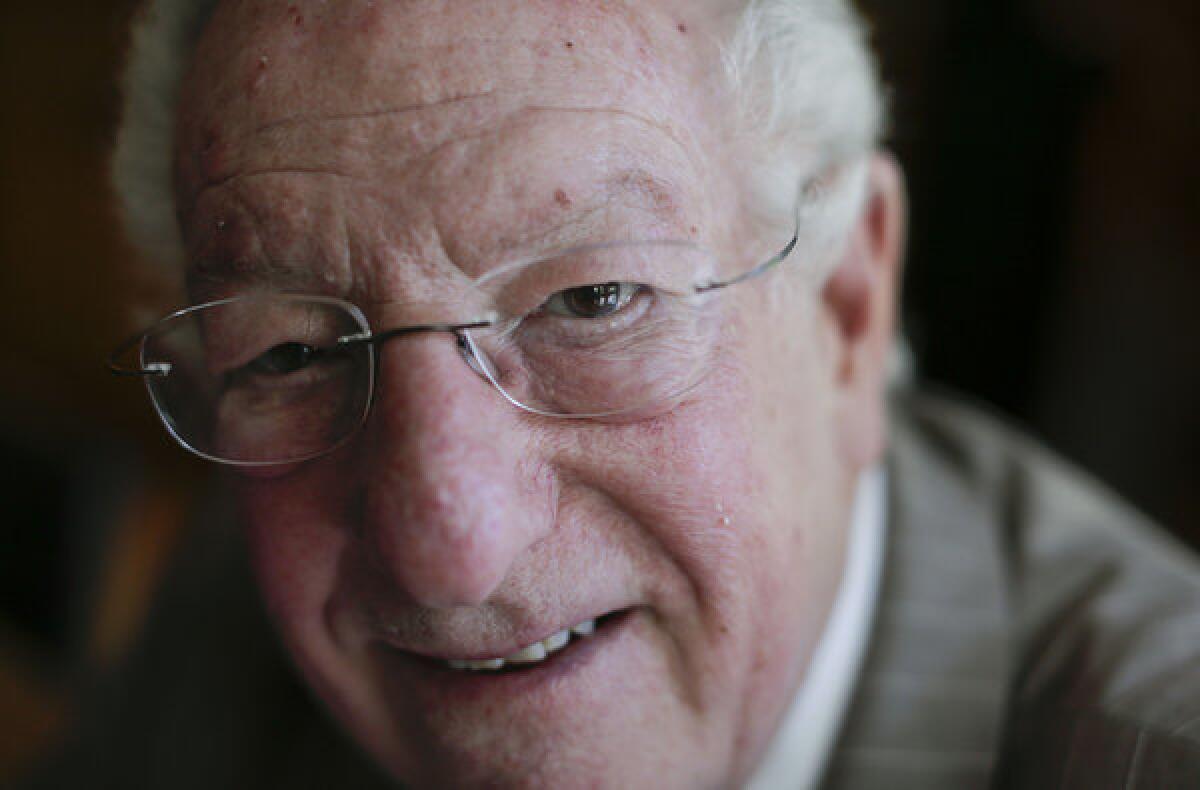
Oscar Goodman Net Worth (2026)
As of 2026, no reliable public net worth estimate for Oscar Goodman has been published. Goodman practiced law for decades as a criminal defense attorney (defending organized crime figures) and later served three terms as Las Vegas mayor (1999–2011).
His income primarily derives from legal work (he is currently of counsel at a Las Vegas law firm) and related activities, such as writing a memoir. Major financial publications (such as Forbes or Bloomberg) do not list his personal wealth, so any figures found online are unverified and speculative.
| Fact Category | Verified & Important Facts |
| Full Name | Oscar Baylin Goodman is an American attorney and politician. |
| Birth | Born on June 26, 1939, in Philadelphia, Pennsylvania, USA. |
| Background | Raised in a Jewish family with strong legal and cultural roots. |
| Education | Graduated from Haverford College and Penn Law School. |
| Legal Career | Became a nationally known criminal defense attorney. |
| Notable Clients | Represented high-profile organized crime figures. |
| Legal Reputation | Named among America’s top trial lawyers by legal peers. |
| Political Role | Served as Mayor of Las Vegas from 1999 to 2011. |
| Election Success | Won three mayoral terms with strong voter support. |
| Major Projects | Led downtown revitalization including Symphony Park. |
| Cultural Impact | Helped establish the Mob Museum in Las Vegas. |
| Public Persona | Known for outspoken, unconventional leadership style. |
| Post-Mayor Role | Returned to law as Of Counsel at Goodman Law Group. |
| Net Worth | Oscar Goodman Net Worth is not publicly disclosed as of 2026. |
| Income Sources | Earns from legal work, public service, and book royalties. |
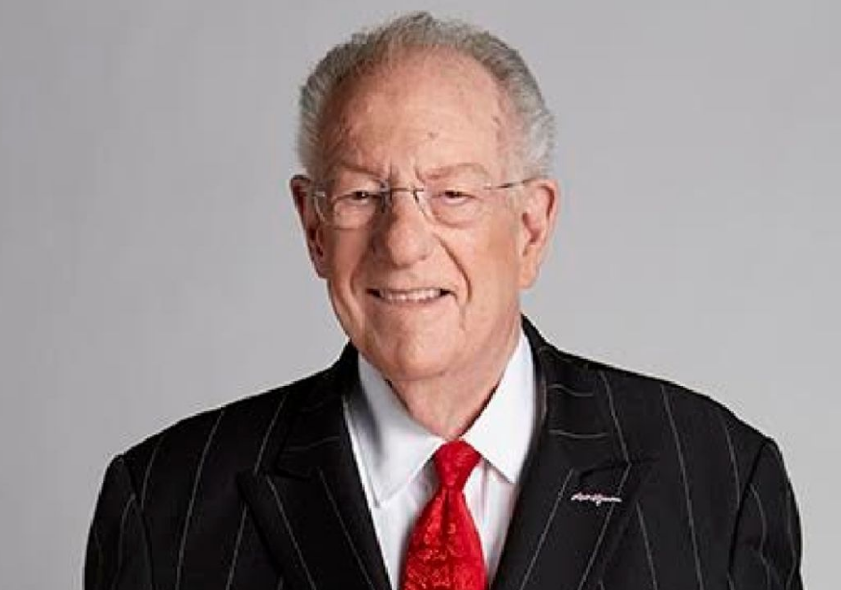
Early Life
Oscar Baylin Goodman was born on June 26, 1939, in Philadelphia, Pennsylvania. He was raised in a middle-class Jewish family. His father worked for the Philadelphia District Attorney’s office for many years and later practiced law privately. His mother was an artist and sculptor. In his youth the family observed Orthodox Jewish traditions and later followed Conservative Jewish practices. Goodman had two sisters, one of whom became a professional ballerina and the other an actress.
He grew up in a West Philadelphia neighborhood. Biographical accounts note that as a schoolboy in the 1950s he suffered repeated anti-Semitic attacks in his neighborhood. For example, profiles report that his nose was broken multiple times by street attackers during this period. These early experiences, along with his Jewish upbringing, are cited as formative influences on Goodman’s outlook.
Goodman attended Haverford College (a Quaker-founded liberal arts college near Philadelphia), graduating in 1961. He majored in sociology while at Haverford. He then earned his law degree from the University of Pennsylvania Law School in 1964. During college he had briefly considered entering the rabbinate, but ultimately chose to study law instead.
Oscar Goodman Career
Oscar Baylin Goodman (born 1939) is an American attorney and former Las Vegas mayor whose career spans high-profile legal work and elected office. After earning a law degree, Goodman built a successful criminal defense practice in Las Vegas, becoming nationally known for representing notable figures in organized crime.
In 1999 he entered politics, winning election as the 21st mayor of Las Vegas. Goodman served three consecutive four-year terms (1999–2011), after which he returned to legal practice and tourism-promotion roles.
Throughout his professional life he has been known for a flamboyant, outspoken style and a focus on city development projects. In recent years he has continued to work as “Of Counsel” for a Las Vegas law firm founded by his son, remaining active in civic affairs and sharing reflections on his legal and political experiences.
Legal Career: High-Profile Defense Attorney Experience
Goodman launched his legal career in Las Vegas after completing law school, initially working as a Clark County prosecutor before entering private practice. He eventually became a senior partner at the firm of Goodman & Chesnoff, establishing himself as a criminal defense attorney.
Goodman earned renown by taking on cases for alleged organized crime figures; his client list included names such as Meyer Lansky, Frank “Lefty” Rosenthal, Nicky Scarfo, Herbert “Fat Herbie” Blitzstein and Anthony “Tony the Ant” Spilotro, among others.
He also represented other high-visibility defendants, for example Roger Hedgecock, the former San Diego mayor. Goodman’s courtroom victories for these clients were frequently noted in the press, and he cultivated a persona as Las Vegas’s unapologetic “mob lawyer.”
He was proud of his record, famously declaring, “I love my past. I don't apologize for one day in my life.” His legal peers recognized his skill: he was named by the National Law Journalas one of the “15 Best Trial Lawyers in America.”
Goodman also led in the legal community, serving as president of the National Association of Criminal Defense Lawyers (NACDL) in 1980–81 and later serving on boards such as the Las Vegas Convention and Visitors Authority (LVCVA) before running for mayor.
Transition From Law To Politics
In 1999 Goodman decided to run for mayor of Las Vegas despite having no prior elective office experience. He financed much of his campaign with personal funds and ran a populist, outsider-style campaign focused on urban growth issues like traffic and infrastructure.
He compared his approach to that of Minnesota’s Jesse Ventura, quipping during the campaign, “He’s the body, I’m the brain,” and in debates he dismissed concerns about his mob-related legal career.
Voters responded favorably; Goodman won the mayoral primary and went on to capture about 64% of the vote in the general election. His landslide victory was attributed to his straight-talking style and promises to address developers’ fees to improve city roads and parks.
Reflecting on the campaign, Goodman later said he had “always fought the System from outside” and was now taking a chance on doing “some good from inside.” This successful transition brought Goodman from the courtroom to City Hall, where he took office on June 28, 1999.
Mayor Of Las Vegas (1999–2011): Political Career Highlights
Oscar Goodman served as Las Vegas’s mayor for 12 years, winning re-election twice. In 2003 he secured a second term with roughly 86% of the vote, and in 2007 he was re-elected to a third term with about 84% support.
During his tenure he worked as a pragmatic mayor addressing the challenges of rapid city growth. He chaired or participated in regional boards such as the Southern Nevada Regional Transportation Commission and Las Vegas redevelopment agencies.
He was known for breaking new ground in city traditions – for example, in 1999 he became the first Las Vegas mayor to have his likeness placed on casino chips.
Goodman remained in office until July 2011, when term limits required him to step down. In a historic moment, he administered the oath of office to his successor, Carolyn Goodman (his wife), marking the only known instance in U.S. history of a spouse directly succeeding a spouse as mayor.
Major Achievements & Impact As Mayor
Goodman’s mayoralty was marked by a number of high-profile development initiatives and civic accomplishments. He was instrumental in revitalizing downtown Las Vegas.
One of his signature projects was the creation of Symphony Park, a 61-acre mixed-use development on the city’s East Fremont corridor. Symphony Park includes prominent cultural and medical facilities – for example, the Cleveland Clinic Lou Ruvo Center for Brain Health (designed by architect Frank Gehry) and The Smith Center for the Performing Arts – along with hotels, residences and commercial space.
Under his leadership, the city also acquired the old federal courthouse and post office, converting it into the National Museum of Organized Crime and Law Enforcement (the Mob Museum) to preserve Las Vegas’s law-enforcement history.
Goodman actively promoted the city’s convention and tourism infrastructure as well, working on efforts to attract new events and conventions.
He even pursued bringing professional sports teams to Las Vegas, lobbying Major League Baseball and the NFL, though those teams arrived after his tenure.
Goodman’s broad popular support was reflected in his 2007 landslide re-election; voters saw him as a catalyst for modernizing the city. He presided over a period of robust growth and is often credited with projects that helped reshape Las Vegas’s image beyond the Strip.
Public Reputation & Political Influence
Goodman developed a distinctive public persona that drew both national attention and local admiration. He was known for his colorful wit and straightforward manner – as one media profile noted, crowds at restaurants would greet him like a celebrity or “Roman god.”
Even as mayor, he cultivated a blend of showmanship and policy focus. Goodman enjoyed high name recognition across Nevada and often spoke boldly on issues affecting the city.
He once suggested legalizing prostitution in downtown Las Vegas as a revenue source for revitalization. His political stance also evolved: originally a Democrat, he became an independent in 2009, reflecting his maverick image.
Throughout his time in office and afterward, Goodman remained a popular figure in local politics. His opinion was sought on civic matters, and he sometimes weighed in on debates about education, development and tourism, drawing on his decades of experience.
He served as a vice-president of the U.S. Conference of Mayors (representing Las Vegas in that national forum) and hosted public forums sharing Las Vegas history.
Overall, Goodman’s blend of legal notoriety and outspoken, humorous charisma kept him in the public eye long after leaving city hall.
Post-Mayoral Career & Current Professional Role
After completing his mayoral service in 2011, Oscar Goodman returned to private practice. He joined the Goodman Law Group (founded by his son, attorney Ross Goodman) as Of Counsel, contributing his extensive criminal trial experience.
In this role he has continued to mentor legal strategy and occasionally consult on cases, though the firm’s day-to-day leadership lies with his son.
In addition to resuming law practice, Goodman remained active in Las Vegas civic promotion. For nearly a decade after 2011 he served as chairman of the Las Vegas Convention and Visitors Authority (LVCVA) Host Committee, acting as an ambassador to draw meetings, conventions and tourists to the city.
In that capacity he led the local effort to “roll out the red carpet” for major events, earning praise from tourism leaders for his “enormous contributions” to promoting Las Vegas.
His contract in that role was terminated in 2020 during the COVID-19 crisis, but by then Goodman had become an honorary advocate for the city’s hospitality industry.
He also authored a memoir, Being Oscar: From Mob Lawyer to Mayor of Las Vegas, which was published in 2013 and chronicles his unique career path.
As of the mid-2020s, Oscar Goodman remains a prominent figure in Nevada’s legal community and civic life – providing counsel at the Goodman Law Group and speaking at legal and historical events – while retaining a legacy as one of Las Vegas’s most influential mayors.
FAQs
Who Is Oscar Goodman?
Oscar Goodman is an American attorney and former politician best known for serving three terms as mayor of Las Vegas from 1999 to 2011. He was previously a prominent criminal defense lawyer handling high-profile cases.
What Is Oscar Goodman Best Known For?
He is best known for his career as a high-profile criminal defense attorney and for his tenure as mayor of Las Vegas. His leadership coincided with major downtown redevelopment projects.
When Was Oscar Goodman Mayor Of Las Vegas?
Oscar Goodman served as mayor of Las Vegas from 1999 until 2011. He completed three consecutive four-year terms before stepping down due to term limits.
What Was Oscar Goodman’s Legal Career Before Politics?
Before entering politics, Goodman worked as a prosecutor and later became a nationally recognized criminal defense attorney. He represented several well-known organized crime figures and public officials.
Is Oscar Goodman Still Practicing Law?
Yes, Oscar Goodman remains involved in the legal field as “Of Counsel” at the Goodman Law Group in Las Vegas. The firm is led by his son, attorney Ross Goodman.
Latest Articles
Popular Articles