What Was Neil Peart’s Net Worth When He Died?
Neil Peart Net Worth details, including income from Rush, books, and royalties, with verified facts and updated context through 2026.
Apr 02, 2026799 Shares57K Views
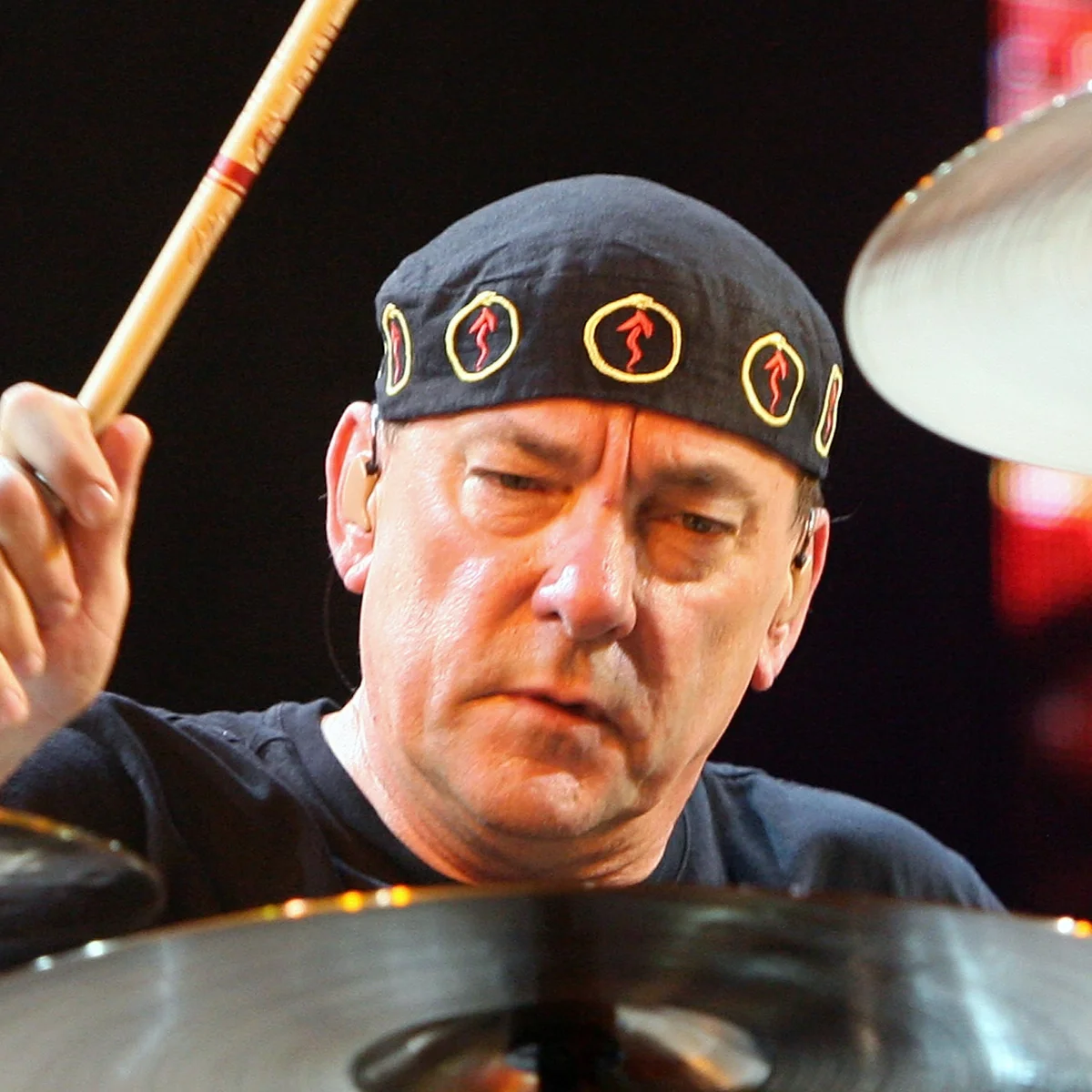
Neil Ellwood Peart was born on September 12, 1952, on his family’s farm near Hagersville in southern Ontario, Canada. He was the eldest of four children born to Glenn and Betty Peart. His parents made a living selling farm equipment.
Peart spent his early childhood on the family farm in Hagersville, a rural area just outside Hamilton. A few years after his birth, the family moved to the nearby city of St. Catharines in southern Ontario. Thus Peart grew up first in a farming community and then in the suburban city of St. Catharines.
From a young age Peart showed an interest in music. He grew up listening to rock and pop on the radio and took piano lessons in childhood. As a teenager he gravitated toward drumming.
He would often tap out rhythms on household furniture with a pair of chopsticks. His parents encouraged this interest: on his 13th birthday they gave him drumsticks and a practice drum, with the promise that if he kept at it for a year they would buy a full drum kit.
True to their word, Peart received a full drum kit at age 14 and began formal drum lessons. By age 14 he was attending the Peninsula Conservatory of Music in St. Catharines to study drumming.
Around this time he made his debut performing on drums – first at a school pageant in St. Catharines, and soon afterward with a local teen band, where he performed his first drum solo. His early musical influences included rock drummers such as Keith Moon of The Who, whom he later cited as a major inspiration for his own playing style.
| Fact Category | Verified Information |
| Full Name | Neil Ellwood Peart |
| Birth Date | September 12, 1952 |
| Death Date | January 7, 2020 |
| Nationality | Canadian |
| Profession | Drummer, lyricist, author |
| Band | Joined Rush in 1974 |
| Nickname | “The Professor” |
| Neil Peart Net Worth | Not officially disclosed; based on royalties, books, and music career |
| Major Achievement | Inducted into Rock & Roll Hall of Fame (2013) |
| Legacy | Considered one of the greatest rock drummers of all time |
Neil Peart Career
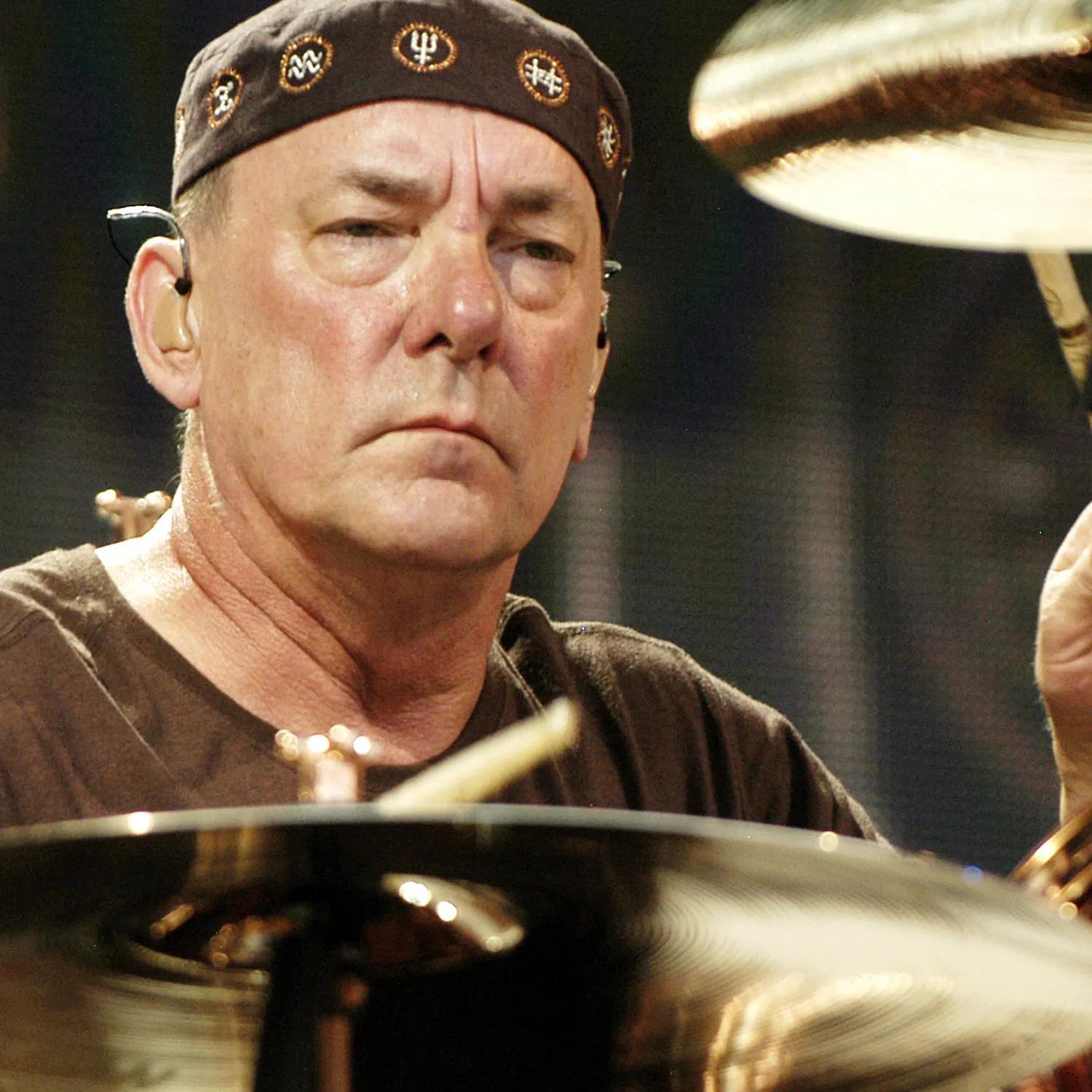
Neil Peart (1952–2020) was a Canadian drummer, percussionist and the principal lyricist for the rock band Rush. He joined Rush in 1974, replacing their original drummer, and remained with the band until his retirement in 2015. Peart was widely respected for his technical virtuosity and complex arrangements, earning him the affectionate nickname “The Professor.”
He embraced a philosophy of continuous improvement – as he once quipped, “What is a master but a master student? … [there’s] a responsibility on you to keep getting better.”– which guided his decades of development on the drums. In addition to performing, Peart published numerous books and instructional materials about music and travel; his works include best-selling travel memoirs (Ghost Rider, Roadshow, Traveling Music, etc.) and educational drum DVDs, reflecting his intellectual approach to both drumming and writing. His career spanned four decades of recording and touring with Rush, during which he earned a global reputation as one of rock’s greatest drummers.
Joining Rush And Rise To Fame
In July 1974 Peart auditioned for and joined Rush, an emerging hard-rock trio. He immediately became the band’s driving force on drums and took over songwriting for the band’s lyrics. His first appearance on a Rush album was Fly by Night(1975), on which he contributed most of the lyrics.
Rush’s next album, the prog-rock epic 2112(1976), became their first major breakthrough, reaching wide audiences with its 20-minute title suite and ushering in the band’s classic era. Throughout the late 1970s, Rush released a series of acclaimed albums – A Farewell to Kings(1977), Hemispheres(1978) and Permanent Waves(1980) – each showcasing Peart’s intricate drumming and literary lyrics.
By the early 1980s, albums like Moving Pictures(1981) cemented Rush’s reputation; the band became known for large, elaborate live shows in which Peart’s thunderous drumming and lengthy drum solos were highlights. Rush’s relentless touring in North America and around the world during this period built the group’s popularity, and Peart’s contributions on stage helped make the band a top-grossing live act.
Neil Peart’s Drumming Style And Technical Mastery
Peart was renowned for his technical mastery and innovation on the drums. He built sprawling multi-piece kits that often included electronic percussion pads and triggers, allowing him to create intricate rhythmic patterns. His playing featured complex odd-time signatures, polyrhythms and jazz/rock fusion influences, reflecting decades of intensive study.
Peart famously studied with drum masters like Freddie Gruber (beginning in the mid-1990s) and Peter Erskine (in 2008) to continually refine his technique. He later noted that it took him “20 years on technique” to reach a level where he could confidently drive a song, focusing on perfecting time-keeping and feel.
This dedication paid off: Peart’s precise and powerful drumming style became hugely influential, and he won many industry polls and drum magazine awards for his recorded work and live performances. His elaborate solo sections – incorporating improvisation, electronic effects and hybrid setups – became signature moments of every Rush concert, inspiring generations of drummers to emulate his approach.
Role As Primary Lyricist And Songwriting Contributions
While Peart’s primary role was as Rush’s drummer, he also served as the band’s chief lyricist from 1974 onward. He was responsible for writing the words to virtually all Rush songs after Fly by Night, drawing on a wide range of literary and philosophical inspirations. His lyrics often explored science-fiction, mythology and humanistic themes.
Peart cited authors like T.S. Eliot, Thomas Pynchon and Tom Robbins as influences on his writing style, aiming to weave vivid imagery and deeper meaning into Rush’s music. He treated lyric-writing as a craft akin to drumming; for example, he observed that “words are a subdivision of time,” noting that his rhythmic sensibility as a drummer helped him fit complex lyrics into Rush’s intricate musical structures.
He also paid close attention to rhyme and meter, once explaining that he had “a very rigid set of values” and would never rhyme merely for convenience. These careful methods can be heard in Rush classics such as “Tom Sawyer,” “Limelight,” “Closer to the Heart” and “The Spirit of Radio,” where Peart’s intelligent, thoughtful lyrics are integral to the songs’ identity.
Major Albums, Songs, And Career Highlights
During Peart’s tenure, Rush released a steady stream of acclaimed albums. After 2112, the band put out landmark records like Moving Pictures(1981), Signals(1982), Grace Under Pressure(1984), Power Windows(1985) and Hold Your Fire(1987) through the 1980s.
In the 1990s and 2000s they continued to evolve with albums such as Roll the Bones(1991), Counterparts(1993), Test for Echo(1996), Vapor Trails(2002) and Snakes & Arrows(2007). The final Rush album, Clockwork Angels(2012), featured a steampunk-inspired concept and included the song “Caravan” among its highlights.
Over Peart’s forty years with Rush, the band sold tens of millions of albums worldwide, achieving 24 Gold records (14 Platinum) in the U.S. alone. Rush also won a number of music awards during this time and earned multiple Grammy nominations for their work.
The band’s live achievements are notable as well: Rush performed to sold-out arenas around the globe and released many live concert recordings. Notably, the 2015 R40tour – celebrating the band’s 40th anniversary – was billed as Rush’s farewell tour. Following that tour, Peart formally announced his retirement from music, marking the end of his performing career.
Awards, Achievements, And Career Milestones
Neil Peart’s accomplishments earned him many top honors. In 1983, at just 30 years old, he became the youngest person ever inducted into Modern Drummer magazine’s Hall of Fame. His band’s songwriting and cultural impact were recognized when Rush was inducted into the Canadian Songwriters Hall of Fame (2010) and the Rock and Roll Hall of Fame (2013).
In 1996, the Canadian government named Peart (along with Geddy Lee and Alex Lifeson) an Officer of the Order of Canada – the country’s highest civilian honor – in acknowledgment of their contributions to music. He and his bandmates also received the Governor General’s Performing Arts Award in 2012.
Internationally, Peart was consistently ranked among the greatest drummers of all time; by 2014, Modern Drummer readers voted him the third-best rock drummer in history. In 2020 he was elected to the Percussive Arts Society Hall of Fame as well.
Throughout his career, Peart additionally authored two acclaimed instructional DVDs (A Work in Progress, 1996 and Anatomy of a Drum Solo, 2005) that influenced drum education worldwide. These awards and recognitions reflect the broad impact of Peart’s musicianship and leadership in progressive rock drumming.
Neil Peart’s Career Legacy In Rock Music
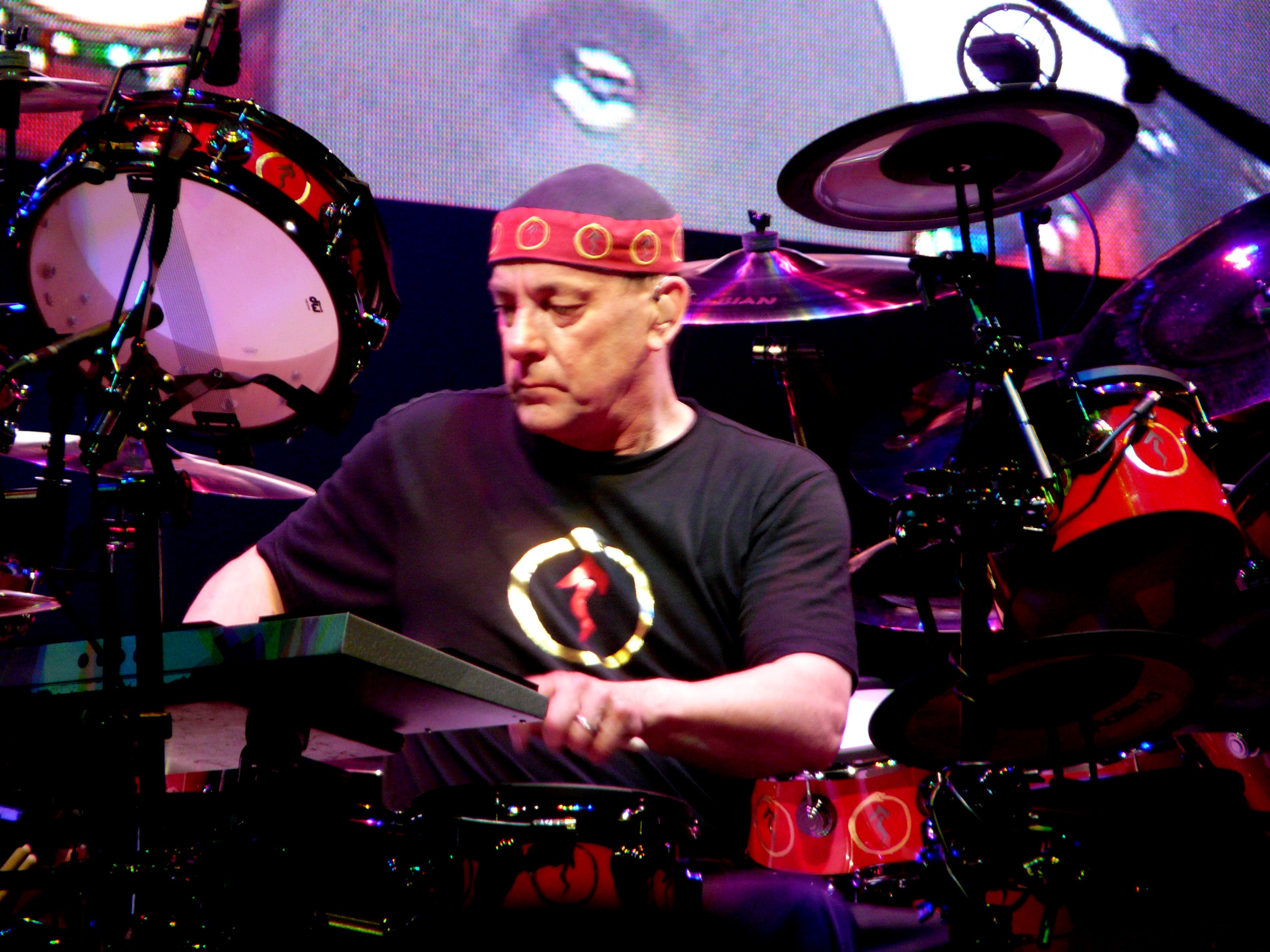
Even after his retirement and passing in early 2020, Neil Peart’s legacy has continued to grow. In October 2021 Modern Drummer magazine announced the annual Neil Peart Spirit of Drumming Scholarship, providing free drum lessons and gear to a promising young drummer in Peart’s memory.
In his hometown of St. Catharines, Ontario, fans and city officials launched a fundraising campaign in 2024 to create a permanent public memorial at Lakeside Park, ensuring that Peart’s name will be honored in his Canadian community.
Peart’s creative projects also continued posthumously. His last literary work, Silver Surfers(published in 2024), is a coffee-table book about his collection of classic sports cars. It has been described as the final work of his prolific career.
Additionally, Peart had co-written a trilogy of novels based on the universe of Rush’s Clockwork Angelsalbum: Clockwork Angels, Clockwork Lives, and Clockwork Destiny. The final volume was released in 2022, concluding a project he had helped plan in his later years.
Together, these tributes and publications have helped cement Neil Peart’s enduring legacy. He remains cited as a major influence by drummers around the world, and his contributions to songwriting and performance continue to be studied and admired.
Neil Peart Net Worth
As of 2026, Neil Peart’s personal net worth has not been publicly disclosed in any officially verified source. No specific figure has been confirmed by credible financial authorities. His documented income sources include royalties from the Rush music catalog tied to his lyric-writing credits, publishing income from his books, and revenue from commercially released drumming instructional videos and related materials. However, exact earnings figures remain unavailable.
FAQs
1. Who Was Neil Peart?
Neil Peart was a Canadian musician best known as the drummer and primary lyricist for the rock band Rush. He joined the band in 1974 and remained a member until his retirement in 2015.
2. Why Was Neil Peart Called “The Professor”?
He earned the nickname “The Professor” due to his highly technical drumming style and disciplined approach to music. His precise playing and complex compositions set him apart in rock music.
3. What Band Was Neil Peart Associated With?
Neil Peart was most closely associated with the progressive rock band Rush. He contributed to the band’s success for over four decades.
4. Did Neil Peart Write Lyrics For Rush?
Yes, Neil Peart was the primary lyricist for Rush after joining the band. He wrote lyrics for nearly all of their songs from 1975 onward.
5. What Made Neil Peart’s Drumming Unique?
His drumming was known for complex time signatures, precision, and large multi-piece drum kits. He also incorporated electronic elements and jazz influences into his style.
Latest Articles
Popular Articles