Neal Stephenson Net Worth 2026: Books & Tech Impact
Neal Stephenson Net Worth explained with a focus on bestseller income, industry roles, and how his work influences earnings.
Mar 27, 202678 Shares26K Views
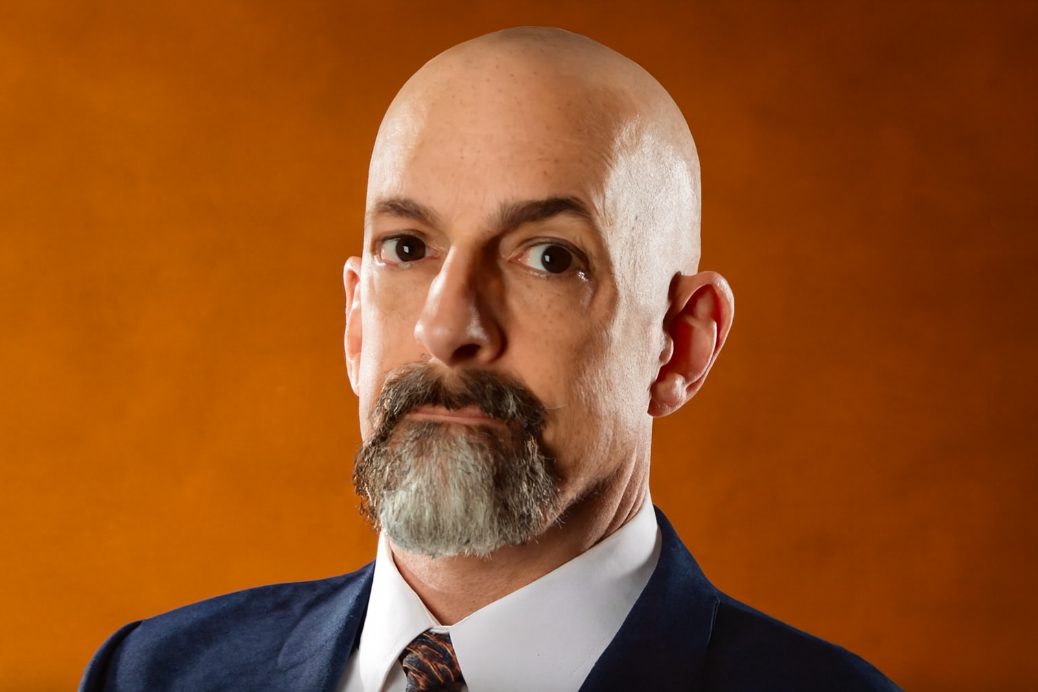
Neal Town Stephenson was born on October 31, 1959, at Fort Meade, Maryland. He grew up in a highly scientific family: his father, David Town Stephenson, was a professor of electrical engineering, and both of his grandfathers were research scientists, his paternal grandfather a physicist and his maternal grandfather a biochemist. His mother, Janet (née Jewsbury) Stephenson, worked as a laboratory technician.
While he was still a child, his family moved from Maryland to Champaign–Urbana, Illinois, and later (around 1966) to Ames, Iowa. Ames is home to a major science and technology university, and Stephenson later recalled growing up in a town “dominated by a university of science and technology.”
In this environment, he developed an interest in hands-on science, building model rockets, conducting simple chemistry experiments, and engaging in similar activities. He even spent summers working as a research assistant at the local Ames Laboratory, a former Manhattan Project facility. These experiences fostered an early interest in computers and programming.
Stephenson graduated from Ames High School in 1977. He then attended Boston University, where he initially majored in physics before switching to geography. He earned a Bachelor of Arts in geography, with a minor in physics, in 1981.
As a child and young teenager, Stephenson was also drawn to science fiction and fantasy. He later recalled encountering J.R.R. Tolkien’s The Hobbitin sixth grade and, around the same time, becoming “obsessed” with early science fiction on television, such as the original Star Trekseries and the Japanese cartoon Astro Boy.
He also developed an interest in popular genre games and films of the time, including Dungeons & Dragonsand Star Wars. These early cultural influences from his school years would later shape the themes he explored in his writing.
| Fact Category | Details |
| Full Name | Neal Town Stephenson |
| Birth Date | October 31, 1959 |
| Nationality | American |
| Education | BA in Geography (Minor in Physics), Boston University |
| Profession | Author, Futurist, Technology Advisor |
| Known For | Snow Crash (1992), where he introduced the term “Metaverse” |
| Writing Style | Known for “big ideas” novels combining science, history, and philosophy |
| Major Awards | Hugo Award, Locus Awards, Arthur C. Clarke Award |
| Tech Career | Former Blue Origin employee, Chief Futurist at Magic Leap, co-founder of Lamina1 |
| Neal Stephenson Net Worth | Not publicly disclosed (2026); income comes from book royalties, tech roles, and startups |

Neal Stephenson Career
Neal Stephenson is a prolific American author whose career has spanned decades, bridging speculative fiction and high-tech enterprises. He debuted in the 1980s with satirical and thriller novels, but quickly rose to prominence as a science fiction writer. Over the years he has published more than a dozen major works, many becoming bestsellers, and has simultaneously engaged with cutting-edge technology firms.
Notably, Stephenson served as the first technical staff member at Blue Origin from 1999 to 2006, investigating innovative rocket designs. In the late 2000s he consulted for Nathan Myhrvold’s Intellectual Ventures Labs on projects in geoengineering, medicine, and food.
In 2014 he joined the augmented reality startup Magic Leap as Chief Futurist, where he led content research and development until 2020. In parallel with these roles, Stephenson founded Subutai Corporation in 2010 to develop transmedia projects (producing the Mongoliad novel series and related games).
He continues to balance writing with tech ventures, later co-founding the blockchain startup Lamina1 (open metaverse project) and an AI-focused company called Whenere. Throughout his career, Stephenson has been driven by the interplay of technology, science, and society, reflected in both his fiction and professional engagements.
Breakthrough Works And Rise In Speculative Fiction
Stephenson’s breakthrough came in the early 1990s with the cyberpunk novel Snow Crash(1992). This novel introduced and named the concept of the “Metaverse” – a shared virtual reality – and established him as a major voice in science fiction. Snow Crashbecame widely read by technologists and futurists, cementing Stephenson’s reputation with its imaginative yet technically grounded vision.
He followed up with The Diamond Age(1995), a cutting-edge tale of nanotechnology that won both the Hugo and Locus Awards. These early successes defined Stephenson’s “cyberpunk” era; his protagonists often were hackers or engineers navigating high-tech worlds.
By the late 1990s he had a solid foothold, and with Cryptonomicon(1999) he extended into techno-thriller territory, intertwining World War II codebreaking with modern cryptography. This period marked Stephenson’s rise: each novel reached new audiences and critical acclaim, blending fast-paced narrative with deep technical ideas.
His work during this time was characterized by expansive scope and a willingness to explore how emerging technologies could reshape society.
Major Books And Career Highlights
Following his initial successes, Stephenson continued to produce influential, ambitious novels. In 2003–2004 he published The Baroque Cycle, a historical epic trilogy (Quicksilver, The Confusion, The System of the World) that reimagined 17th-century science and politics. This series garnered multiple awards (including the Arthur C. Clarke Award for Quicksilver) and demonstrated his mastery of blending rigorous historical research with imaginative storytelling.
In 2008 he released Anathem, a standalone science fiction novel set in a cloistered world of philosophers and mathematicians, which won the Locus Award and drew praise for its intellectual depth.
In the 2010s Stephenson wrote a series of popular thrillers. Reamde(2011) mixed international espionage with online gaming economics, and Seveneves(2015) dealt with humanity’s survival in space; Sevenevesbecame a New York Times bestseller and was notably chosen for summer reading by public figures such as Bill Gates and Barack Obama.
He co-authored The Rise and Fall of D.O.D.O.(2017) – a time-travel saga combining magic and quantum physics – and followed with Fall; or, Dodge in Hell(2019), a genre-blending exploration of consciousness and virtual afterlife. In 2021 he published Termination Shock, a near-future thriller about climate geoengineering, continuing his pattern of grounding high-concept themes in compelling plots. Across these works, Stephenson’s novels have consistently reached bestseller lists and solidified his status as a leading figure in modern speculative fiction.
Writing Style, Themes, And Intellectual Influence
Stephenson is known for a “big ideas” writing style – lengthy, intricately plotted novels that weave deep scientific, historical, and philosophical exposition into their narratives. Critics frequently note that he “writes big books”, with action that spans large time periods and complex worlds.
His stories often revolve around protagonists who are scientists, engineers, or hackers, reflecting his interest in technology. For example, Cryptonomiconexplores cryptography and World War II, Anathemimmerses readers in philosophical and mathematical thought, and The Diamond Ageexamines advanced nanotech and education.
Across his body of work, Stephenson habitually blends technical detail with adventure, providing essentially fictional case-studies of ideas in mathematics, currency, linguistics, philosophy, and the history of science. Reviewers have praised Anathemas a “great novel of ideas,” noting that Stephenson is a foremost practitioner of this intellectual style.
Stephenson himself has remarked that all his science-fiction books contain “callbacks to historical themes” – a continuum between past and future that is evident in works from The Baroque Cycleto Polostan. By combining rigorous research with vivid storytelling, he has cultivated a distinctive narrative voice that challenges readers while delivering entertainment.
Awards, Recognition, And Critical Reception
Over his career, Stephenson has won many of science fiction’s top honors. His novel The Diamond Agewon both the Hugo and Locus Awards (1996), and The Baroque Cyclevolumes earned Locus Awards and a Clarke Award (Quicksilverwon the Clarke Award in 2004).
Cryptonomiconwas later inducted into the Prometheus Hall of Fame (2013). Anathemcaptured the Locus Award for Best SF Novel (2009). He has also received numerous award nominations (Hugo, Nebula, Campbell, etc.) across different works.
Many of Stephenson’s books have been New York Times bestsellers, reflecting widespread commercial success. In addition, Sevenevesand others have earned attention from mainstream influencers. Critics have noted Stephenson’s talent for fusing thought-provoking content with popular appeal.
For example, Timemagazine lauded Anathemas an epic of ideas, declaring Stephenson a leading “practitioner” of the science-fiction novel of ideas. In sum, the volume of accolades underscores Stephenson’s critical stature and the impact of his work on both readers and fellow writers.
Impact On Science Fiction And Modern Literature
Neal Stephenson’s influence extends beyond sales and awards into the broader cultural and technological landscape. Most notably, he coined and popularized the term “Metaverse” in Snow Crash, a concept that has re-entered public consciousness and even lent its name to major tech initiatives.
His visionary portrayal of virtual reality and digital culture anticipated trends that big technology companies have since pursued. Similarly, Cryptonomiconis often credited with inspiring modern interest in cryptocurrency and data privacy; the novel’s themes of code-making and unregulated data havens resonate with blockchain pioneers today.
Stephenson has consistently predicted future tech phenomena – from wearables to digital worlds – in his fiction, making him a frequent reference point in tech circles. In science fiction literature, he is widely regarded as a figure who expanded the genre’s intellectual scope.
His blend of speculative technology with historical context helped bring SF ideas into mainstream discussion. For instance, his Baroque Cycle reintroduced complex historical science to novel readers, and Anathemfused philosophy and quantum theory in blockbuster form.
Many contemporary authors cite Stephenson as an inspiration for integrating rigorous concepts into storytelling. His career also broke down barriers between literature and industry: he is one of the few novelists to hold formal positions in cutting-edge tech firms, exemplifying a symbiotic relationship between narrative imagination and real-world innovation.
In these ways, Stephenson has not only entertained but also shaped how technologists and lay readers think about the future, securing his legacy as a visionary in both science fiction and modern intellectual culture.
Current Work, Recent Projects, And Public Influence
In recent years Stephenson has remained highly active on multiple fronts. As a novelist, he published Termination Shock(2021), a thriller about climate engineering, and in October 2024 released Polostan, the first volume of his new Bomb Light series, a historical epic set in the 1930s and 40s.
He has indicated that Polostan’s successor (tentatively titled D) is due in 2026. In 2021 he co-created New Found Land: The Long Haul, an original audio drama (for Audible) based on a Magic Leap project, demonstrating his continuing interest in multimedia storytelling.
Stephenson’s tech ventures have also accelerated. In June 2022 he co-founded Lamina1, a layer-1 blockchain platform aimed at building an open metaverse, and he serves as its chairman. He participated in forming an alliance between Lamina1 and blockchain company ConsenSys (2025), extending his engagement in decentralized technologies.
He also worked with Weta Workshop on a project called Artefact, an AI-themed game set in a future competitive scenario of super-intelligent AIs. In addition, Stephenson co-founded and serves as R&D lead of an AI-centric startup called Whenere, which is developing applications using large language models and game engines.
These projects reflect Stephenson’s ongoing role as a technology innovator, where he often contributes creative direction and technical ideas. Publicly, Stephenson has continued to share insights through talks and writing.
He is a frequent interview subject and panelist, discussing topics from cryptocurrency to artificial intelligence. For example, in 2024 he proposed novel approaches to AI safety and provided commentary on how historical events influence the modern era.
His personal blog and social media (often under the persona “Graphomane”) also offer updates on his work and ideas. In summary, as of 2026 Neal Stephenson remains a leading figure in speculative fiction and technology – actively producing new literature, spearheading ambitious tech ventures, and influencing public conversation about the future.
Neal Stephenson Net Worth
As of 2026, Neal Stephenson’s net worth has not been publicly disclosed, and no figures have been officially verified by major financial authorities. His income comes from royalties on his bestselling novels and other writings, as well as compensation from his roles in technology ventures.
He was the first employee at Blue Origin and later served as Chief Futurist at Magic Leap. In 2022, he co-founded Lamina1, a blockchain platform, where he serves as co-founder and chairman. However, specific earnings from these roles, as well as from book sales, have not been publicly disclosed.
FAQs
1. What Is Neal Stephenson Known For?
Neal Stephenson is best known for his science fiction novels, particularly Snow Crash, which introduced the concept of the “Metaverse.” His work often combines technology, history, and philosophy.
2. What Are Neal Stephenson’s Main Sources Of Income?
His income primarily comes from book royalties and his roles in technology companies. He has also worked with organizations such as Blue Origin and Magic Leap.
3. Did Neal Stephenson Work In The Tech Industry?
Yes, he has held several roles in the tech sector, including being the first employee at Blue Origin and Chief Futurist at Magic Leap. He has also co-founded companies like Lamina1.
4. What Was Neal Stephenson’s First Major Success?
His breakthrough came with Snow Crashin 1992. The novel gained significant attention for its innovative ideas about virtual reality and digital culture.
5. Has Neal Stephenson Won Any Major Awards?
Yes, he has received several awards, including the Hugo Award and Locus Awards. His works have also been widely recognized by critics and readers.
Latest Articles
Popular Articles