Kirk Ferentz Net Worth 2026: Salary And Earnings
Kirk Ferentz Net Worth reflects his long Iowa career, including salary, bonuses, and contract details through 2026 and recent updates.
Apr 18, 20267.9K Shares125.8K Views
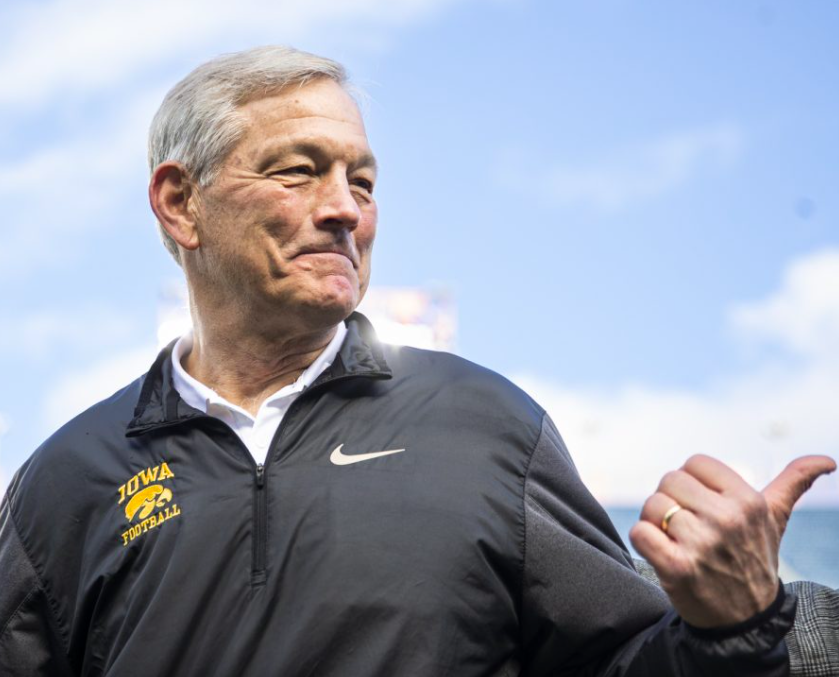
Kirk Ferentz was born on August 1, 1955, in Royal Oak, Michigan. He grew up in a Midwestern household with his parents, John and Elsie Mae Ferentz, and an older brother (also named John). In his early childhood he lived in suburban Detroit – he and his brother played neighborhood baseball games near their Michigan home. When Ferentz was about nine years old, his family moved from Michigan to the Pittsburgh, Pennsylvania area.
In Pittsburgh, Ferentz attended Upper St. Clair High School (a suburb of Pittsburgh). There he was active in athletics – he played on the high school football team and eventually served as a team captain. After graduating high school, he went on to college at the University of Connecticut. He earned a bachelor’s degree in English Education from Connecticut in 1978. At UConn, Ferentz continued his involvement in sports: he was a linebacker on the football team, where he was team captain and earned academic all-conference honors.
| Full Name | Kirk James Ferentz |
| Date of Birth | August 1, 1955 |
| Age | 70 (2026) |
| Birthplace | Royal Oak, Michigan, USA |
| Nationality | American |
| Education | B.A. English Education, UConn |
| Profession | College Football Head Coach |
| Coaching Start | 1977 |
| Current Role | Head Coach, Iowa |
| Past Roles | UConn, Worcester Academy, Pitt, Browns, Ravens |
| Net Worth | Not publicly disclosed |
Kirk Ferentz Career
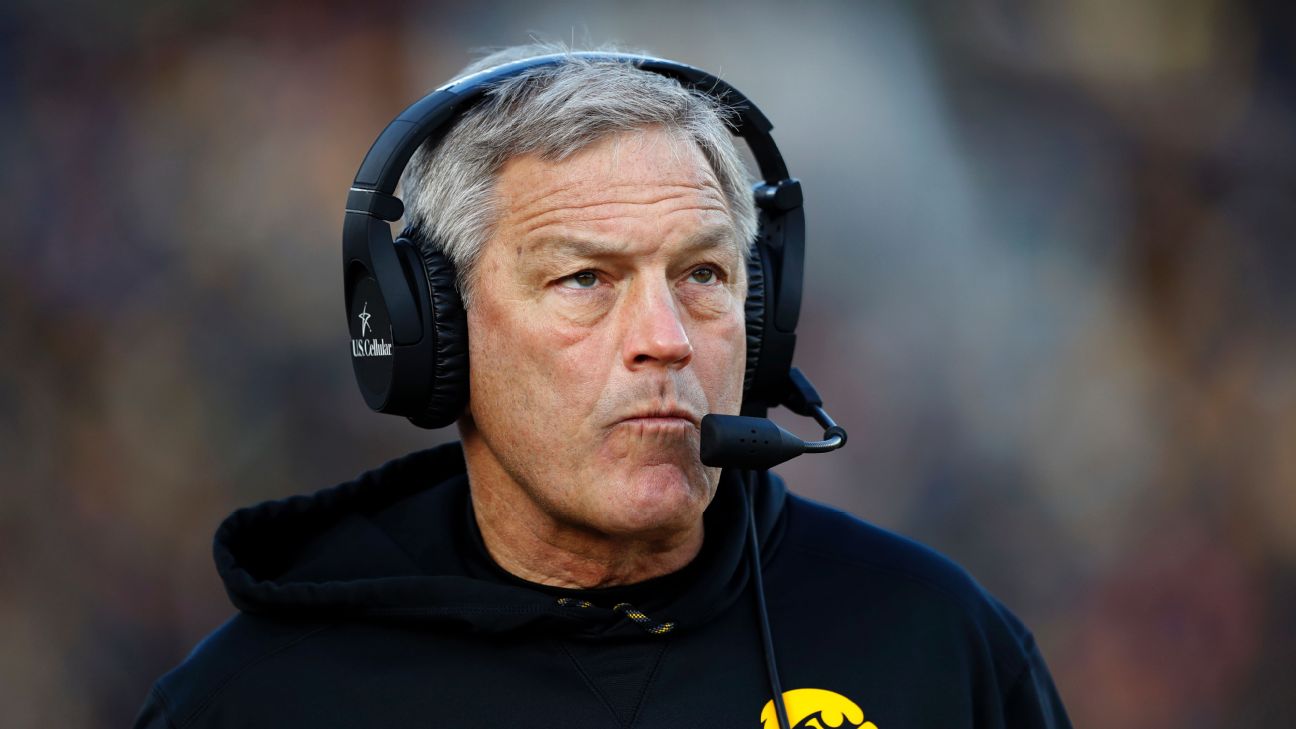
Kirk Ferentz is the University of Iowa’s current Moon Family Head Football Coach and, as of spring 2026, is in his twenty-eighth season in charge of the program. Iowa’s official biography lists his current career record at 221-149 over 30 seasons, including a 209-128 mark at Iowa and a 133-91 record in Big Ten play, and it says his most recent contract extension runs through the 2029 season. The NCAA directory for the 2025-26 academic year also identifies him as Iowa’s head football coach.
Early Coaching Career And Rise In College Football
Ferentz’s coaching path began at the University of Connecticut in 1977, where he served as a student assistant at his alma mater. He then spent the 1978 and 1979 seasons at Worcester Academy, working on the offensive line and as defensive coordinator while also teaching English literature.
In 1980, he moved to Pittsburgh as a graduate assistant offensive line coach on a team that finished 11-1 and was ranked No. 2 nationally. In 1981, he joined Hayden Fry’s staff at Iowa as offensive line coach, a move that placed him in one of the Big Ten’s most formative rebuilding projects of that era.
His first Iowa stint lasted through the 1989 season and became the foundation of his reputation as a line coach and program builder. Iowa’s official profile credits that 1981 staff with producing the program’s first winning season in 19 years, a conference title, and a Rose Bowl berth.
The same biography notes that Iowa went 73-33-4 during Ferentz’s nine seasons as offensive line coach and reached eight bowl games, while many of the school’s most productive offenses, both in scoring and yardage, were built with Ferentz coaching the front line.
Head Coaching Start At University Of Maine
Ferentz received his first college head-coaching opportunity at the University of Maine in 1990. Iowa’s official coaching history lists him as Maine’s head coach from 1990 through 1992, marking the first time he moved from position coaching into overall program leadership.
That stretch separated his assistant years under Fry from the next phase of his career and established him as a head coach before he returned to the highest levels of the sport. After three seasons at Maine, Ferentz was hired by Bill Belichick to coach the Cleveland Browns’ offensive line.
Iowa’s official biography says he stayed with the franchise after its move to Baltimore, served as assistant head coach and offensive line coach with the Ravens, and spent six total seasons in the Browns-Ravens organization.
Iowa’s later retrospective on his hiring emphasized that when the Hawkeyes considered him in late 1998, he arrived not only with prior Iowa experience but also with both college head-coaching experience and NFL assistant-head-coach experience.
Appointment As Head Coach Of University Of Iowa
When Hayden Fry retired after the 1998 season, Iowa turned to Ferentz as his successor. A University of Iowa feature published in 2025 recounts that Ferentz was then the assistant head coach of the Baltimore Ravens and that his preparation, professionalism, and thoughtfulness impressed the search committee during the interview process.
Iowa’s decision effectively reunited the program with one of Fry’s key former assistants, but this time in the lead role. The on-field rebuild was not immediate, but it was decisive once it turned.
Iowa’s year-by-year record under Ferentz began with back-to-back losing seasons in 1999 and 2000 before improving to 7-5 in 2001 and then surging to 11-2 in 2002 with an 8-0 conference record and an Orange Bowl appearance.
Iowa’s own historical coverage says the 2002 team laid claim to a share of the Big Ten title, while Ferentz’s official honors list shows that he won Associated Press national Coach of the Year, Walter Camp national Coach of the Year, and Big Ten Coach of the Year for that season.
Building A Consistent Program At Iowa Hawkeyes
Ferentz’s second, longer accomplishment at Iowa was not a single breakthrough season but the creation of a program that repeatedly returned to contention. After the 2002 breakthrough, Iowa followed with a 10-3 finish in 2003 and another 10-win season in 2004.
Iowa’s official releases from late 2004 describe that team as a Big Ten championship team, say it captured the program’s second conference title in three years, and note that Ferentz won another Big Ten Coach of the Year honor.
More than a decade later, the 2015 Hawkeyes delivered a 12-2 record, an undefeated regular season, a Big Ten West title, and a Rose Bowl berth, with Iowa’s official biography calling it a historic season and recording a school-record 12 wins.
The scope of that consistency shows up in the cumulative numbers. Iowa’s official biography says Ferentz has led the Hawkeyes to 23 bowl appearances in 27 seasons, with 11 bowl victories ranking first among Big Ten coaches.
It also says Iowa earned 13 straight bowl invitations from 2013 through 2025, the longest such streak in school history, and that Ferentz has produced eight wins or more in 16 seasons since 2002 and nine or more wins 10 times at Iowa. The same profile records final national rankings for Ferentz-led teams in 2002, 2003, 2004, 2008, 2009, 2015, 2018, 2019, 2020, 2021, 2023, and 2025.
Coaching Style, Strategy, And Player Development
Iowa’s official description of Ferentz’s football identity is unusually concise: his approach is “smart, tough, and physical.” The same biography adds that academics and character development are central off-field priorities.
That combination has been a defining feature of the Ferentz era, where the program’s public identity has emphasized disciplined play, continuity of teaching, and long-term development rather than frequent schematic reinvention or staff turnover.
The player-development record under Ferentz is one of the strongest objective arguments for his coaching model. Iowa’s official biography credits him with 94 NFL Draft selections, 13 first-round picks, and an 88 percent rate of senior starters over the last 23 years either being drafted or signing NFL free-agent contracts.
The same source lists 20 consensus All-Americans during his head-coaching tenure and a long run of national award winners, including Tyler Linderbaum’s 2021 Rimington Trophy, Jack Campbell’s 2022 Butkus Award and William V. Campbell Trophy, Tory Taylor’s 2023 Ray Guy Award, and the Joe Moore Award for Iowa’s offensive line in 2025.
That developmental structure extends beyond the roster to the larger football operation.
Iowa’s official profile lists 596 Academic All-Big Ten honorees and 19 Academic All-America selections across the Ferentz era, while also recording assistant-coach recognition such as Phil Parker’s 2023 Broyles Award and AFCA Assistant Coach of the Year honor. Those results help explain why the program has often looked stable even when it has changed coordinators, personnel groupings, or competitive cycles.
Career Achievements, Records, And Honors
Ferentz’s résumé now occupies a rare place in Big Ten and Iowa history. Iowa’s official biography lists him at 221 career wins, 209 victories at Iowa, and first place in school history for coaching wins.
The same biography identifies him as the Big Ten’s winningest coach, and the conference itself formally recognized him in September 2025 after Iowa’s win over UMass, announcing that he had become the winningest coach in Big Ten football history.
That conference release called the milestone a reflection of “leadership, consistency and commitment to excellence,” language that fits the larger shape of his tenure. His awards record is similarly broad. Iowa’s official list shows Big Ten Coach of the Year honors in 2002, 2004, 2009, and 2015, plus the Hayes-Schembechler and Dave McClain conference awards in 2015.
Nationally, he won the Associated Press and Walter Camp Coach of the Year awards in 2002, then added the Eddie Robinson Award, the Dodd Trophy, and the Woody Hayes Coach of the Year award in 2015.
Iowa’s official profile also notes that his 11 bowl victories rank first all-time among Big Ten coaches, and that he has guided the Hawkeyes to multiple runs of three straight bowl wins and repeated top-10 national finishes.
Current Coaching Role And Recent Season Performance
The most recent phase of Ferentz’s career shows that Iowa has remained competitive well into his third decade as head coach. In 2021, Iowa finished 10-4 and 7-2 in conference play, won the Big Ten West for the second time, ended the year ranked No. 23 in both the AP poll and Coaches Poll, recorded three wins over ranked opponents, and set a school record with 25 interceptions.
In 2022, Iowa went 8-5 and 5-4 in the Big Ten, and Jack Campbell’s season brought the program both the William V. Campbell Trophy and its first Butkus Award. The 2023-2025 stretch added more evidence of program durability, even with later record adjustments.
Iowa’s 2023 team won the Big Ten West on the field and finished in the final AP and Coaches top 25, while Tory Taylor set an NCAA single-season punting-yardage record with 4,479 yards and the defense allowed just 14.8 points per game, fourth-best nationally.
Iowa’s current official biography now records that season as 6-4 overall and 6-2 in conference play because four overall wins and one conference win were vacated. In 2024, Iowa finished 8-5 and 6-3, extended its bowl streak to 12 straight seasons, led the Big Ten in rushing, and produced three Big Ten positional award winners.
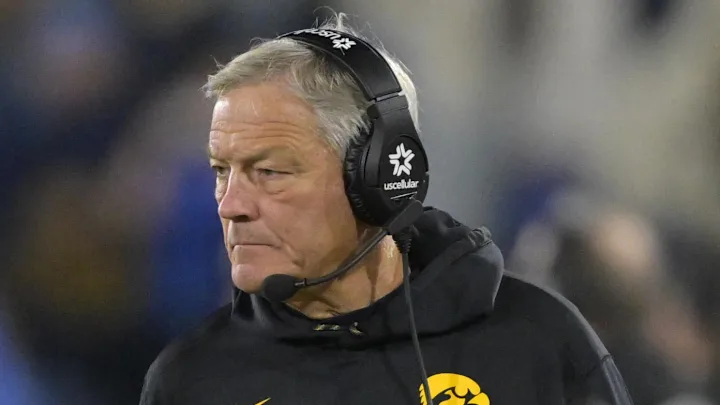
In 2025, Iowa finished 9-4 and 6-3, beat No. 14 Vanderbilt in the ReliaQuest Bowl, and closed the season ranked No. 17 in both the AP and Coaches polls. As of April 2026, Ferentz remains in charge of the program and is actively shaping Iowa’s next season.
Iowa’s official staff page says he is in year 28 as head coach, and the football program announced February and March 2026 staff additions and role changes, including Jay Norvell’s move to running backs coach and the additions of Mike Grant and Brian Smith in analyst roles. Iowa’s published 2026 schedule lists spring practice for April 25 and a season opener against Northern Illinois on September 5.
At the same time, recent NCAA action has become part of the current career record: Iowa announced in August 2024 that Ferentz and assistant Jon Budmayr would miss the opener against Illinois State as a self-imposed penalty, with Ferentz saying, “I frequently tell our players to abide by the rules, and in this instance, I did not.”
On April 14, 2026, the NCAA said Iowa’s football program would face a one-year probationary period and vacate four wins from the 2023 season in the tampering case involving Cade McNamara.
Kirk Ferentz Net Worth
As of 2026, Kirk Ferentz’s net worth has not been publicly disclosed, and no figure has been officially verified by major financial authorities. His income primarily comes from his role as head football coach at the University of Iowa and includes a base salary, supplemental compensation, a longevity bonus, and performance-based incentives under his contract. Specific details of his compensation are publicly available through university contract disclosures and payroll records.
FAQs
1. Who Is Kirk Ferentz?
Kirk Ferentz is an American college football coach and the longtime head coach of the University of Iowa football team. He has held the position since 1999 and is one of the longest-tenured coaches in NCAA Division I football.
2. How Long Has Kirk Ferentz Coached At Iowa?
Kirk Ferentz has been the head coach at the University of Iowa since 1999. As of 2026, he is in his 28th season leading the program.
3. What Is Kirk Ferentz Known For As A Coach?
He is known for building a consistent and disciplined football program focused on player development. His teams are often recognized for strong defense, physical play, and steady performance in the Big Ten Conference.
4. What Are Kirk Ferentz’s Major Coaching Achievements?
Ferentz has won multiple Big Ten Coach of the Year awards and national Coach of the Year honors. He also became the winningest coach in Big Ten football history in 2025.
5. Where Did Kirk Ferentz Play College Football?
Kirk Ferentz played college football at the University of Connecticut. He was a linebacker and served as a team captain during his time there.
Latest Articles
Popular Articles