Frederic Forrest Net Worth 2026: Facts & Earnings
Frederic Forrest Net Worth is unverified publicly. Get accurate facts about his acting career, major roles, and how he earned his income.
Mar 27, 20266.8K Shares115.8K Views
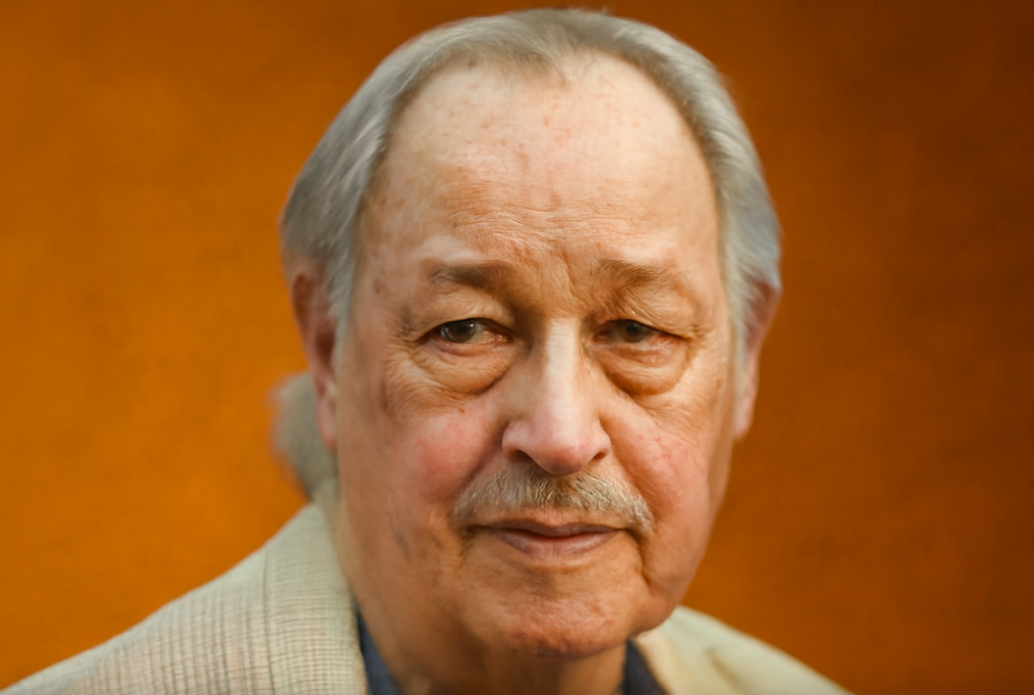
Frederic Fenimore Forrest Jr. was born on December 23, 1936, in Waxahachie, Texas. He was the son of Frederic Forrest Sr. and Virginia (née McSpadden). His father owned a local furniture store (and also ran greenhouses) in Waxahachie, and his mother’s maiden name was McSpadden.
Forrest grew up in Waxahachie in the late 1930s and 1940s. He attended Waxahachie High School, where he was an athletic student – he played football and ran track (among other sports). In interviews he recalled that the small town had no television reception, so entertainment meant walking to one of Waxahachie’s three local movie theaters (“the picture show”).
He later said, “I fell into movies,” noting that going to the picture show was a central part of his youth. These early experiences growing up on the town’s outskirts, helping his family, and watching films shaped his interests before he decided on acting.
After high school and a brief trip to New York to pursue acting, Forrest enlisted in the U.S. Army. Upon completing his military service he returned to Texas and enrolled at Texas Christian University in Fort Worth. At TCU he majored in radio and television (with a minor in theater) and graduated in 1960. After college he returned to New York to study acting formally under Sanford Meisner and Lee Strasberg.
| Fact Category | Verified Details |
| Full Name | Frederic Fenimore Forrest Jr. |
| Date of Birth | December 23, 1936 |
| Place of Birth | Waxahachie, Texas, USA |
| Date of Death | June 23, 2023 |
| Profession | American film and television actor |
| Frederic Forrest Net Worth | Not publicly disclosed; no verified estimate available |
| Primary Income Source | Acting in films, television, and stage productions |
| Breakthrough Role | The Conversation (1974), directed by Francis Ford Coppola |
| Most Notable Films | Apocalypse Now (1979), The Rose (1979), The Conversation (1974) |
| Awards & Recognition | Academy Award nominee for The Rose (1979); also received Golden Globe nominations |
Frederic Forrest Career
Frederic Forrest (1936 2023) was an American character actor whose career flourished during the New Hollywood era. He trained in theater and made his on-screen debut in the early 1970s, quickly gaining a reputation for powerful supporting performances.
Over four decades he appeared in a wide range of films and television dramas, often bringing intensity and nuance to every role. Forrest worked with top directors and in diverse genres from Westerns and thrillers to coming-of-age stories and became best known for key roles in Francis Ford Coppola films. His career highlights include an Academy Award nomination for The Rose(1979) and acclaimed turns in The Conversationand Apocalypse Now.
Breakthrough And Rise In The New Hollywood Era
Forrest began on stage in the 1960s and moved into film with his debut in When the Legends Die(1972), playing a Native American youth, a role that earned him a Golden Globe nomination as Most Promising Newcomer.
He followed with roles in crime dramas like The Don Is Dead(1973). His breakthrough came in 1974 when he was cast by Francis Ford Coppola in the espionage thriller The Conversation, playing Mark, a surveillance target whose recorded words become central to the plot.
This early New Hollywood classic showcased Forrest’s ability to add mystery and depth to a complex supporting part. By the late 1970s he had become a familiar face in major films: in 1979 alone he appeared in two career-defining works.
In Coppola’s Apocalypse Nowhe portrayed Chef Jay “Chef” Hicks, a boisterous soldier whose breakdown in the jungle is one of the film’s most memorable scenes. That same year he played Huston Dyer in The Rose, a devoted Texas chauffeur who falls in love with a troubled rock star (played by Bette Midler).
Both roles brought Forrest to the height of his recognition. He won the National Society of Film Critics Award for Best Supporting Actor for those performances and received an Oscar nomination for The Rose.
Collaborations With Francis Ford Coppola
A hallmark of Forrest’s career was his ongoing collaboration with director Francis Ford Coppola. After working together on The Conversation(1974), Coppola cast Forrest as Chef in Apocalypse Now(1979).
He later gave Forrest one of the rare leading-man roles of his career: in the ambitious musical romance One from the Heart(1981) he played Hank, a romantic Los Angeles mechanic.
Though the film was a commercial failure, it exemplified Coppola’s trust in Forrest’s talent. Coppola cast Forrest again in Tucker: The Man and His Dream(1988), where Forrest played Eddie Dean, a tireless automotive engineer helping realize visionary inventor Preston Tucker’s dream car.
These four collaborations (1974 1988) including Conversation, Apocalypse Now, One from the Heartand Tuckermade Forrest a key supporting player in Coppola’s body of work.
Notable Films And Career-Defining Performances
Outside of Coppola’s films, Forrest delivered memorable performances in a variety of genres. His portrayal of Huston Dyer in The Rose(1979) remains a career highlight; the role earned him Academy Award and Golden Globe nominations for Best Supporting Actor.
In Martha Coolidge’s 1983 teen comedy Valley Girl, Forrest was warmly cast as a health-food store manager and protective father, showing his range in a lighter role.
He played the infamous Lee Harvey Oswald in the TV movie Ruby and Oswald(1978), and twice portrayed novelist Dashiell Hammett: first in Wim Wenders’s film Hammett(1982) and later in the TV movie Citizen Cohn(1992).
Forrest also appeared with Hollywood stars in genre films, for example as a hot-headed cowboy in The Missouri Breaks(1976) with Marlon Brando and Jack Nicholson, and as a Nazi storekeeper in Falling Down(1993).
On television he was cast in prestige projects such as the Western miniseries Lonesome Dove(1989), playing the Native American outlaw Blue Duck, and the action series 21 Jump Street(1987) as Captain Richard Jenko in its first season. His final screen role was Donald Stark in the political drama All the King’s Men(2006), after which he retired from acting.
Acting Style, Roles, And Industry Reputation
Forrest earned a reputation as a versatile and intense character actor. Critics and colleagues noted that he brought an unpredictable energy and depth to supporting roles.
He often played men with a quirky intensity or inner tension, and was praised for fully inhabiting each character. Director Mark Rydell credited Forrest with learning to “personalize” his acting through looseness and spontaneity, traits evident in Forrest’s relaxed yet powerful screen presence.
Actor Barry Primus, who worked with Forrest, recalled that whenever a director gave Forrest a role “you got the whole package” – he would elevate even small parts with vivid detail.
Though talented enough for leading roles, Forrest was known to quip early in his career that he chafed at having scenes cut for being “too strong.” Nevertheless, colleagues remembered him as a generous and creative performer, one who delivered eccentric, unforgettable turns in film and television.
Awards, Nominations, And Career Achievements
Forrest’s performances earned recognition from major industry groups. His most notable accolades came for The Rose(1979), for which he was nominated for the Academy Award and Golden Globe Award for Best Supporting Actor.
He also received Golden Globe nominations for Most Promising Newcomer (for When the Legends Die) and Best Supporting Actor (for The Rose).
Critics’ organizations honored him as well: in 1979 the National Society of Film Critics awarded him Best Supporting Actor for his combined work in Apocalypse Nowand The Rose.
These honors underscored the impact of Forrest’s work during his peak years. Although he did not win a major Oscar or Golden Globe, Forrest was widely respected for his contributions to several acclaimed films of the 1970s and 1980s.
Frederic Forrest’s Legacy In American Cinema
Forrest’s legacy is that of a consummate New Hollywood character actor who made significant contributions to American cinema. His roles in landmark films like The Conversationand Apocalypse Nowremain influential examples of the era’s filmmaking, and his Oscar-nominated turn in The Rosestands as a memorable romantic lead. Industry peers and co-stars have fondly remembered Forrest as a “remarkable” and “brilliant” actor who always enhanced a production.
He helped bridge generations of cinema: for example, critics noted how his role in Valley Girlconnected the classic 1970s style to emerging 1980s stars. After his death, contemporaries and fans alike paid tribute to his unique talent. Today Forrest is remembered as a gifted supporting actor whose vivid, unpredictable performances left a lasting imprint on the films of his time.
Frederic Forrest Net Worth
At the time of his death, Frederic Forrest’s net worth was not publicly disclosed, and no official figure has been verified by major financial authorities. He earned income through his acting career in film and television. His film credits include Apocalypse Nowand Francis Ford Coppola’s The Conversation, One from the Heart, and Tucker: The Man and His Dream. He also appeared in television series such as 21 Jump Street. Specific earnings from these roles have not been publicly disclosed.
FAQs
Who Was Frederic Forrest?
Frederic Forrest was an American character actor known for his work in film and television during the 1970s and 1980s. He gained recognition for supporting roles in critically acclaimed films, particularly those directed by Francis Ford Coppola.
What Was Frederic Forrest Best Known For?
He was best known for roles in Apocalypse Now(1979), The Conversation(1974), and The Rose(1979). His performance in The Roseearned him an Academy Award nomination for Best Supporting Actor.
Did Frederic Forrest Win Any Major Awards?
Frederic Forrest did not win an Academy Award but received a nomination for The Rose(1979). He also earned recognition from critics, including a National Society of Film Critics Award.
Which Directors Did Frederic Forrest Frequently Work With?
He had a notable working relationship with director Francis Ford Coppola. Their collaborations include The Conversation, Apocalypse Now, One from the Heart, and Tucker: The Man and His Dream.
Did Frederic Forrest Serve In The Military?
Yes, Frederic Forrest served in the United States Army before pursuing higher education. After completing his service, he attended Texas Christian University.
Latest Articles
Popular Articles