Daniel Noboa Net Worth 2026: Salary And Assets
Daniel Noboa Net Worth reveals his 2026 income, presidential salary, and business assets, with a clear look at how his wealth is structured today.
Apr 11, 20262.4K Shares58.7K Views
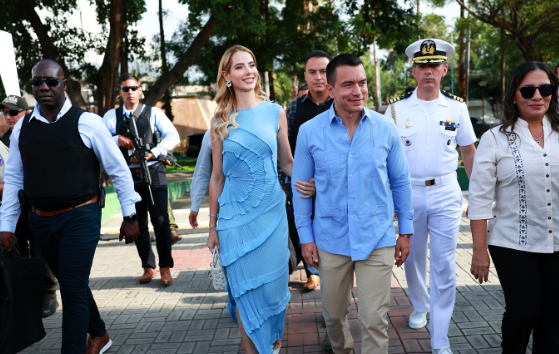
Daniel Roy Gilchrist Noboa Azín was born on November 30, 1987, in Miami, Florida. He is the eldest of four children born to Álvaro Noboa and Annabella Azín. Both of his parents are Ecuadorian: his father, Álvaro Noboa, is a prominent banana magnate, while his mother, Annabella Azín, is a physician who later became active in politics. The Noboa family is wealthy and influential in Ecuador.
Noboa was raised in Guayaquil, Ecuador, where he grew up immersed in his family’s business and political activities. As a child, he accompanied his father on political campaign tours, and his biography notes that he was “raised among business and electoral campaigns.” These experiences within a politically active and entrepreneurial household played a central role in shaping his upbringing.
Noboa pursued his education in the United States. He earned a bachelor’s degree in Business Administration from New York University’s Stern School of Business. He later completed several graduate degrees, including a Master of Business Administration from Northwestern University’s Kellogg School of Management, a Master of Public Administration from Harvard Kennedy School, and a master’s degree in Governance and Political Communication from George Washington University.
| Estimated Net Worth (2026) | $894,276 (not officially verified) |
| Nationality | Ecuadorian |
| Current Position | President of Ecuador |
| Education | Degrees from NYU, Kellogg, Harvard, GWU |
| Political Start | Elected to National Assembly in 2021 |
| Presidential Win | Won 2023 runoff with ~52% |
| Major Achievements | Security reforms, crime reduction, youth scholarships |
| Current Position | President of Ecuador (2025–2029 term) |
| Family Background | Son of businessman Álvaro Noboa and Dr. Annabella Azín |
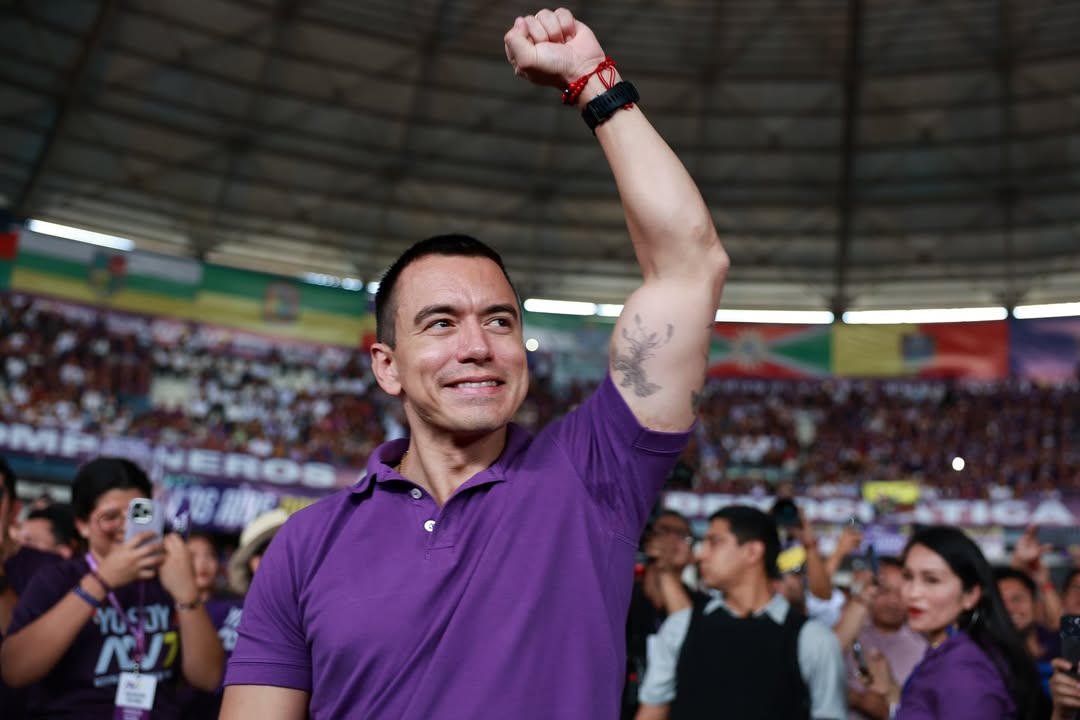
Daniel Noboa’s Professional Career And Political Leadership In Ecuador
Daniel Noboa is a business executive-turned-politician whose career accelerated from private-sector leadership into national legislative authority and, ultimately, the presidency of Ecuador.
After being credentialed and sworn into a full presidential term for the 2025–2029 period, his work has centred on executive decision-making during a national security crisis, fiscal measures enacted via executive instruments, and repeated efforts to translate campaign commitments into operational government directives.
Early Career In Business And Entrepreneurship
Early in his professional life, Noboa established an events-focused enterprise DNA Entertainment Group positioned around organising events and related commercial activity. This venture is repeatedly referenced in official and major-media career profiles as a foundation for his first executive responsibilities.
He then entered the corporate export-and-logistics environment through Corporación Noboa, beginning in junior operational work before progressing into senior logistics management.
Official legislative-profile materials specify that he served as Director of Logistics from December 2010 to August 2015, and attribute to that period a major shift in the company’s cold-chain transport model moving perishables from refrigerated ship systems to container-based transport explicitly framed as a cost-reducing transition at scale.
Following the logistics portfolio, those same official records state that he moved into commercial leadership, serving as Commercial Director until June 2018. He held responsibility for supervising global sales strategy for the company’s food products and overseeing corporate controls connected to that commercial function.
In parallel, government and media profiles describe him reaching a maritime/shipping leadership position within the company. They emphasise that he became one of the youngest individuals to hold that maritime director role in the organisation’s history.
How Daniel Noboa Entered Politics
Noboa’s entry into public office came through legislative elections rather than appointed executive roles. In 2021, he ran for and won a seat in Ecuador’s National Assembly representing Santa Elena, a move that shifted his career from corporate management into formal lawmaking and parliamentary oversight responsibilities.
His legislative tenure ended in May 2023 when Ecuador’s National Assembly was dissolved through the constitutional mechanism commonly known as “muerte cruzada.” This triggered an early political reset that reshaped the national electoral calendar and created a direct pathway for the 2023 snap presidential contest in which he later competed.
Daniel Noboa’s First Political Roles And Experience
Within the legislature, Noboa’s most documented leadership role was chairing the Assembly’s economic-development commission. Official National Assembly reporting identifies him as president of the Comisión de Desarrollo Económico, Productivo y la Microempresa during the 2021–2023 legislative cycle.
The commission under his leadership contributed 11 draft bills to the Assembly’s legislative output, spanning topics that included “economía violeta” and digital transformation.
That same official account attributes to his commission a measurable share of institutional output. It states that 21.5% of the laws approved by the Assembly were based on projects and reports prepared by the commission and characterises this as a production increase compared with the prior period.
It also documents a high-volume public-engagement approach hundreds of appearances and broad stakeholder input. This links his legislative management style to structured citizen participation and cross-bloc collaboration.
The Presidential Campaign That Defined His Career
Noboa’s transition from legislator to presidential contender took place during the compressed timeframe of Ecuador’s 2023 snap election. Major international business and political reporting describes his decision to run as a pivotal career bet: a first-time presidential candidacy undertaken after only a short parliamentary stint.
This positioned him as a bid to move from policy committee leadership into national executive authority. In campaign-era materials, his platform themes were repeatedly framed around job creation and security.
These two priorities were later echoed in official records of his early presidential messaging. This continuity matters for career analysis because it shows a deliberate through-line. The campaign’s proposed direction was used as a basis for defining what his administration would treat as urgent governance tasks once he secured office.
Daniel Noboa’s Rise To The Presidency Of Ecuador
Noboa’s rise to the presidency was formalised through Ecuador’s electoral authority and the Assembly’s constitutional investiture process. After the 2023 contest, Ecuador’s National Electoral Council approved the adjudication of the presidential and vice-presidential offices to Daniel Noboa and Verónica Abad.
It explicitly noted that the numerical results were firm and that the adjudication was no longer subject to further appeal under the cited electoral code provision. The CNE subsequently delivered official credentials to Noboa and Abad on 15 November 2023.
In that ceremony, the CNE’s leadership publicly highlighted the institutional significance of the moment. It included a recorded statement from Noboa thanking the electoral body and asserting a unifying national message (“Hemos demostrado que como país podemos reconstruirnos y dar un mensaje de unidad”).
Ecuador’s National Assembly then conducted the formal assumption of office on 23 November 2023. It swore Noboa in as President for the 2023–2025 period and recorded his initial governing emphasis on reducing violence and tackling unemployment as mutually reinforcing priorities.
Official Assembly reporting also documents that he received a top-tier state honour (Orden Nacional al Mérito, Gran Collar). He also signed the executive decree by which he assumed the headship of state and government in conformity with Ecuador’s constitution.
Key Policies And Leadership Approach As President
A defining feature of Noboa’s early presidential leadership was the use of executive decrees to expand the state’s security posture in response to escalating organised-crime violence.
On 9 January 2024, Executive Decree No. 111 formally recognised the existence of an internal armed conflict. It established this as an additional basis connected to the state of exception declared the previous day.
The decree explicitly ordered the mobilisation and intervention of the Armed Forces and National Police across national territory. That same decree identified specific organised-crime groups as “organizaciones terroristas” and “actores no estatales beligerantes.”
It ordered the Armed Forces to execute military operations under international humanitarian law while respecting human rights. This framed security operations as a central executive responsibility of the presidency rather than a purely policing matter.
This security approach has also attracted sustained human-rights scrutiny. Human Rights Watch argued that the “internal armed conflict” announcement contributed to serious violations by security forces. It urged Ecuador to prioritise strengthened investigative and justice capacity rather than expanding street-level military deployment.
This illustrates that Noboa’s leadership has been evaluated not only on operational outcomes but also on legality, oversight, and rights compliance. On the economic governance front, Noboa’s administration implemented tax-rate change through executive action in 2024.
An official publication of Ecuador’s Ministry of Economy and Finance states that, on 15 March 2024, the President issued Executive Decree No. 198. This ordered an increase of the VAT rate to 15%, effective from 1 April 2024. It is an example of a presidency using decree-based tools to rapidly alter fiscal parameters affecting the wider economy.
Major Career Milestones And Political Achievements
Noboa’s career milestones can be tracked as a progression from enterprise creation to executive corporate authority and then to institutional political leadership. The documented launch of DNA Entertainment Group and subsequent rise to senior logistics and commercial posts in a major export-linked company established his operational background.
This included supply chain management, cost-structure change, and global commercial oversight. In the National Assembly, his milestone was achieving commission chairmanship with measurable legislative output. Official Assembly reporting credits the commission he led with 11 projects.
It also links that work to a significant share of approved laws during the legislative cycle. This commission leadership positioned him as a policy operator. He combined legislative drafting, committee governance, and public participation processes before seeking national executive office.
At the national level, his milestone sequence included formal adjudication by the electoral authority as President and Vice President-elect following the 2023 snap election.
It also included receipt of official credentials in November 2023 and constitutional assumption of office via National Assembly investiture later that month. Each step was recorded through government institutions that together define the transition from candidate to head of state.
Current Work, Government Actions, And Political Activities
Noboa’s current professional role is President of the Republic of Ecuador for the 2025–2029 term. The transition into that full term was formally recognised by Ecuador’s electoral authority through credentialing and by the National Assembly through the investiture ceremony held on 24 May 2025.
The Assembly’s official account records the oath taken by Noboa as President and by María José Pinto as Vice President. This situates the administration’s present work within an institutional mandate running to May 2029. In the credentialing stage for the 2025–2029 period, the CNE framed the election process as completed successfully.
It recorded Noboa’s acceptance of the new mandate “con alto sentido de responsabilidad y gratitud.” This reflects a public positioning of his leadership as grounded in electoral legitimacy and responsibility to the electorate.
From a governance-activity perspective, the record of his presidency to date shows a continued reliance on decree instruments as a mechanism for rapid national action. This is particularly visible in security decrees defining conflict status and operational roles for security forces.
It is also visible in fiscal decrees implementing nationwide tax-rate adjustment. Together, these actions illustrate a presidency shaped by crisis-time executive management. Legal instruments and institutional coordination electoral authority, legislature, armed forces, and economic administration form the core infrastructure of his ongoing professional agenda.
Daniel Noboa Net Worth
As of 2026, Daniel Noboa’s net worth is estimated at $894,276. This figure has not been officially verified by major financial authorities. His income sources include his official presidential salary of $60,864 per year, as well as equity in his family’s agribusiness and export companies, such as shares in Pesquera Marintan and Nobexport. However, specific earnings from these private ventures have not been publicly disclosed.
FAQs
1. Who Is Daniel Noboa?
Daniel Noboa is an Ecuadorian businessman and politician who currently serves as the President of Ecuador. He took office in November 2023 after winning a snap presidential election.
2. When Was Daniel Noboa Born?
Daniel Noboa was born on November 30, 1987, in Miami, Florida, United States. He was raised in Guayaquil, Ecuador.
3. What Is Daniel Noboa’s Educational Background?
He studied in the United States and holds a bachelor’s degree from New York University. He also earned graduate degrees from Northwestern University, Harvard Kennedy School, and George Washington University.
4. What Was Daniel Noboa’s Career Before Politics?
Before entering politics, Noboa worked in business, including roles in his family’s company, Corporación Noboa. He held positions in logistics and commercial management and also founded an events company.
5. When Did Daniel Noboa Enter Politics?
Daniel Noboa entered politics in 2021 when he was elected to Ecuador’s National Assembly. He served until 2023, when the assembly was dissolved.
Latest Articles
Popular Articles