Colin Hay Net Worth 2026: Music, Royalties & Income
Colin Hay Net Worth comes from record sales, streaming, and performances. Get updated insights into his financial standing and revenue sources.
Apr 18, 2026317 Shares63.4K Views
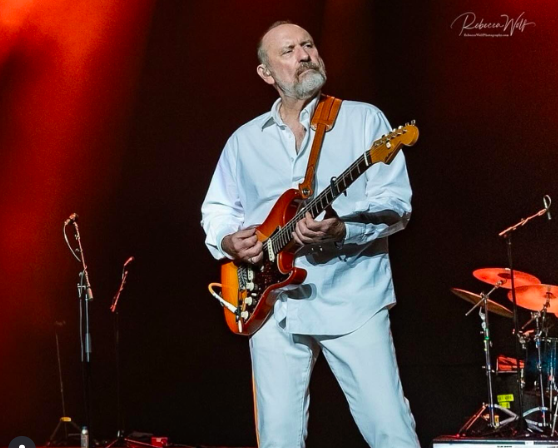
Colin James Hay was born on 29 June 1953 in Kilwinning, on the west coast of Scotland. He spent his early childhood in the nearby town of Saltcoats, Ayrshire. He was one of three children of James and Isabella Hay. His father James ran the local music shop and also worked as a piano tuner, while his mother Isabella sang. Growing up in this musical household, Hay listened to the popular music of the era – including records by The Beatles and soul and R&B artists.
In 1967, when he was about 14, Hay and his family emigrated from Scotland to Melbourne, Australia. He continued his schooling in Melbourne. By age 12 he had already begun learning the guitar, and shortly after moving he was writing his own songs and performing as a singer and guitarist in local folk clubs. (Hay later recalled that he wrote and sang in Melbourne folk clubs while still at school.)
After finishing secondary school in Australia, Hay pursued higher education. During the 1970s he attended La Trobe University in Melbourne, where he completed a degree in the arts.
| Full Name | Colin James Hay |
| Date of Birth | June 29, 1953 |
| Birthplace | Kilwinning, Scotland |
| Nationality | Scottish–Australian |
| Profession | Singer, Songwriter, Musician |
| Years Active | 1978–present |
| Famous For | Lead singer of Men at Work |
| Major Band | Men at Work |
| Solo Debut Album | Looking for Jack (1987) |
| Notable Solo Releases | Man @ Work (2003), Now and the Evermore (2022) |
| Record Label | Lazy Eye Records (founded 1994) |
| Recent Activity (2025) | World tour + Man @ Work, Vol. 2 upcoming |
| Net Worth (2026) | Not publicly disclosed |
| Main Income Sources | Album sales, streaming royalties, global touring |

Early Career Moves And Entry Into The Music Industry
Colin Hay first made his mark on the Australian music scene in the late 1970s. In 1978 he formed an acoustic duo with schoolfriend Ron Strykert in Melbourne. By 1979 this duo expanded into a full rock band; Hay, Strykert and drummer Jerry Speiser recruited multi-instrumentalist Greg Ham and bassist John Rees, officially launching Men at Work.
The group spent those years performing extensively in local venues, honing their style. In 1980 Men at Work independently released the single “Down Under/Keypunch Operator,” which they funded and pressed themselves. This DIY recording helped them secure a record deal and paved the way for their first studio album.
How Colin Hay Became The Frontman Of Men At Work
From the very beginning of Men at Work, Colin Hay took on the role of frontman. He served as the band’s lead vocalist and guitarist, becoming the dominant creative force in the group. Hay wrote or co-wrote many of the band’s songs and guided their musical direction.
Signature Men at Work hits such as “Down Under” and “Who Can It Be Now?” were penned by Hay (often in collaboration with Strykert). His engaging stage presence and distinctive voice defined the band’s identity. Through constant touring and recording from 1979 into the mid-1980s, Hay remained the one member who was there from the start to the finish of the original lineup.
Breakthrough Success With Men At Work
Men at Work achieved global success in the early 1980s. Their debut album Business as Usual (1981) became a runaway hit, topping charts in Australia, New Zealand, the UK and the US. In January 1983 both Business as Usual and its lead single “Down Under” simultaneously held the No. 1 position on the US Billboard charts – a first for any Australian act.
The band’s second album Cargo (1983) also fared strongly, reaching the Top 10 in several countries. This period saw Hay front a Grammy-winning phenomenon: in 1983 Men at Work won the Grammy Award for Best New Artist. Hits like “Overkill” and “It’s a Mistake” followed on later releases.
By the time the original lineup split in early 1986, the group had sold well over 30 million records worldwide. Men at Work were later inducted into the Australian Recording Industry Association (ARIA) Hall of Fame (as a group) in 1994, cementing their legacy as one of Australia’s most successful pop-rock acts.
Transition From Band Success To A Solo Career
After Men at Work disbanded in 1986, Hay immediately began pursuing a solo path. In January 1987 he released his debut solo single “Hold Me,” followed by his first solo album Looking for Jack (1987). This marked the official start of his solo recording career.
Around 1989 Hay relocated from Australia to Los Angeles, positioning himself in the US music industry. In 1994 he founded his own label, Lazy Eye Records, giving him full creative control over his releases.
Throughout the late 1980s and 1990s he gradually assembled a new backing band, toured extensively in smaller venues, and honed a solo performance style. By the mid-1990s his focus had firmly shifted to being a singer-songwriter fronting his own projects rather than the 80s band.
Colin Hay’s Solo Music Career And Evolution As An Artist
As a solo artist, Colin Hay developed a reputation for thoughtful, melodic songwriting with roots in folk-rock and pop. Over more than three decades he has recorded a dozen albums under his own name. His early solo work continued in a rock-pop vein, but he gradually embraced more acoustic and introspective arrangements.
Critics have noted this shift: Rolling Stone praised Hay’s tunes as “witty, hooky pop,” and NPR’s World Café lauded his “distinctive voice.” Hay’s concerts often combine warm humor with sincerity, reflecting his evolution into a troubadour style.
During his solo career he gained steady attention through radio and television. He played numerous late-night TV shows in the US (such as David Letterman and Craig Ferguson) and performed on major radio programs like NPR’s World Café.
A significant boost came in the 2000s when filmmaker Zach Braff championed his music: Braff prominently featured Hay’s songs on the Grammy-winning Garden State soundtrack and later invited Hay to appear as himself on the TV series Scrubs. These exposures introduced Hay’s music to a new generation of listeners.
He also branched into collaborative ventures – for example, he toured internationally several times as part of Ringo Starr & His All–Starr Band – and explored other creative outlets (such as narrating an audiobook of Aesop’s fables and starring in a documentary about his life).
Major Career Milestones And Musical Achievements
Colin Hay’s career is marked by notable accolades and achievements. As the frontman of Men at Work, he earned the band a Grammy Award for Best New Artist in 1983 and massive commercial success (Business as Usual sold millions of copies globally).
The band’s achievements include multiple chart-topping singles and albums, and their 1994 ARIA Hall of Fame induction honored the group’s lasting impact. As a solo artist, Hay has continued to be recognized by the music industry.
His 1998 album Transcendental Highway was nominated for an ARIA Award (Best Adult Contemporary Album). In recent years he has been celebrated by his peers: in 2020 he was inducted into the Australian Songwriters Hall of Fame.
That same year he received APRA’s Distinguished Service Award, and in 2023 he won the APRA Ted Albert Award for Outstanding Services to Australian Music. These honours reflect his long-standing contributions as a songwriter and performer.
In 2022 he even charted on the dance/electronic charts with a reimagined version of “Down Under,” which won an ARIA award for Best Dance Release. Throughout his career Hay has also achieved numerous gold and platinum records, and songs he co-wrote remain staples of 1980s pop-rock compilations.
Colin Hay’s Influence On Pop And Rock Music
Hay’s work – especially with Men at Work – has had a lasting cultural influence. Men at Work’s signature song “Down Under” is widely recognised as an iconic Australian anthem and remains a touchstone of 1980s pop.
Hay’s blend of catchy melodies and clever storytelling has inspired other singer-songwriters. Contemporary artists have cited admiration for his craft; for example, pop star Sia (his niece) publicly lauded Hay as her favourite singer while presenting him an award.
His success helped pave the way for other Australian musicians to achieve international careers. As a performer, Hay set a precedent for authenticity and humour in songwriting. Critics often point out that his ability to mix witty observations with heartfelt emotion broadened the appeal of pop/rock songwriting. Through TV, film and tributes by new artists, Hay’s music continues to reach audiences across generations, underlining his role in shaping modern singer-songwriter traditions.
Current Work, Tours, And Professional Activities
Colin Hay remains highly active in music as of 2026. In April 2026 he launched a U.S. spring tour with his acoustic band, debuting in Palm Springs, California. This run features stripped-down, acoustic renditions of Men at Work classics and Hay’s solo songs, and continues through major cities in April. He is also scheduled to perform under the Men at Work name later in 2026; a North American summer tour was announced featuring Hay and new bandmates (with acts like Toad the Wet Sprocket and Shonen Knife).
Beyond live shows, Hay recently released new recordings: his 2023 album Now and the Evermore (issued on his Lazy Eye/Compass Records label) featured guest musicians including Ringo Starr on drums. He has also been working on acoustic reinterpretations of older material (the Man @ Work series).
In addition to headlining his own tours, Hay continues to collaborate with other artists: he has joined Ringo Starr’s All–Starr Band for global concerts and appears at special music events worldwide. Through these ongoing tours and releases, Hay maintains a busy professional schedule, bringing both his Men at Work heritage and his solo repertoire to audiences around the world.
Colin Hay Net Worth
As of 2026, Colin Hay’s net worth has not been publicly disclosed, and no figure has been officially verified by major financial authorities. He earns income from his music career, including songwriting and publishing royalties he is co-credited as a writer on Men at Work’s song “Down Under” as well as revenue from the sales and streaming of his recordings. He also generates income from live performances and touring, as reflected in his active 2026 concert schedule; however, specific earnings figures are not publicly available.
Latest Articles
Popular Articles