Bryan Stevenson Net Worth And Income In 2026
Bryan Stevenson Net Worth estimates are unverified. Get accurate insight into his nonprofit leadership role, academic career, and book revenue.
Feb 17, 2026209 Shares41.8K Views
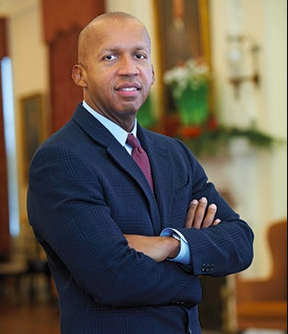
Bryan Stevenson Net Worth (2026)
As of 2026, no reliable public estimate of Bryan Stevenson’s net worth is available. He is primarily known as an attorney, a law professor at New York University School of Law, and the founder and executive director of the Equal Justice Initiative (a nonprofit).
He derives income from his faculty salary, book royalties (including those from his memoir Just Mercy), and from speaking engagements. Major financial outlets like Forbes and Bloomberg have not reported any personal wealth figure for him; any online net-worth estimate should be treated as unverified speculation, reflecting uncertainty and data limitations.
| Fact Category | Verified & Important Facts |
| Full Name | Bryan Stevenson is an American lawyer and justice reform advocate. |
| Birth | Born on November 14, 1959, in Milton, Delaware, USA. |
| Net Worth | Bryan Stevenson Net Worth is not publicly reported as of 2026. |
| Income Sources | Earns from teaching, book royalties, and speaking engagements. |
| Organization | Founder and Executive Director of the Equal Justice Initiative (EJI). |
| Education | Holds degrees from Eastern University and Harvard University. |
| Legal Focus | Specializes in death penalty and juvenile justice cases. |
| Supreme Court | Argued landmark cases before the U.S. Supreme Court. |
| Key Ruling | Won Miller v. Alabama (2012) on juvenile sentencing. |
| Academic Role | Professor of Criminal Justice at NYU School of Law. |
| Book | Author of Just Mercy, a bestselling nonfiction book. |
| Public Speaking | Delivered a globally viewed TED Talk on justice. |
| Awards | Recipient of the MacArthur Fellowship and National Humanities Medal. |
| Financial Ethos | Known for nonprofit service, not personal wealth focus. |
| Current Status | Actively working in law, education, and advocacy (2026). |
Early Life
Bryan Stevenson was born on November 14, 1959, in Milton, Delaware. He is one of three children of Alice (Golden) Stevenson, an office worker at the Dover Air Force Base, and Howard Stevenson Sr., a factory technician. Stevenson and his brother Howard grew up in the small rural town of Milton during the era of segregation; they were raised in a close-knit family despite the region’s racial divides. His mother, Alice, refused to accept the local school segregation, insisting that her children receive the best education possible.
Stevenson’s early schooling took place in segregated public schools, and he became part of the first generation of African Americans in Delaware to attend fully integrated schools. In school he excelled in academics and extracurricular activities; as a youth he became an accomplished pianist and soccer player.
One of his high school teachers, Harriet Jeglum, encouraged him to enter speech contests and take part in drama productions, an influence he credits with kindling his early love of literature. Stevenson graduated from Cape Henlopen High School (Lewes, Delaware) in 1977.
Stevenson attended Eastern University in St. Davids, Pennsylvania. He graduated from Eastern University in 1981 with a bachelor’s degree in philosophy. He then earned a scholarship to Harvard University in Cambridge, Massachusetts. At Harvard he completed both a Juris Doctor (J.D.) degree from the Law School and a master’s degree in public policy (M.P.P.) from the Kennedy School in 1985.
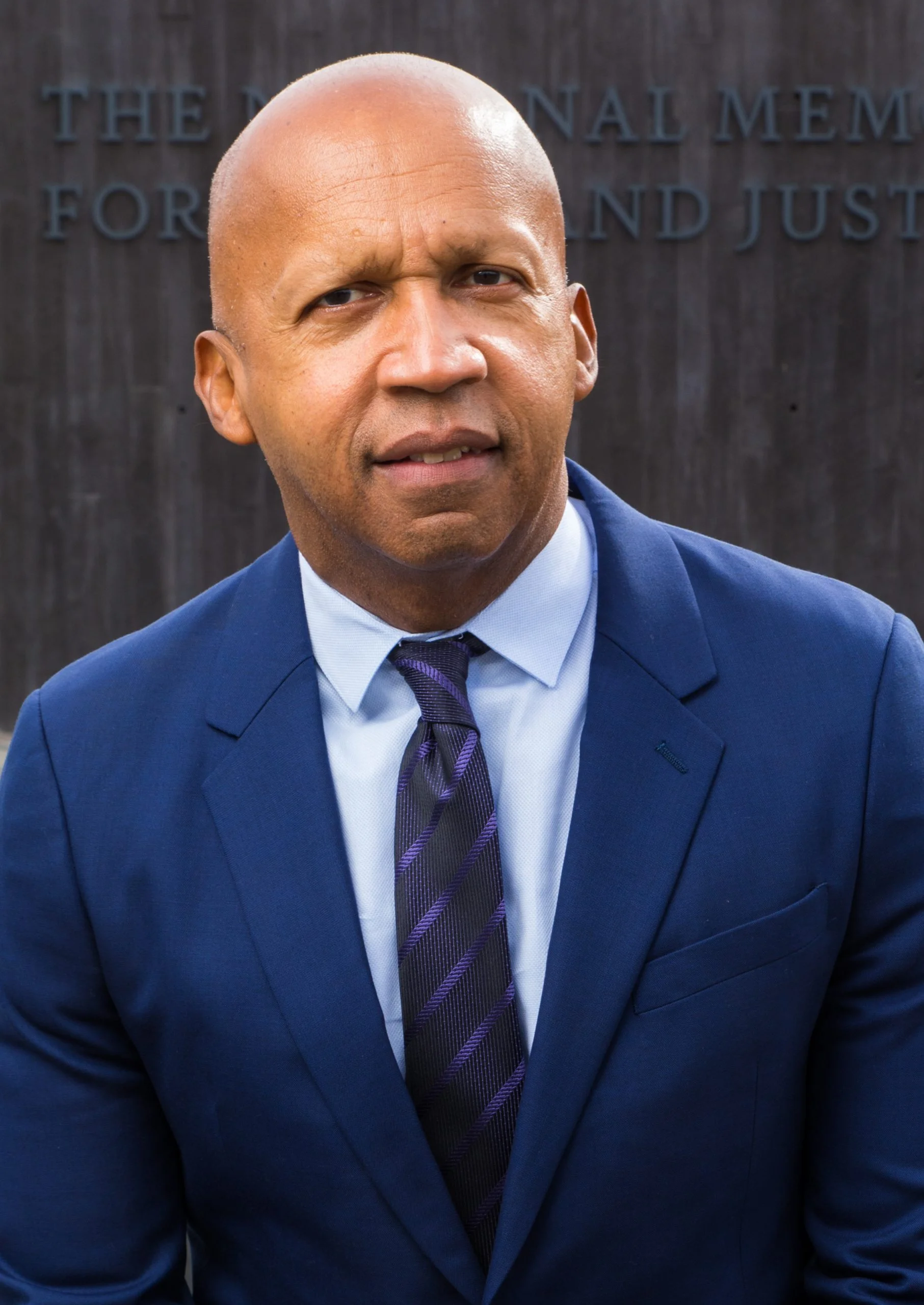
Bryan Stevenson Career
Bryan Stevenson is a prominent American attorney and criminal justice reformer. He is best known as the founder and executive director of the Equal Justice Initiative (EJI), a nonprofit legal services organization in Montgomery, Alabama.
Stevenson has dedicated his career to defending poor and marginalized people in the criminal justice system, with a special focus on death row prisoners, juveniles, and those facing excessively harsh sentences.
Alongside his litigation work, Stevenson is a law professor at New York University School of Law (Aronson Family Professor of Criminal Justice) and an influential public speaker and author.
Throughout his career he has consistently challenged racial bias, economic inequality, and inhumane punishments, gaining national recognition as a leading advocate for justice.
Legal Career Foundation & Education Background
Stevenson’s legal career began after an outstanding academic record. He earned a B.A. in philosophy from Eastern University (Pennsylvania) in 1981, then attended Harvard University where he completed both a Master of Public Policy (Kennedy School) and a Juris Doctor (Harvard Law) in 1985.
Upon graduation from Harvard Law, he joined the Southern Center for Human Rights in Atlanta, Georgia, as a staff attorney. In this role (1985–1989) he represented capital defendants and death row inmates across the Deep South, handling appeals and post-conviction cases for indigent clients.
His early courtroom successes at the Southern Center laid the groundwork for his vision of a new organization.
In 1998, Stevenson returned to legal education by joining New York University School of Law’s clinical faculty. He became the Aronson Family Professor of Criminal Justice and a University Professor at NYU.
In that capacity he teaches courses on capital punishment, race and poverty in the law, and experiential clinics. Throughout, he has combined teaching with active law practice.
NYU notes that Stevenson “has recently challenged extreme sentences imposed on young children in several cases before the U.S. Supreme Court.”
His academic work and public service have earned him teaching awards, and he often advises law students on careers in public interest law.
Founding Of Equal Justice Initiative (EJI)
In 1989, Stevenson founded the Equal Justice Initiative (EJI) in Montgomery, Alabama, and has served as its executive director ever since. He created EJI as a private, nonprofit law firm to provide legal representation to prisoners who were denied fair trials or effective defense because of poverty or bias.
Under his leadership, EJI grew from a small practice into a major human rights organization. It litigates on behalf of condemned prisoners, juvenile offenders, and people unfairly sentenced or wrongly convicted.
EJI also advocates against excessive punishment (such as mandatory life without parole) and works to change discriminatory laws.
Stevenson oversaw EJI’s expansion beyond courtroom advocacy into public education and outreach. He guided the launch of anti-poverty projects (food assistance and free clinics for vulnerable families) and anti-discrimination research reports.
EJI under Stevenson’s direction also created the Legacy Sites in Montgomery: the National Memorial for Peace and Justice (honoring lynching victims) and the Legacy Museum (tracing the link from slavery and segregation to modern mass incarceration).
These high-profile institutions opened in 2018 and 2019 and reflect Stevenson’s effort to confront historical racial injustice as part of criminal justice reform.
In summary, since its 1989 founding, EJI has become a multi-faceted organization – in large part through Stevenson’s vision – that provides legal aid, conducts public education, and challenges systemic injustice.
Career Focus: Criminal Justice Reform & Human Rights Law
Throughout his career, Stevenson has concentrated on core issues of criminal justice reform and human rights. He has made it a priority to challenge the death penalty, racial discrimination, and draconian sentencing laws.
He focuses on cases involving juveniles (arguing that children deserve more lenient treatment than adults), prisoners with mental illness, and inmates wrongly convicted.
Stevenson’s work targets both individual cases and the laws underlying them. He often argues that mandatory life sentences or the execution of vulnerable people violate the Eighth Amendment’s ban on cruel and unusual punishment.
Consistently, he points to racial bias – for instance, how historical lynching and segregation have influenced the disproportionate incarceration of minorities – and fights policies that perpetuate inequality.
In practice, this focus means he and his team file appeals and habeas petitions to overturn unfair trials and sentences.
EJI under Stevenson has campaigned against extreme juvenile sentences, abusive prison conditions, and the failure of legal systems to serve the poor.
The organization also collects data and publishes reports on issues like racial disparity in the courts and the impact of poverty on justice.
This combination of high-impact litigation and research-driven advocacy illustrates Stevenson’s emphasis on treating criminal justice as a matter of human rights.

Major Legal Cases & Career Impact
Stevenson’s legal career includes several landmark cases that had a broad impact. Early on, he handled numerous death-row appeals in Alabama.
A flagship victory was the exoneration of Walter “Johnny D.” McMillian. Stevenson took up McMillian’s case (a Black man wrongfully convicted of murder) and uncovered evidence that key witnesses lied and evidence was suppressed.
After a six-year legal battle, McMillian’s conviction was overturned in 1993 and he was released from death row.
This case, which Stevenson later chronicled in his memoir Just Mercy, highlighted systemic errors in capital trials and inspired greater scrutiny of wrongful convictions.
Stevenson has also argued multiple cases before the U.S. Supreme Court. He has been lead counsel in five cases at the high court, winning all but one.
Notably, in 2012 he won Miller v. Alabama, a 5–4 ruling that outlawed mandatory life-without-parole sentences for offenders under 18.
This decision meant that children could no longer automatically be condemned to die in prison, and it forced many states to revisit harsh juvenile sentences.
In 2019, he prevailed in Madison v. Alabama, where the Court ruled that it may violate the Eighth Amendment to execute a prisoner who has become severely mentally impaired by dementia.
These Supreme Court victories demonstrate Stevenson’s ability to shape national law.
Beyond the Supreme Court, Stevenson’s team at EJI has achieved hundreds of case wins. Under his direction, EJI lawyers have won reversals, retrials, or clemency for over a hundred clients who were on death row and shown to be innocent.
They have also secured relief for many more inmates serving unjust sentences.
These case outcomes have had ripple effects, drawing attention from media and policymakers, spurring legal reforms, and providing hope to others with similar injustices.
In summary, Stevenson’s litigation record includes freeing dozens of innocent people and setting major legal precedents that have curbed the most draconian punishments in the United States.
Public Advocacy, Speaking & Policy Influence
Stevenson extends his impact through public speaking and policy engagement. He is a sought-after speaker who has addressed audiences across the country on issues of justice and equality.
One of his most famous talks was the 2012 TED Talk “We Need to Talk About an Injustice,”which has been viewed millions of times.
In speeches and interviews, he emphasizes the human stories behind legal statistics and often speaks about the power of proximity to injustice.
As he has stated at youth justice conferences, “[w]hen we make policies from a distance, we get the policies wrong.”
He also affirms that hope is vital, famously saying “I believe that injustice prevails where hopelessness persists. I think hopelessness is the enemy of justice.”
Stevenson’s advocacy work includes advising and consulting on legal policy. In 2014–2015, he served on President Barack Obama’s Task Force on 21st Century Policing.
He has testified before legislative bodies and met with judges, prosecutors, and legislators to argue for humane sentencing laws and better defense resources.
Stevenson has also served as a trustee of the Ford Foundation and as a board member of the Open Society Foundations.
Through these activities, he blends courtroom work with storytelling and policy influence.
Career Achievements, Awards & Recognition
Bryan Stevenson’s contributions have earned widespread recognition. Early in his career he received the MacArthur “Genius” Fellowship (1995) and the ACLU’s National Medal of Liberty (1991).
He was named Public Interest Lawyer of the Year (1996) and received the American Bar Association Medal.
International recognition includes the Olof Palme Prize (2000) and the Right Livelihood Award (2020).
His book Just Mercyearned the Andrew Carnegie Medal for Best Nonfiction Book (2015) and an NAACP Image Award (2015).
Stevenson was named one of Time magazine’s 100 Most Influential People (2015) and was included in Fortune magazine’s lists of world leaders in 2016 and 2017.
He received the Smithsonian American Ingenuity Award (2012) and the Martin Luther King Jr. Nonviolent Peace Prize (2018).
In 2014 he was elected to the American Academy of Arts and Sciences. In 2023, President Joe Biden awarded him the National Humanities Medal.
Author Career: Books & Thought Leadership
In 2014 Stevenson published Just Mercy: A Story of Justice and Redemption. The book recounts his legal work and explores themes of mercy and accountability.
Just Mercybecame a #1 New York Times bestseller and received multiple literary awards. It was adapted into a feature film in 2019 and expanded through young readers and graphic novel editions.
Stevenson is also featured in the HBO documentary True Justice(2020), which won an Emmy Award. He has written law review articles, essays, and opinion pieces, establishing himself as a leading thought voice on justice reform.
Current Professional Role & Ongoing Work
Bryan Stevenson remains the executive director of the Equal Justice Initiative, overseeing its legal, educational, and memorial initiatives. Under his leadership, EJI employs over 150 staff members working across multiple states.
He continues to litigate high-impact cases involving juvenile sentencing, wrongful convictions, and mental illness. Stevenson remains on the faculty of NYU School of Law, mentoring students and leading clinical programs.
He also serves on prominent nonprofit boards and advisory commissions. His continued litigation, teaching, and public advocacy demonstrate that he remains actively engaged in shaping criminal justice reform in the United States.
FAQs
1) Who Is Bryan Stevenson?
Bryan Stevenson is an American attorney, author, and criminal justice reform advocate. He is the founder and executive director of the Equal Justice Initiative (EJI) in Montgomery, Alabama.
2) What Is Bryan Stevenson Best Known For?
He is best known for his work defending people who were wrongly convicted or unfairly sentenced, including death row prisoners and juveniles. He also gained wide recognition through his bestselling book Just Mercy.
3) What Organization Did Bryan Stevenson Found?
Bryan Stevenson founded the Equal Justice Initiative (EJI) in 1989. The nonprofit provides legal representation and works on criminal justice reform and racial justice education.
4) Is Bryan Stevenson A Professor?
Yes, Bryan Stevenson is a law professor at New York University School of Law. He has served on the faculty while continuing his legal and nonprofit work.
5) Where Did Bryan Stevenson Go To College?
He earned his undergraduate degree from Eastern University in Pennsylvania. He later earned both a J.D. and a Master of Public Policy from Harvard University.
6) What Is Bryan Stevenson’s Most Famous Book?
His most well-known book is Just Mercy: A Story of Justice and Redemption(2014). The memoir focuses on his legal work and broader issues in the U.S. justice system.
Latest Articles
Popular Articles